Transcription of SODIUM BISULFITE SOLUTION MATERIAL SAFETY DATA …
1 October 26, 2009 SODIUM BISULFITE SOLUTION Page 1 of 4 SODIUM BISULFITE SOLUTION MATERIAL SAFETY data SHEET SECTION 1. PRODUCT AND COMPANY IDENTIFICATION Product Identity: SODIUM BISULFITE SOLUTION Manufacturer: Various (Please Contact Supplier for Further Information) Supplier:Teck American Incorporated 501 North Riverpoint Blvd., Suite 300, Spokane, WA. 99202 Emergency Telephone: 250-364-4214 MSDS Preparer: Teck Metals Ltd. Suite 3300 550 Burrard Street Vancouver, British Columbia V6C 0B3 Date of Last Review/Edit: October 26, 2009. Product Use: Used in the manufacturing of SODIUM hydrosulfite, in the dechlorination of waste water, in the dechlorination of bleaching effluent, as a pulping chemical and as a food processing additive and preservative. SECTION 2. COMPOSITION / INFORMATION ON INGREDIENTS Hazardous Ingredient Approximate Percent by Weight CAS Number Occupational Exposure Limits(OELs) LD50 / LC50 Species and Route SODIUM BISULFITE 27-42% 7631-90-5 OSHA PEL ACGIH TLV NIOSH REL None Established 5 mg/m3 5 mg/m3 LD50, rat, oral 2,000 mg/kg NOTE: OELs for individual jurisdictions may differ from OSHA PELs.
2 Check with local authorities for the applicable OELs in your jurisdiction. OSHA - Occupational SAFETY and Health Administration; ACGIH - American Conference of Governmental Industrial Hygienists; NIOSH - National Institute for Occupational SAFETY and Health. OEL Occupational Exposure Limit, PEL Permissible Exposure Limit, TLV Threshold Limit Value, REL Recommended Exposure Limit. Trade Names and Synonyms: SODIUM acid sulfite, SODIUM hydrogen sulfite, monosodium sulfite, NaHSO3. SECTION 3. HAZARDS IDENTIFICATION Emergency Overview: A pale yellow aqueous SOLUTION with a pungent sulfur-like odor. Non-combustible but excessive heat may liberate sulfur dioxide gas that is strongly irritating to the eyes and mucous membranes. The SOLUTION itself is relatively non-toxic and poses little immediate hazard to fire fighting personnel in an emergency situation.
3 SOLUTION is mildly acidic and can pose a threat to water courses in an emergency situation. Potential Health Effects: Inhalation will irritate the nose, throat, and respiratory tract. Direct skin or eye contact will cause irritation and discomfort. Accidental splashes in the eye may cause eye tissue damage if left untreated. Sulfiting agents, including SODIUM BISULFITE , have been reported to cause reactions in sensitive individuals, even when ingested at very low concentrations. This MATERIAL is not listed as a human carcinogen by OSHA, NTP, ACGIH, or IARC. (see Toxicological Information, Section 11) Potential Environmental Effects: This product, a SODIUM BISULFITE SOLUTION , is moderately acidic, and has a high chemical oxygen demand (COD). Due to these characteristics, the SOLUTION itself, or water run-off from the product, has the potential to pose ecological risks in nearby watercourses.
4 (see Ecological Information, Section 12) SECTION 4. FIRST AID MEASURES Eye Contact: Quickly and gently blot or brush chemical off face. Immediately flush the contaminated eye(s) with lukewarm, gently flowing water for 5 minutes, while holding the eyelid(s) open. Obtain medical advice. Skin Contact: Remove contaminated clothing, shoes and leather goods ( watchbands, belts). Quickly and gently blot or brush away excess chemical. Wash gently and thoroughly with lukewarm, gently flowing water and non-abrasive soap for 5 minutes. If October 26, 2009 SODIUM BISULFITE SOLUTION Page 2 of 4 irritation persists, repeat flushing. Obtain medical advice. Completely decontaminate clothing, shoes and leather goods before reuse or else discard. Inhalation: Remove source of contamination or move victim from exposure area to fresh air immediately.
5 If breathing has stopped, trained personnel should begin artificial respiration. If the heart has stopped, immediately start cardiopulmonary resuscitation (CPR), or automated external defibrillation (AED). Quickly transport victim to an emergency care facility. Ingestion: NEVER give anything by mouth if victim is rapidly losing consciousness, or is unconscious or convulsing. Have victim rinse mouth thoroughly with water. DO NOT INDUCE VOMITING. Have victim drink 2 8 oz. (60 240 ml) of water. If vomiting occurs naturally, have victim rinse mouth with water again. Obtain medical advice and bring a copy of this MSDS. SECTION 5. FIRE FIGHTING MEASURES Fire and Explosion Hazards: This product is not considered a fire or explosion hazard. Extinguishing Media: Use any means of extinction appropriate for surrounding fire conditions such as water spray, carbon dioxide, dry chemical, or foam.
6 Cool any containers that are exposed to heat or flames by the application of water streams until well after the fire has been extinguished. Fire Fighting: Toxic fumes of sulfur dioxide may be released from this product in a fire situation. Firefighters must be fully-trained and must wear full protective clothing including an approved, self-contained breathing apparatus which supplies a positive air pressure within a full face-piece mask. Do not allow water run-off to enter sewers or watercourses. Flashpoint and Method: Not Applicable. Upper and Lower Flammable Limit: Not Applicable. Autoignition Temperature: Not Applicable. SECTION 6. ACCIDENTAL RELEASE MEASURES Procedures for Cleanup: Stop release if possible to do so safely. Contain spill, isolate hazard area, and deny entry. Pump back into system if possible.
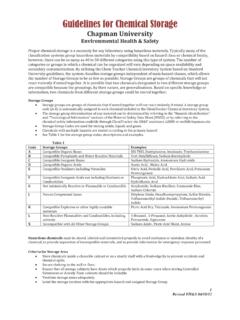
7 Otherwise, neutralize with alkali such as SODIUM carbonate or SODIUM bicarbonate, soda ash, lime or limestone granules. Dispose of spilled MATERIAL and neutralization residues in accordance with applicable regulations. Personal Precautions: Protective clothing, gloves, and a combination acid gas/P95 or P-100 respirator are recommended for persons responding to an accidental release (see also Section 8). Splash goggles and/or face shield should be worn to prevent eye contact with mist or spray where splashing is possible. Environmental Precautions: Components of this product can pose a threat to the environment. Contamination of water and air should be prevented. Do not allow water run-off to enter sewers or watercourses. SECTION 7. HANDLING AND STORAGE Store in a dry, cool, well-ventilated area away from acids, acid fumes, and oxidizers.
8 Keep containers tightly closed. Prolonged exposure to the atmosphere will slowly oxidize this product to produce SODIUM sulfate and release sulfur dioxide gas. Empty and clean containers of all residues before adding more product to container, to avoid potentially dangerous reaction. Always practice good personal hygiene. Refrain from eating, drinking, or smoking in work areas. Thoroughly wash hands before eating, drinking, or smoking in appropriate, designated areas. SECTION 8. EXPOSURE CONTROLS / PERSONAL PROTECTION Protective Clothing: Protective clothing, splash goggles, and impervious gloves are recommended when handling bulk SOLUTION . Appropriate protective clothing should be worn where any possibility exists that skin contact may occur. Eye protection should be worn where mist is generated and where any possibility exists that eye contact may occur.
9 An eyewash and quick drench shower should be provided. Workers should wash immediately when skin becomes contaminated and at the end of each work shift. Work clothing should be removed promptly if it becomes contaminated and should be changed daily if there is reasonable probability that the clothing may be contaminated. Ventilation: Use adequate local or general ventilation to maintain the concentrations of aerosol mists and sulfur dioxide below recommended occupational exposure limits. October 26, 2009 SODIUM BISULFITE SOLUTION Page 3 of 4 Respirators: Where sulfur dioxide or liquid aerosol mists are generated and cannot be controlled to within acceptable levels, use appropriate NIOSH-approved respiratory protection equipment (combined 42 CFR 84 Class N, R or P-95 or P-100 particulate filter and acid gas cartridge).
10 SECTION 9. PHYSICAL AND CHEMICAL PROPERTIES Appearance: Pale yellow liquid Odor: Possible odor of SO2 Physical State: Liquid pH: Vapor Pressure: Not Applicable Vapor Density: Not Applicable Boiling Point/Range: 104 C Freezing Point/Range:3 C Specific Gravity: at 20 C Evaporation Rate: Not Applicable Coefficient of Water/Oil Distribution: Not Applicable Odor Threshold: ppm (SO2) Solubility in Water: Aqueous SOLUTION SECTION 10. STABILITY AND REACTIVITY Stability & Reactivity: This MATERIAL is stable and not considered reactive under normal temperatures and pressures. Hazardous polymerization or runaway reactions will not occur. Prolonged exposure to the atmosphere will slowly oxidize this product to produce SODIUM sulfate and release sulfur dioxide gas. Incompatibilities: Avoid contact with acids - may liberate sulfur dioxide.