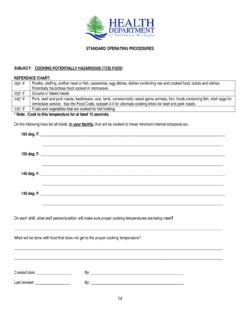
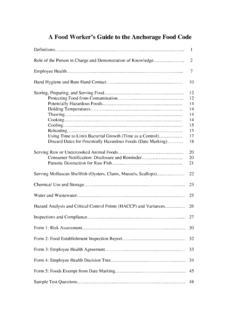
Transcription of STANDARD OPERATING PROCEDURES SUBJECT: …
1 STANDARD OPERATING PROCEDURES subject : employee health The PIC is required to: 1. Become familiar with and recognize diseases that are transmitted by foods. Common symptoms of illnesses that can be easily spread by food include: Diarrhea Sore throat with fever Jaundice Vomiting Discharges from the eyes, nose, and mouth Fever Infected wounds and boils 2. Inform employees of reporting requirements regarding their health . Food employees will be notified of their legal responsibility to report to the person in charge when: they experience any of the common symptoms of illnesses that can be easily spread by food, including diarrhea; sore throat with fever; vomiting; discharges from the eyes, nose, and mouth; fever; infected wounds and boils; and jaundice; they are diagnosed as being ill as a result of a Big Five pathogen.
2 The Big Five pathogens are Salmonella typhi, Enterohemorrhagic or Shiga toxin-producing E. coli, Shigella spp., Hepatitis A, and Norovirus. they are exposed to or are suspected of causing a confirmed foodborne illness outbreak of any of the Big Five ; and/or they live with a household member who has any of the Big Five pathogens, or if a household member works in or attends a setting where any of the Big Five have caused a confirmed outbreak. 3. Restrict or Exclude affected food workers. Food employees will be excluded from the establishment if : they are diagnosed as having an illness associated with a Big Five pathogen.
3 They are jaundiced, and the onset of the jaundice occurred in the last 7 days. they have symptoms of vomiting or diarrhea. Food employees will be restricted in the food establishment from working with exposed food; clean equipment; utensils and linens; and unwrapped single service and single-use articles if the food employee : Is suffering from symptoms of illnesses associated with being easily spread by food including: *Sore throat with fever *Discharges from the eyes, nose, and mouth *Fever *Infected with wounds and boils *Jaundice has a lesion containing pus, such as a boil or infected wound that is open or draining and is.
4 On the hands or wrists, unless an impermeable cover, such as a finger cot or stall protects the lesion and a single use glove is worn over the impermeable cover, on the exposed portions of the arms, unless the lesion is protected by an impermeable cover, or on other parts of the body, unless the lesion is covered by a dry, durable, tight-fitting bandage. 4 is not experiencing a symptom of acute gastroenteritis, but has a stool that yields a specimen culture that is positive for Salmonella typhi, Enterohemorrhagic or Shigea toxin-producing E Coli, Shigella spp, or Norovirus. Such a person is considered a shedder of Big Five pathogens.
5 Is jaundiced and the onset occurred more than 7 calendar days before, are not suspected of causing foodborne illness, not diagnosed with Hepatitis A, and the facility does not serve a highly susceptible population. A highly susceptible population is defined as a group of persons who are more likely than other populations to experience food borne diseases because they are immunocompromised or older adults, and in a facility that provides health care or assisted living services, such as a hospital, nursing home or kidney dialysis center; or preschool age children in a facility that provides custodial care, such as a day care center.
6 This establishment does / does not (circle one) serve a highly susceptible population. If the facility serves a highly susceptible population, food employees will be excluded from the establishment if: they are experiencing symptoms of acute gastrointestinal illness and they are exposed to or are suspected of causing a confirmed foodborne illness outbreak of any of the Big Five ; and/or they live with a household member who has any of the Big Five pathogens, or if a household member works in or attends a setting where any of the Big Five have caused a confirmed outbreak.; they have had a past illness from Salmonella Typhi within the last 3 months; they have had a past illness from Shigella species, or Enterohemorrhagic or Shiga toxin-producing E.
7 Coli within the last month. Are diagnosed with an infection from Norovirus and are Asymptomatic. they are jaundiced and the onset of the jaundice was more than 7 days before. 4. Notify the health Department when an employee is diagnosed with a Big Five pathogen. The Big Five pathogens are Salmonella typhi, Enterohemorrhagic or Shiga toxin-producing E coli, Hepatitis A and Norovirus. 5. Reinstate affected food workers who are restricted or excluded. Reinstatement will be performed in the following manner: Any excluded employees will be reinstated per written medical documentation from a physician and approval from the health Department.
8 Any restricted employee exhibiting symptoms such as diarrhea; sore throat with fever; vomiting; and fever; will be reinstated via the Person in Charge when symptoms cease and no foodborne illness occurs. A restricted food employee who is jaundiced and the onset occurred more than 7 calendar days before, are not suspected of causing foodborne illness, not diagnosed with Hepatitis A, and the facility does not serve a highly susceptible population will be reinstated via the Person in Charge per physician documentation that the person is free of Hepatitis A. A restricted food employee who is without symptoms for at least 24 hours, except for those with a positive stool for Salmonella thyphi, Shigella, or E.
9 Coli will be reinstated by the Person in Charge based on physician documentation. If a restricted food employee exhibits symptoms such as diarrhea; sore throat with fever; vomiting; fever; and jaundice that result from a chronic noninfectious condition, they will be reinstated by the person in charge, based on written documentation from a physician. A restricted food employee who exhibits persistent sneezing, coughing, or runny nose will be reinstated by the person in charge once the symptoms cease. If the establishment serves a highly susceptible population, the person in charge will seek guidance from the health department on how to reinstate excluded or restricted employees.
10 The Person In Charge will insure that all Food Employees: 1. Review this STANDARD OPERATING procedure. 5 2. Notify the person in charge when: they experience any of the common symptoms of illnesses that can be easily spread by food, including diarrhea; sore throat with fever; vomiting; discharges from the eyes, nose, and mouth; fever; infected wounds and boils; and jaundice; they are diagnosed as being ill as a result of a Big Five pathogen. The Big Five pathogens are Salmonella typhi, Enterohemorrhagic or Shiga toxin-producing E coli, Hepatitis A, and Norovirus they are exposed to or are suspected of causing a confirmed foodborne illness outbreak of any of the Big Five ; and/or they live with a household member who has any of the Big Five pathogens, or if a household member works in or attends a setting where any of the Big Five have caused a confirmed outbreak.