Transcription of Storytime for Learning - American Library Association
1 Once upon a time, in a land far away ..thus begins the story ; then the magic happens!Have you ever been mesmerized by a well-crafted tale that took you to strange places and filled your imagination with fanciful characters and settings? If so, then you have experienced the magic of lives are filled with stories stories we read, stories we tell or hear from others, and stories we experience in the digital world of apps, games, and movies. Stories are the way we transmit important cultural informa-tion to each other. Children experience many stories throughout childhood.
2 Take some time to watch a group of young children during playtime when they are engaged in acting out one of the many stories they know, and you will understand the importance of Storytime in a child s growth and school librarians, we know how important literature and the craft of the story are to developing literacy skills in reading, writing, speaking and listening, and language. As a result of the adoption of the Common Core State Standards we now have the responsibility to foster literacy development across the curriculum. Student Learning outcomes related to literature and literacy are embedded throughout the Common Core English Language Arts Standards (2010).
3 A crucial part of our professional work is incorporating quality literature in all genres and formats into the Storytime experiences we provide. Anchor standards in English language arts for students in K 12 include the following components, all of which are critical elements in school Library Storytime activities:1) Key Ideas and Detail: Gaining an understanding of literature by being able to identify central details, characters, events, and ideas2) Craft and Structure: Gaining an understanding of how literature is structured, by narrative or informative text, the structure of the story , and the meaning and rhythm of words3) Range of Reading and Level of Text Complexity.
4 Gaining a deepening understanding of the wide range of literature, both fiction and nonfiction4) Comprehension and Collaboration: Development of oral language skills through engagement in discussions related to literature5) Presentation of Knowledge and Ideas: Gaining experience with organizing, synthesizing, and communicating ideas using a variety of mediaThe theme of this issue of Knowledge Quest is Storytime for Learning in a Digital World. Contributors to this issue address important questions raised about the purpose and relevance of Storytime in the school Library .
5 Most significantly, is Storytime a relevant school Library activity in the era of STEM and CCSS? How has Storytime been transformed by technology?In response to these questions two storytellers, Kentucky Poet Laureate George Ella Lyon and Western Kentucky University s School of Teacher Education professor Pamela Petty make an emphatic plea for the Storytime guest editor COLUMNThe ideas presented by the authors of these articles clearly make the case for Storytime both as a Learning experience and as a way children can experience stories in formats beyond the book. Storytime for LearningCynthia Houston | Quest | Storytime for Learning in a Digital WorldAll materials in this journal subject to copyright by the American Library Association may be used for the noncommercial purpose of scientific or educational advancement granted by Sections 107 and 108 of the Copyright Revision Act of 1976.
6 Address usage requests to the ALA Office of Rights and in libraries and classrooms as a critical setting for socialization and Learning . Both storytellers assert that a well-crafted story very effectively captures children s attention and interest in the subject matter. Pam Petty explains that, regardless of subject matter or genre, a story creates interest and engagement with content more effectively than any textbook or worksheet. George Ella Lyon believes that in the age of one-to-one devices, the social setting of a Storytime activity is critical to developing a child s brain, sense of self, and the understanding that humans are all members of social groups, a community, and a school librarian who recognizes the power of traditional stories is Sue Giffard of the Ethical Culture Fieldston School in New York City.
7 In her article she describes how she has brought the power of Mayan and Egyptian myths to her students through interactive storytelling, thus expanding their worldview and knowledge of other we move into the next decade of the twenty-first century, no school librarian can ignore the fact that much of the content and Learning students experience in school is via digital means. Many educators believe that the flexibility of the digital format offers a variety of instructional strategies that meet the needs of diverse learners. For example, in a storytelling environment, digital books such as Inanimate Alice bring animation, interactivity, and alternative endings to a story , thereby fostering increased student participation and Cahill, a professor of Library science at the University of Kentucky, and Jennifer Bigheart, librarian at the Westbank Community Libraries in Austin, Texas, explain how the interactive problem-solving and literacy-development strategies used by instructional television can be adapted for Storytime .
8 School librarians can help students develop strategies for thinking through and solving problems, increase phonological awareness and oral language development, and introduce foundational concepts for reading while increasing students knowledge of the world. Though Maria and Jennifer focus primarily on enhancing the educational experiences of young children, many of the Storytime activities they discuss could also be used with older Paganelli, a professor of Library media education at Western Kentucky University, explains how the digital world can extend children s Storytime experience by introducing students to new stories created for the digital age and enhancing existing stories such as Alice in Wonderland with animations and interactivity.
9 She also provides a list of resources students can use to craft their own digital Smollar, an award-winning librarian at Plumosa School of the Arts in Delray Beach, Florida, tells us about her experiences helping students develop their own digital storytelling projects using a variety of computer programs. These projects engage students in the art and craft of storytelling. Sally compares her work with students to the cooking process: her classroom is a test kitchen and they are the chefs!The ideas presented by the authors of these articles clearly make the case for Storytime both as a Learning experience and as a way children can experience stories in formats beyond the book.
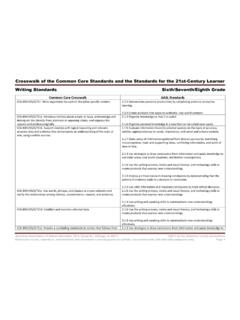
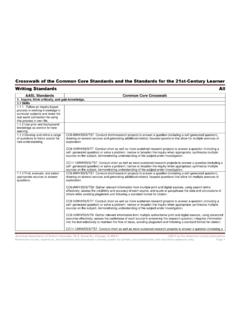
10 If school librarians ever need to provide rationales for Storytime in their libraries, the authors in this issue certainly have provided them. In addition, AASL s crosswalk connecting Common Core State Standards with AASL Learning standards (< >) can be useful in connecting Storytime to Learning , let s find a lap AND a laptop for every child so the magic of Storytime can be shared. Let s as George Ella Lyon says, draw kids into the lap of the story with a real human voice and in the words of Pamela Petty let s all tell some stories! Work Cited:Common Core State Standards Initiative.