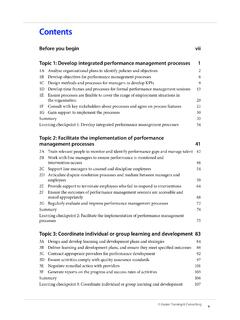
Transcription of TAEASS502 Design and develop assessment tools
1 TAEASS502 Design and develop assessment toolsLearner guide ASPIRE TRAINING & CONSULTING viiBefore you beginThis learner guide is based on the unit of competency TAEASS502 Design and develop assessment tools , Release 1. Your trainer or training organisation must give you information about this unit of competency as part of your training program. You can access the unit of competency and assessment requirements at: to work through this learner guideThis learner guide contains a number of features that will assist you in your learning. Your trainer will advise which parts of the learner guide you need to read, and which activities you need to complete. The features of this learner guide are detailed in the following of the learner guideHow you can use each feature OverviewThis section provides general information about the vocational education and training sector and its essential components (such as training packages), which will underpin your learning.
2 IntroductionThe introduction covers the key concepts relevant to this particular unit of competency, including the terminology that will be used throughout this learner contentRead each topic in this learner guide . If you come across content that is confusing, make a note and discuss it with your trainer. Your trainer is in the best position to offer assistance. It is very important that you take on some of the responsibility for the learning you will are referred to throughout the guide . These are samples of working documents similar to those found in a training organisation. Completed templates may be useful as evidence for portfolio assessments. Ask your trainer for sample templates provided with the Trainer s and assessor s guide for this Examples of completed documents that may be used in a workplace are included in this learner guide . Examples highlight learning points and provide realistic examples of workplace give you the opportunity to put your skills and knowledge into action.
3 Your trainer will tell you which activities to learning points are provided at the end of each topic. ASPIRE TRAINING & CONSULTING 7 Topic 1In this topic you will learn how to:1A Identify a target group of candidates, purposes of the assessment tool , and the contexts in which the tool will be used1B Access relevant benchmarks for assessment and interpret them to establish evidence required to demonstrate competence1c Identify, access and interpret industry requirements and relevant contextualisation guidelines1d Identify other related documentation to inform assessment tool development Determine the focus of the assessment toolThe process of designing and developing assessment tools begins with a critical analysis of the assessment context. You need to identify the target group for the assessment , the benchmarks that will be used to judge performance and the various organisational factors that impact on the assessment process. It is important to remember that, as competency- based assessment occurs (wherever possible) in actual workplaces, you need to understand the systems, policies and procedures of workplaces and training organisations.
4 ASPIRE TRAINING & CONSULTING 9topIc 1 DETERMINE THE FOCUS OF THE assessment TOOLC onsiderations for target groupsThe following table summarises the things you should consider when developing and designing assessment tools for specific target client group: WorkplaceConsiderations:XXAre they a workplace trainee or apprentice?XXDo they require recognition of current competence and prior learning?XXAre there opportunities for them to gather assessment evidence in the workplace?XXThe purpose of assessment formal qualifications, organisation-specific courses, licences, induction to the workplacetarget group: community groupsConsiderations:XXLanguage, literacy and numeracy issuesXXSocial disadvantage; for example, a low socioeconomic groupXXPrevious negative experiences in school or adult educationXXLocation, such as remote, rural or isolatedXXDisabilities that may influence learningXXLearning oopportunities to gather assessment evidence in a workplaceXXSupport required to gather evidence of prior learning target group: International studentsConsiderations:XXThey may be located in Australia or overseasXXEnglish may be their second languageXXAssessment tools may need to be contextualised to suit a specific location or workplacetarget group: Apprentices and workplace traineesConsiderations.
5 XXAssessment may be blended (workplace and group learning environment)XXThe workplace supervisor will need to be involvedXXLanguage, literacy and numeracy support may be requiredXXDisabilities that may influence learningXXThey are usually younger, less-experienced workers and may be recent school leaversXXCheck current information of regulations regarding the assessment of apprentices at the Australian Apprenticeships website at: 10 TAEASS502 Design AND develop assessment TOOLSThe assessment contextThe assessment context can be described as being made up of the following: assessment context: XXThe physical and operational factorsXXThe assessment system within which assessment is carried outXXOpportunities for gathering evidence in a number of situationsXXThe purpose of the assessmentXXWho carries out the assessmentXXThe period of time during which it takes placeIdentify the assessment contextThe objective is to understand the various factors that will impact on the assessment tool so you can provide realistic opportunities for candidates to gather evidence.
6 To identify the assessment context where the proposed assessment tool is to be implemented, you need to access the for determining the assessment contextXXPolicies and procedures of the organisation where the assessment will be conductedXXInterviews of trainers and assessorsXXReview documents such as enrolment forms, assessment plans, training packages and information distributed by relevant professional associations and industry groupsEstablish the environment When developing assessment tools , establish the environment where assessment will occur. The location of the assessment will impact on the resources used and the people involved. It will also impact on whether special assessment methods need to be employed, such as role-plays or appropriate case studies, to address the individual unit of competency, training package implementation guidelines and access and equity issues. The assessment plan document is useful for providing information about the where the assessment will be conducted.
7 The assessment environment may be:XXin the candidate s workplace; this is the desired location specified in most training packagesXXoff the job; for example, in a computer laboratory to co nduct assessment of software skillsXXin a group learning environmentXXin a simulated work environment such as a model office ; if an actual workplace is unavailable, training packages stipulate that a simulated workplace must be providedXXonlineXXa combination of the above. ASPIRE TRAINING & CONSULTING14 ASPIRE TRAINING & CONSULTINGTAEASS502 Design AND develop assessment TOOLSThe assessment tools you develop must be appropriate for the purpose of assessment . It is important that you understand the different assessment instruments and procedures used in specific contexts. These are outlined instrumentpurposereason for using the assessment instrumentTemplates and proformasXXTo provide candidates with real-life documents/forms to completeXXTo provide a method of capturing the required evidenceXXTo gather standardised evidence that supports reliable assessment decisionsXXTo assist candidates who do not have access to appropriate workplace documentsThird-party reportsXXTo authenticate evidence provided by the candidateXXTo use as a testimonial from an employer or supervisorXXTo use as a component of an RPL evidence portfolioSpecific questions or activitiesXXFor candidates being assessed for a qualification or the RPL processXXTo determine language.
8 Literacy and numeracy needs of candidatesXXFor licensing or regulatory requirementsXXTo confirm the candidate s understandingXXTo focus on particular aspects not covered by other methodsXXTo encourage responses in the candidate s own wordsEvidence and observation checklistsXXFor licensing or regulatory requirementsXXTo record evidence of the candidate using the skills requiredXXTo assist the candidate to satisfy the rules of evidenceXXTo support assessors in ensuring that they record observations that satisfy the rules of evidenceChecklists for the evaluation of work samplesXXTo provide a framework/criteria against which the work samples can be assessed to ensure they meet the benchmarks for competencyXXFor RPL candidatesXXAppropriate where the assessment requirements requires the candidate to submit specific types of work samples16 ASPIRE TRAINING & CONSULTINGTAEASS502 Design AND develop assessment TOOLSI mportance of instructionsYou also need to acknowledge the importance of the instructions to the assessors and candidates that must be included in the assessment instrument.
9 These form part of the assessment tool and are crucial in establishing and providing a clear framework for the use of the instruments and the conditions under which the assessment is to be conducted. This information includes suggestions to adjust the assessment for people with language or disability issues, for resources required, instructions for using assessment methods and instruments and the importance of following WHS a target group of candidates, purposes of the assessment tool , and the contexts in which the tool will be used In the following example, a qualified assessor determines the focus of the assessment tool for use in MEM31215 Certificate III in Engineering Industrial is a qualified assessor with ISkill, an RTO that specialises in the training and assessment of apprentices in the construction industry. The RTO s training manager has asked Phillip to write assessment tools for the Certificate III in Engineering Industrial Electrician because they have applied to have this qualification added to the RTO s scope for delivery and begins the process of reviewing the existing assessment tools and sources information from the RTO s assessment policy and procedures.
10 He checks for information about the assessment strategies that the RTO uses to assess apprentices. He also confirms with the course manager the specific units of competency that apprentices will be enrolled in. He then accesses the National Register website ( ) and prints the various units of competency that will be used as benchmarks for assessment . He also refers to the implementation guide for the MEM Manufacturing and Engineering Training Package and reads this document to make sure he follows the guidance also checks for information on the Australian Apprenticeships website ( ) to ensure his knowledge of regulations regarding the assessment of apprentices is , a trainer/assessor with the RTO, is a specialist in the area of language, literacy and numeracy (LLN). Phillip arranges a meeting with Marisa to discuss with her the strategies he should use to ensure he provides sufficient information in the assessment tool about reasonable adjustment for apprentices with LLN issues.