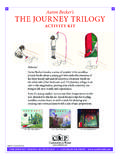
Transcription of Teachers’ Guide - Candlewick Press
1 Teachers GuideJon Klassen s hat trilogy I Want My Hat Back, This Is Not My Hat, and We Found a Hat has won over readers of all ages. Starring a unique cast of animals in humorous situations, these award-winning books are certain to grab children s attention, allowing opportunities for deep discussions and enriching any THIS GUIDEThis Guide consists of discussion questions and classroom extension activities that can be used when reading, teaching, or discussing I Want My Hat Back, This Is Not My Hat, and We Found a Hat (together or individually).
2 Jon Klassen s hat trilogy allows readers to think about literary components such as author s craft, character traits, and text features and to use reading compre-hension strategies such as comparing, contrasting, and drawing inferences. The questions and activities contained in this Guide are designed to be used in any grade, whether the texts are read as a whole group, in a small group, or Common Core Anchor Standards that can be addressed using the discussion questions and activities in this Guide are Anchor Standards for Reading.
3 And and Anchor Standards for Speaking and Listening: For more information on specific standards for your grade level, visit the Common Core website at Klassen s Hat Trilogy Teachers Guide page 2 Illustrations copyright 2011, 2012, 2016 by Jon KlassenCommon Core ConnectionsThe bear s hat is gone, and he wants it back. Patiently and politely, he asks the animals he comes across, one by one, whether they have seen it. Each animal says no some more elaborately than others. But just as the bear begins to lose heart, a deer comes by and asks a simple question that sparks the bear s memory and renews his search with a vengeance.
4 Told completely in dialogue, this delicious take on the classic repetitive tale plays out in sly illustrations laced with visual humor and winks at the reader with a wry irreverence that will have kids of all ages thrilled to be in on the : 978-0-7636-5598-3 Also available as an e-bookWhen a tiny fish shoots into view wearing a round blue topper (which happens to fit him perfectly), trouble could be following close behind. So it s a good thing that enormous fish over there won t wake up. And even if he does, it s not like he ll ever know what happened.. Visual humor swims to the fore in this deadpan-funny : 978-0-7636-5599-0 Two turtles have found a hat.
5 The hat looks good on both of them. But there are two turtles. And there is only one hat. Evoking hilarity and sympathy, the shifting eyes tell the tale in this brilliantly paced story in three parts, highlighting Jon Klassen s visual comedy and deceptive simplicity. The delicious buildup takes an unexpected turn that is sure to please loyal fans and newcomers : 978-0-7636-5600-3 ABOUT THE BOOKSJon Klassen s Hat Trilogy Teachers Guide page 3 Illustrations copyright 2011, 2012, 2016 by Jon Klassen 1. On the spread where the bear realizes that he has seen his hat, the background is red.
6 Discuss with your students why they believe the author-illustrator decided to set up the page this way. What does the red symbolize? 2. The setting of the story is never directly stated, but there are clues throughout the book, including the type of animals encountered and the grass. Discuss with your students the different possibilities for the setting. 3. At the end of the book, what happens to the rabbit is not directly stated. Brainstorm with your students the different possibilities for what could have happened to the rabbit. Ask them to make inferences based solely on the illustration that shows the bear sitting on flattened grass (did he sit on the rabbit?)
7 Then reread the page on which the squirrel is questioning the bear and ask your students to make inferences based on what the bear says (did he eat the rabbit?). 1. The narrator of a book is usually the protagonist of the text. In This Is Not My Hat, the narrator is the character that has done something wrong. Discuss with your students whether they would categorize the little fish as a protagonist or an antagonist. 2. Although the crab says he won t tell anyone where the little fish went, as soon as the big fish arrives, the crab points in the little fish s direction.
8 Have your students examine this page and ask what they see in the illustration that suggests why the crab would tell. Discuss with them other reasons the crab might help the big fish. 3. The little fish knows it s wrong to take the hat, but he does it anyway. Talk with your students about what the little fish s reasons are and whether they warrant taking the hat. Is stealing ever right? 4. At the end of the book, what happens to the little fish is not directly stated. Brainstorm with your students the different possibilities for what could have happened to the little fish.
9 Ask them to make inferences based on the illustrations. Did the big fish simply take the hat back? Or did he eat the little fish? Are there any other possibilities?DISCUSSION QUESTIONSJon Klassen s Hat Trilogy Teachers Guide page 4 Illustrations copyright 2011 and 2012 by Jon Klassen 1. We Found a Hat has two narrators, compared to a single narrator in the previous two books. Have your students discuss why the author would choose to have both turtles narrate. Also, discuss with them how they are able to tell which turtle is talking, even though the text doesn t indicate this.
10 2. At the end of the book, the turtle chooses not to take the hat. Discuss with your students why the turtle makes that choice and what it tells the reader about his character. 3. The text of this book is split into three different parts. Discuss with your students why the author may have made this choice. Ask them whether having the book split into parts helped them in any way while reading. 4. The author shows the relationship between the turtles without telling the reader in words. Ask your students to look back through the text and answer these questions: Are the turtles friends?