Transcription of TECHNIQUES FOR IMPROVING THE QUALITY AND …
1 Costa, and Roberts. 2014. TECHNIQUES for IMPROVING the QUALITY and quantity of dna extracted from herbarium specimens . Phytoneuron 2014-48: 1 8. Published 12 May 2014. ISSN 2153 733X TECHNIQUES FOR IMPROVING THE QUALITY AND QUANTITY OF dna extracted from herbarium specimens CLAYTON M. COSTA and ROLAND P. ROBERTS Department of Biological Sciences Towson University Towson, Maryland 21252 ABSTRACT There is a need to modify DNA extraction methods to obtain amplifiable DNA from herbarium specimens that are relatively old we explored several methods to improve both QUALITY and quantity of DNA obtained from a range of specimens of Asteraceae.
2 Leaf tissue was sampled from herbarium specimens of varying ages. Modifications were made to the Qiagen DNeasy Plant Mini Kit and the CTAB Extraction protocols. Comparison of the results of both protocols for recently collected and older specimens demonstrated that better QUALITY and greater quantity of DNA was obtained with the modified DNeasy protocol. The modified DNeasy protocol was more consistent in yielding amplifiable DNA from herbarium specimens older than 20 years. Modification and optimization of two currently used DNA extraction protocols were successful in yielding QUALITY amplifiable DNA from herbarium specimens of Asteraceae, tribe Astereae, that were up to 127 years old.
3 The concentration and QUALITY of DNA was comparable to that obtained from specimens less than 20 years old. The use of natural history resources in phylogenetics, biogeography, and population biology, among other areas of biodiversity research, justifies investments in their security and accessibility by federal, state, and private funding agencies. Among the collections supported by these agencies are herbaria, repositories of millions of plant specimens, representing documented snapshots of plant diversity and distribution in space and time. Many have called for increased use of natural history resources for research into species discovery.
4 It is proposed that large numbers of unknown and/or undescribed species are part of these collections (Bebber et al. 2010). In addition to prospects of new species discovery, it is argued that these resources should be utilized in molecular-based studies, justifying financial and time investments in them (Dr bkov et al. 2002), while protecting wild populations from further degradation. However, while many institutions house valuable plant resources, seldom are researchers able to utilize older plant specimens for molecular investigation. A major obstacle is the securing of high QUALITY , amplifiable DNA from older herbarium specimens (Telle & Thines 2008).
5 Molecular studies, particularly among taxa of Asteraceae the largest family of flowering plants can benefit from the use of herbarium resources specifically in cases where taxa are rare or their distribution remote. Also, use of these resources supports current and future investments in them and contributes to the conservation and protection of wild populations. However, despite the abundance of resources in plant collections, researchers are usually restricted to using more recently collected specimens, those collected within the last 20 years. For older specimens, the limiting factor is obtaining high QUALITY , amplifiable DNA.
6 The problems encountered when using older herbarium specimens for molecular studies stem primarily from specimen collection and processing practices. Post collection processing of specimens, including alcohol treatment, time between collection and drying, and method of drying can have adverse effects on the quantity and QUALITY of DNA obtained (Staats et al. 2011). In addition, the age of the specimens (time since collection) may impede DNA retrieval due to natural DNA degradation over time (Staats et al. 2011). This combination of natural DNA degradation and post collection processing practices that accelerate DNA degradation compounds the problem encountered Costa and Roberts: DNA extraction from herbarium specimens 2 when older plant specimens are used.
7 Damaged or degraded DNA hinders PCR-based molecular studies and next-generation sequencing (Lindahl 1993). Obtaining QUALITY DNA from old herbarium specimens usually require several modifications to commonly used protocols (Dr bkov et al. 2002 and citations therein). Dr bkov et al. (2002) recommended the use of Qiagen DNeasy Plant Kit or the extraction methods from Doyle and Doyle (1987, 1990) as the most satisfactory extraction methods, albeit for specimens of graminoids only. The resulting extracts from these protocols must also be purified before they are used as PCR template. These extracts did not, however, consistently produce amplicons that were larger than 350 bp.
8 Because DNA extraction requires the destructive sampling of preserved plant specimens, it is imperative that the extraction TECHNIQUES employed result in high QUALITY amplifiable DNA, reducing the frequency of sample removal from specimens, thus preserving the specimens for posterity. In addition to the challenges outlined above, products of plant secondary chemistry, concentrated by the drying of plant tissues, may have a greater impact on the QUALITY of DNA recovered from older herbarium specimens. These secondary compounds can impede downstream use of extracted DNA as they inhibit reactions and processes in which the DNA extract is utilized.
9 Here we address some of the issues associated with obtaining high QUALITY , amplifiable DNA from older herbarium specimens of Asteraceae taxa. We discuss modifications to two commonly used extraction protocols and their utility among herbarium specimens of varying ages. The modifications employed are relatively cheap and easy to implement, without substantial increases in processing time. Specifically, we utilized strategies to increase the concentration of DNA while reducing the levels of impurities in the dna extracted from herbarium specimens that are older than 20 years. Materials and methods Plant samples for this study were obtained from herbarium specimens.
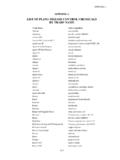
10 Sampled taxa included species from Asteraceae, tribe Astereae (Appendix 1). The collection year of specimens ranged from 2013 to 1887, 0 127 years old (at the time of this study). Two methods of DNA extraction were explored and modified several times to optimize for DNA quantity and QUALITY . Samples of desiccated leaves collected close to the apex of specimens were stored in silica gel prior to DNA extraction. For both methods of extraction, 20-40 mg of leaf tissue was pulverized with a Mini-Beadbeater-8 (Bio Spec Products Inc. Bartlesville, OK). Optimization of the hexadecyltrimethylammonium bromide (CTAB) method (modified from Doyle and Doyle 1987 & 1990) involved reduction of the volume of all reagents to facilitate the use of micro-centrifuge tubes, a useful though not novel strategy.