Transcription of The Barren Grounds
1 24 The Barren Grounds David Robertson SECTION 1: Belonging Start- pg 53 25 Section 1: Belonging Start - pg. 53 Summary: Meet Morgan and Eli, foster siblings living in Winnipeg. This first section introduces students to these characters, as well as the home and school life of Morgan and Eli. This section also includes the first hints of a magical portal. Important background knowledge/ context for Teacher consideration: Note for teachers Morgan and Eli are foster children- a topic that connects deeply to the historical and current child removal policies of the Canadian government. Indigenous children are disproportionately removed from their homes, families, and communities. David Robertson has publicly stated that this book is not an inditement of the foster care system, it does however reflect contemporary Indigenous stories. For more on Davidson s decision to have the two main characters in care watch this interview. Note for teachers for your classroom context, be mindful of how these stories could impact your student population having this conversation in conjunction with school counsellors, principals, vice principals, Family support workers, Aboriginal support workers, families, and the student themselves will support the success of this novel.
2 FPPL: Learning ultimately supports the well-being of the self, the family, the community, the land, the spirits, and the ancestors. Big Ideas: Language and text can be a source of creativity and joy. Exploring stories and texts helps us understand ourselves and make connections to others and to the world. Curricular Competency: Recognize and appreciate the role of story, narrative, and oral tradition in expressing First Peoples perspectives, values, beliefs, and point of view. 26 Talking Circle Prompts: - Where did you find meaning? - What is unclear or is an area you think you might need to learn more about? - How is this story a guide? - What is a gift you have been given that held meaning for you? - What are all the ways we can show people we care about them? - What does it mean to be welcome? What suggestions do you have to make sure our classroom is a welcoming to each other? - What does it mean to write from the heart not the head? Have you ever struggled to write what you really feel or mean?
3 Indigenous Worldview & Perspectives Focus Indigenous Language: From the Langley School District site: Learn h n q min m h n q min m is spoken by the Down River peoples of the Fraser Valley, including the Musqueam, Tsleil-Waututh, Kwikwetlem, Tsawwassen, Katzie, and Kwantlen Nations. In the Kwantlen Nation, the language is taught to Langley students by h n q min m Language Teacher, Fern Gabriel Sesmelot. Fern learned her language from the Musqueam Nation. We would also like to recognize the UBC First Nations Endangered Languages Program in collaboration with the Musqueam First Nation. It is through this program that Fern Gabriel, Luke Dandurand, Deanna Miller, and Carlyn Andres learned their language. Learn a greeting in h n q min m : Where are you from?greeting in h n q min m : Where are you from? Self: Artifact share: Have students bring in/and or share an artifact of meaning to them. Have students share in a circle about the object.
4 - What do we learn about each other through the objects we care about? Self: Explore the notion of gifts: The most important thing each of us can know is our unique gift and how to use it in the world. - Robin Wall Kimmerer Thought provoking question: Are gifts always things that can be touched, consumed, or held? Unpack with students the word gift from different perspectives: - North American view of gift (present, things) - Indigenous view of gift (personal trait, quality) The author uses both views in Eli s artbook. It is both a meaningful gift for him (from his birth father) and is a place where he records his gift (his artistic skills) 27 - Students Reflect: What are your gifts? (Emphasis on quality/strength) Can you think of a life lesson or experience that taught you something which you could look back at as a gift ? Community: Role of Children in Society: The two main voices so far in this story are children. - Explore the role of children in Indigenous society through the FNESC resource: Beliefs and Values around Children - Teachers could post this in their rooms and refer to them throughout the story.
5 - A fantastic opportunity to break students into groups and have them take a statement and put it on large paper and illustrate the statement they have been given. Students can then share their visual choices. Great collaborative activity. Post these statements around the room students can then access these throughout the read aloud, looking for examples of these values in the text as they explore the story. Note for teachers This document creates a deeper understanding of the impact on Indigenous communities when children were/are removed from Indigenous homes due to ongoing systemic racism. Connections can be made using this document to Residential Schools, the 60 s Scoop and unsatisfactory access to education that forces many Indigenous children to leave their communities to receive a high school education. This document has a recursive quality that could be used to make connections throughout the text. Land - Place Based: How aware are we of the weather?
6 Go outside and sense the weather. What temperature do you think about? Why don t we need to think about the weather? How do different peoples dress for weather? Understanding Winnepeg s climate and geography and how it is different than coastal BC. Have students find facts about Winnipeg s or share some facts. Perhaps do a class Venn chart to understand the differences in each place , the lack of mountains, the more sustained winter and cold. Look at a detailed map of Canada and ask students to think about how the location of a place influences its weather, and its people. Check out some facts about the geography of Manitoba here and here. To find some useful information, this is an opportunity to introduce students to some of the digital resources the school district has free access to including World Book and Encyclopedia Britannica. Go to the school Library Learning Commons website: and select your school. Login: langley and password: langley 35 Ancestors: Cultural Iceberg: Share graphic in the appendix of the Cultural Iceberg.
7 Ask students to comment on how what is under the water is different than what you see above the water. Ask for examples of these, students can list or fill out their own, on a copy of the Cultural Iceberg. - Discuss how what is under the water is often hidden and harder to realize or understand. The 28 responsibility of the listener/reader of a new culture to them, is to learn beyond the surface. When we learn only about cultural surface items, we are in danger of reinforcing stereotypes, and misinterpreting someone else's culture. - What is the difference between knowing a culture and understanding a culture? Extension: - What areas of another culture are out of bounds ? Note for teachers Opportunity to connect to sacred knowledge- some knowledge you may know exists (like a protocol etc.) but are not invited to be a part of or share. - Why is it important to build context about a culture? Note for teachers Opportunity to connect concept or benefits of building cultural context.
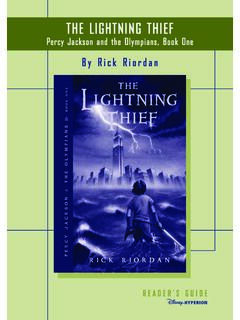
8 The goal would be for students to be able to identify when and if they are lacking a cultural context to understand a given situation, text, etc. Self: Repetition: In the closing comments of the section Morgan asks Emily Why are you being so nice to me? to which Emily responds, Why wouldn t I be? . Hours later, in an interaction with Eli, Eli asks, You got this for me? in reference to the new notebook for his drawings. Morgan responds, Why wouldn t I? - Where do you find meaning in these interactions? - Where do we learn how to treat one another? Self: Identity Map: Explore what makes us, us. Use the Identity, Value Map from the appendix to think about: - What are my strengths and abilities? - How do I use my strengths in my family, relationships and communities? Literacy Focus Pre- Read: Cover Prediction Activity: Project image of the front cover and have students individually record details or share orally what: - they notice (I see, I ), - predictions for the content (I predict, I expect, I think, I ) and - questions that they have (I wonder, Why ) Discussion Questions: Resource: The Barren Grounds - Educators Guide - How does Morgan express her feelings?
9 How is her current situation different from her past foster experiences? Note for teachers Avoid having questions that directly connect Morgan and students. IE DO NOT ASK How would you feel if you were Morgan? - Describe Morgan s relationship with Eli, the twelve-year-old boy who is also being fostered in the same home. How has Morgan s childhood differed from Eli s childhood? How have they been similar? - Morgan is an avid reader, especially of fantasy novels, and Eli is a gifted artist. Why do you think 29 they connect with one another? Why do you think these interests are so important to them? - How do you think Morgan feels about being Indigenous? Why do you think her foster parents Katie and James try so hard to connect her to her Indigenous culture? How does Morgan react to that? Allusion: Define. Referencing other literature in this section Western Popular cultural Literature - tin-man of poetry ; Spiderman s Multiverse Why use western references?
10 (Discussion) Literacy Choice Board: See attached resource for student engagement with core aspects of the text. - Teacher can choose a topic or students can choose a topic to demonstrate their understanding of this section. - This Literary Choice Board can be used throughout the novel after reading a chapter or a section. Creative Arts Learning Activity with movement: (How emotions can affect our body/ How the body interprets emotions) Kids stand in a circle and wait for the teacher to call out an emotion. Once the teacher calls an emotion, students allow their bodies to mimic/ feel/ interpret the emotion, moving silently in the same direction to avoid chaos and bumping into others. Example: What does sadness look like? Etc. Inspired by the point in the novel ..moving around like a jewel thief . Once kids have felt those different emotions as an action in the body, ask students to move like a jewel thief . (Creeping around and getting that feeling of moving slowly, cautiously and without sound, as if you don t exist and not to cause attention to yourself).