Transcription of The effects of plasma exchange in patients with ANCA ...
1 RESEARCHthe bmj | BMJ 2022;376:e064604 | doi: 1 The effects of plasma exchange in patients with ANCA- associated vasculitis: an updated systematic review and meta-analysisMichael Walsh,1,2,3 David Collister,3,4 Linan Zeng,2,5 Peter A Merkel,6 Charles D Pusey,7 Gordon Guyatt,1,2 Chen Au Peh,8,9 Wladimir Szpirt,10 Toshiko Ito-Hara,11,12 David R W Jayne,13 on behalf of the plasma exchange and glucocorticoid dosing for patients with ANCA-associated vasculitis BMJ Rapid Recommendations Group*AbstrActObjectiveTo assess the effects of plasma exchange on important outcomes in anti-neutrophil cytoplasm antibody (ANCA)-associated vasculitis (AAV).DesignSystematic review and meta-analysis of randomised controlled criteriaRandomised controlled trials investigating effects of plasma exchange in patients with AAV or pauci-immune rapidly progressive glomerulonephritis and at least 12 months sOurcesPrior systematic reviews, updated by searching Medline, Embase, and CENTRAL to July Of biasReviewers independently identified studies, extracted data, and assessed the risk of bias using the Cochrane Risk of Bias Of resultsMeta-analyses were conducted using random effects models to calculate risk ratios and 95% confidence intervals.
2 Quality of evidence was summarised in accordance with GRADE methods. Outcomes were assessed after at least12 months of follow-up and included all-cause mortality, end stage kidney disease (ESKD), serious infections, disease relapse, serious adverse events, and quality of trials including 1060 participants met eligibility criteria. There were no important effects of plasma exchange on all-cause mortality (relative risk (95% CI to ), moderate certainty). Data from seven trials including 999 participants that reported ESKD demonstrated that plasma exchange reduced the risk of ESKD at 12 months (relative risk ( to ), moderate certainty) with no evidence of subgroup effects . Data from four trials including 908 participants showed that plasma exchange increased the risk of serious infections at 12 months (relative risk ( to ), moderate certainty).
3 The effects of plasma exchange on other outcomes were uncertain or considered unimportant to Of eviDenceThere is a relative sparsity of events, and treatment effect estimates are therefore imprecise. Subgroup effects at the participant level could not be the treatment of AAV, plasma exchange has no important effect on mortality, reduces the 12 month risk of ESKD, but increases the risk of serious funding was is an update of a previously unregistered systematic review and meta-analysis published in with polyangiitis and microscopic polyangiitis are commonly grouped together as anti-neutrophil cytoplasm antibody (ANCA)-associated vasculitis (AAV). Due to the varied symptoms and organs involved when patients with AAV present, they are often cared for in hospital by several different specialties.
4 Although treatment with immunosuppression and glucocorticoids improve the outcomes of patients with AAV, they remain at high risk of death, end stage kidney disease (ESKD), and serious infections, particularly in the first year of 2 plasma exchange (PLEX) mechanically removes circulating plasma constituents, including immunoglobulins such as ANCA. The rapid removal of autoantibodies may reduce damage incurred by AAV and therefore reduce the risk of death and ESKD. However, the removal of antibodies, as well as the use of blood products and the potential need for central venous access, may also increase the risk of harms, particularly serious infections, the most common cause of death for patients with the publication of a large trial evaluating the effects of PLEX in patients with AAV (PEXIVAS), For numbered affiliations see end of the article*See supplementary material for collaborating authorshipCorrespondence to: M Walsh St Joseph s Hospital, Hamilton, ON, Canada L8N 4A6 (ORCID 0000-0001-8292-2014)Additional material is published online only.
5 To view please visit the journal this as: BMJ 2022;376:e064604 : 16 December 2021 WhAt Is AlreAdy knoWn on thIs topIcPlasma exchange has been used to treat some patients with anti-neutrophil cytoplasm antibody (ANCA)-associated vasculitis (AAV) since the 1980s on the basis of biological rationale and small clinical trialsWhAt thIs study AddsThis meta-analysis compiles the most recent and detailed data available from randomised controlled trials examining the effects of plasma exchange on important outcomes in patients with AAVIt found plasma exchange , when added to standard therapies, reduced the risk of end stage kidney disease at one year, regardless of baseline kidney function, and increased the risk of serious infections, a previously unrecognised effectPlasma exchange did not change the risk of death on 17 June 2022 by guest.
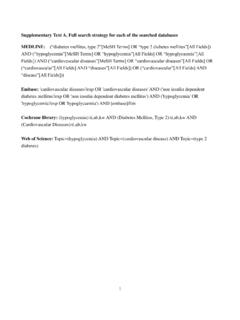
6 Protected by : first published as on 25 February 2022. Downloaded from RESEARCH2 doi: | BMJ 2022;376:e064604 | the bmjwe updated a previous systematic review and meta-analysis of randomised control trials (RCTs) to better guide recommendations for the use of PLEX in This review is conducted as part of the BMJ Rapid Recommendations project, a collaborative initiative from the MAGIC Evidence Ecosystem Foundation ( ) and The BMJ. This systematic review informs a BMJ Rapid Recommendation addressing PLEX in addition to immunosuppression and glucocorticoid therapy in patients with severe AAV (see box 1).4 MethodsNo ethical approval was required to conduct this strategyWe previously searched Medline (1950 through August 2009), Embase (1980 through August 2009), and the Cochrane Controlled Clinical Trials Register (1996 through August 2009) using the Ovid search engine with two comprehensive search themes combined using the Boolean operator and.
7 5 The first theme, vasculitis, was created using the Boolean search term or to search for the following terms, text words, and database-specific thesaurus terms: vasculitis or ANCA or antibodies, antineutrophil cytoplasm or Wegener s granulomatosis or microscopic polyangiitis or microscopic polyarteritis or rapidly progressive glomerulonephritis or RPGN or pauci-immune glomerulonephritis or crescentic glomerulonephritis. The second theme, plasma exchange , was created to search for the text words and database-specific thesaurus terms plasma exchange or plasmapheresis or apheresis. The results were filtered for randomised controlled trials. We added to the literature from this search by repeating the search on literature from January 2009 to July 2020.
8 We added the term granulomatosis with polyangiitis to the search string and used the controlled trials, all filter on and exclusion criteriaTwo reviewers (MW and DC) independently evaluated all articles from both the first systematic review and the updated search for eligibility by first reviewing all identified abstracts. Abstracts that either evaluator did not identify as definitely ineligible underwent full text eligibility review. Inclusion criteria consisted of: (a) study design (RCT); (b) study population ( patients with AAV or rapidly progressive glomerulonephritis of which >75% of cases were considered pauci-immune or idiopathic); (c) the intervention (PLEX) by any method and in any dose as initial therapy in addition to immunosuppression and glucocorticoids); (d) the outcome (trials that report at least one of mortality, ESKD, serious infections, relapse of vasculitis, serious adverse events, or health related quality of life); and (e) time (outcomes reported at 12 months after randomisation or later).
9 Serious infections were defined as infections requiring hospitalisation or intravenous antibiotics. Studies were eligible whether published or unpublished and irrespective of language. Studies were excluded if they included primarily children (>75% with age <16 years).risk of bias assessmentTwo reviewers (MW and DC) assessed study quality independently using the Cochrane tool for assessing risk of bias that includes: random sequence generation; allocation concealment; blinding of participants, staff, and outcome assessors; incomplete outcome data; selective outcome reporting; and other important extractionFor each eligible study, two reviewers independently extracted the following: study characteristics: population, description of intervention, and outcomes.
10 Study outcomes were extracted for 12 months after randomisation and for longer term follow-up for each study and whenever possible for each pre-specified subgroup within a study (creatinine <500 mol/L v 500 mol/L or on dialysis at baseline, no lung haemorrhage v lung haemorrhage at baseline). Reviewers resolved disagreements through of evidence assessmentWe assessed certainty of evidence using the minimally contextualised GRADE approach (that is, we assessed the certainty of a minimally important effect being present).8 Minimally important differences were chosen by the plasma exchange and glucocorticoid dosing for patients with ANCA-associated vasculitis BMJ Rapid Recommendations Group, including absolute risk differences of 2% for mortality, 3% for ESKD, and 5% for serious We used commonly accepted thresholds for health-related box 1: linked resources for this bmj rapid recommendations cluster Zeng L, Walsh M, Guyatt GH, et al.