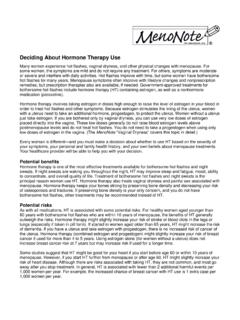
Transcription of The Greene Climacteric Scale
1 The GreeneClimactericScaleTrack your menopausal symptoms with this doctor-approved tableThere are so many symptoms associated with the menopause that it s sometimes hard to keep track. We have hormone receptors in cells all over our bodies so the changes in our hormones can affect many of our bodily systems, even ones we wouldn t expect. This simple tracking tool is a great way to measure your menopausal symptoms. This table is called the Greene Climacteric Scale , named after the doctor who devised it. It tracks a comprehensive list of 21 symptoms that are often associated with the menopause , including ones we might not know to look out for, such as those that affect our hands and feet. The four part grading system affords a bit more flexibility for how you re feeling than the yes or no questions that are often offered. It s also great for tracking the changes in how we feel.
2 The first eleven questions look at psychological symptoms, looking at the ways the menopause can affect our brains and how we feel. The next seven questions are part of the somatic Scale , or the symptoms that affect our bodies physically. This helps to document how the sensations in our bodies are changing. The final questions are called vasomotor symptoms, meaning that they are related to the way our blood vessels are working. Keeping this table handy can help you keep track of symptoms that might be related to hormone changes. Using it through the menopause and perimenopause can help you to notice how many of the boxes are shifting to the right over time, even if it may seem gradual from day to day. And keep in mind there are other symptoms you might like to note alongside too, such as dizziness, tinnitus, recurrent urinary tract infections (UTIs), incontinence, vaginal dryness, a burning mouth, itchy skin and dry table can be extremely helpful to take to a doctor when you are seeking an HRT prescription.
3 Showing which symptoms you are suffering from using this widely recognised format might help medical professionals to better understand your symptom profile and the changes in your body over time. The menopause Doctor, Dr Louise Newson, recommends the use of the table before seeing a specialist and after, to track the efficacy of treatments. How does it work? JUST sure if HRT is for you? Be sure to download Liz s bestselling ebook The Truth about HRT. This comprehensive guide includes the myths and facts about HRT, a medic-approved look at the risks and benefits and guidance on how to speak to your GP. SymptomsNot at allA littleQuite oftenAll the timeDo you ever feel your heart beating quickly or pounding?Do you feel tense or nervous?Do you have difficulty sleeping? Either getting to sleep or waking up in the night?Do you often feel excitable?
4 Are you anxious or experiencing panic at-tacks?Do you have difficulty concentrating?Are you tired or lacking in energy during the day?Have you experienced a lack of interest in things and activities?Do you often feel unhappy or depressed?Are you experiencing crying spells in your day to day life?Are you irritable with your family, friends and people you come into contact with?Do you ever feel pressure or a tightness in your head?Do parts of your body feel numb?Are you experiencing headaches?Do you feel pains or aches in your muscles and joints?Do you ever experience a loss of feeling or numbness in your hands and feet?Do you ever have difficulty breathing?Are you experiencing hot flushes?Do you sweat in the night?Has your libido changed? Have you lost interest in sex? Greene , J. G. (1976) A factor analytic study of Climacteric symptoms. Journal of Psychosomatic Research, 20, 425 , J.
5 G. (1984) The Social and Psychological Origins of the Climacteric Syndrome. (Chapter 7 Methodological Issues in Climacteric Research). Gower: Aldershot, , J. G. (1990) Factor Analyses of Climacteric Symptoms: Toward a Consensual Measure. Unpublished Report. Department of Psychological Medicine, University of , J. G. and Cooke, D. J. (1980) Life stress and symptoms at the Climacteric . British Journal of Psychiatry, 136, 486 , J. G. (1983) Bereavement and social support at the Climacteric . Maturitas, 5, 115 , J. G. and Hart, D. M. (1987) Evaluation of a psychological treatment programme for Climacteric women. Maturitas, 9, 41 , M. G., Hart, D. M. and Forrest, C. A. (1983) Hormonal treatments of sexual unresponsiveness in post menopausal women: a comparative study. British Journal of Obstetrics and Gynaecology, 90, 361 366. J. G. Greene Department of Clinical Psychology Gartnavel Royal Hospital Glasgow G12 OXH United KingdomReferences