Transcription of THE INTERNET STROKE CENTER
1 THE INTERNET STROKE CENTER . PRESENTATIONS AND DISCUSSIONS ON STROKE MANAGEMENT. Anticoagulation in Acute Ischemic STROKE William J. Powers, Departments of Neurology and Radiology Washington University School of Medicine STROKE CENTER at Barnes-Jewish Hospital TABLE OF CONTENTS. An Introduction to Heparin 2. Clinical Trials of Anticoagulation in STROKE 4. Additional Studies 6. Additional Studies and Conclusions 8. References 10. 1. An Introduction to Heparin What is Heparin? Heterogeneous collection of straight chain anionic sulfated mucopolysaccharides usually obtained from animal lung or intestine Potentiates activity of antithrombin III - an endogenous inhibitor of coagulation factors IIa, IXa and Xa Binds to platelets and plasma proteins Heparinoids and Low Molecular Weight Heparinseparin Pharmacological Reduced anti-IIa e ect, primary e ect on Xa Reduced platelet interaction Reduced plasma protein binding Clinical Assay activity as anti-Xa units Longer half-life Reduced bleeding Intravenous Heparin for Partial Stable STROKE 225 patients with acute ischemic STROKE and partial motor deficits Onset within 48 hours Exclusions: Progression within 1 hour Diastolic BP > 110.
2 Cardiac source 2. Progression at 7 days Heparin - 19/112 (17%). Placebo - 22/113 ( ). p=.62 - 95% CI to + No di erence in number improved, overall functional status or death Late Results Three months No di erence in functional activity level One year Higher mortality in heparin group (p<.01). No di erence in functional activity level Source: Ann Internal Med 1986: 105:825-828. 3. Clinical Trials of Anticoagulation in STROKE Recently Published Clinical Trials International STROKE Trial (IST). Lancet 1997; 349: 1569-1581. Hong Kong Nadroparin Trial (HK). New England Journal of Medicine 1995; 333:1588-1593. Trial of ORG 10172 in Acute STROKE Treatment (TOAST). Journal of the American Medical Association 1998; 279: 1588-1593.
3 Trial Format IST HK TOAST. Entry <48 hrs <48 hrs <24 hrs Endpoint Dead/Dependent Dead/Dependent Good Duration 6 months 6 months 3 months Drug Heparin Nadroparin ORG 10172. Class LMWH Heparinoid Dose 5000 SC BID 4100 SC QD 7200 IV/day 12,500 SC BID 4100 SC BID. Time 14 days 10 days 7 days Recurrent Ischemic STROKE IST HK TOAST. Time 14 days 10 days 7 days HD 2% LD 1%. Control 1% 4. Percent with Poor Outcome IST HK TOAST. HD 45% *. LD 52%. Control 65% *. Results Negative p=.007 Negative Intracranial Hemorrhage IST HK TOAST. Time 14 days 10 days 10 days HD 0% LD 2%. Control * *p<.05. Major Extracranial Hemorrhage IST HK TOAST. Time 14 days 10 days 10 days HD 2% 0% 5%. LD 0%. Control * 1% *p<.05 HK data for major GI hemorrhages only 5.
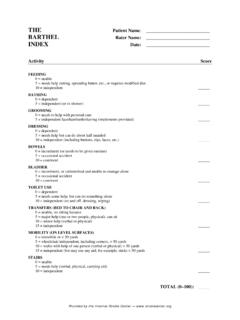
4 Additional Studies Fraxiparine in Ischemic STROKE Study Death / Dependency at Six Months Placebo LD HD. Number 250 272 245. Death 68 73 73. Barthel <85 74 82 75. Combined Fraxiparine is the proprietary name for nadroparin Source: New England Journal of Medicine 1995 Dec 14;333(24):1588-1593. Heparin Complications in Patients with Cerebrovascular Disease Symptomatic CNS hemorrhage in 1-4%. Serious non-CNS hemorrhage in 2-3%. Sources: Rothrock & Hart: Annals of Internal Medicine 1991; 115:885-895. Camerlingo et al: Archives of Neurology 1994; 51:462-467. Anticoagulant Treatment in Progressing STROKE Unblinded, randomized trial of heparin (125 mg IV x1, IM q6H x 2) then phenindione PT 2-3x control for 3 weeks. Number recovered or improved at 6 months: Control 19/38.
5 Anticoagulation 26/38 (p=.16). Source: British Medical Journal 1961 2:70-73. Anticoagulant Therapy in Thrombosis in Evolution Unblinded, randomized trial of heparin (50 mg IV q4h if < 1week until dicumarol therapeutic) then dicumarol for PT 15-25%. Progression of deficit: 1 month - control 10/67 vs Rx 8/61. 6 months - control 13/67 vs Rx 8/61. 6. 12 months - control 18/67 vs Rx 9/61. Source: Fisher, Neurology 1961 11:119-131, Baker et al, Neurology 1962 12:823-835. Heparin Treatment of Progressing STROKE -I. Prospective study of 36 patients who worsened after admission and were then treated with heparin for 7 hours to 21 days. Further progression: Carotid 13/19. Vertebrobasilar 2/8. Lacunar 2/9. Source: Haley et al: STROKE 1988; 19:10-14.
6 Heparin Treatment of Progressing STROKE -II. Retrospective chart review of 69 patients: 27 (39%) continued to deteriorate 2 due to CNS hemorrhage 12 (17%) stabilized 30 (44%) improved 10 (14%) developed hemorrhagic side e ects Source: Slivka & Levy, STROKE 1990; 21:1657-1662. 7. Additional Studies and Conclusions Cerebral Embolism Study Group Un-blinded, prospective randomized study of clinically diagnosed cardio-embolic STROKE within 48. hours treated with heparin for 48 hours then warfarin. Results at 14 days: STROKE - control 2/21 vs Rx 0/24. Death - control 2/21 vs Rx 0/24. Source: STROKE 1983; 14:668-670-1662. International STROKE Trial Atrial Fibrillation Heparin Control Number randomized 1557 1612. Recurrent Ischemic STROKE Hemorrhagic STROKE Total New STROKE Data for first 14 days Source: Lancet 1997; 349:1569-1581.
7 8. Trial of ORG 10172 in Acute STROKE Treatment (TOAST). Cardioembolism ORG 1072 Control Number randomized 143 129. Recurrent STROKE 0% Data for first 7 days Source: Journal of the American Medical Association 1998; 279: 1588-1593. Retrospective STROKE Subtype Analysis Five subtypes analyzed for two di erent endpoints in addition to 4 analyses for total group = 14. analyses p < .05/14 = p< .0036. Large artery atherosclerosis Favorable outcome p=.04. Very favorable outcome p=.02. No significant di erence Cardiac Embolism Conclusions IST showed no benefit for the subgroup with atrial fibrillation TOAST showed no benefit for the subgroup with cardioembolism Summary Patients with lower extremity paralysis should receive DVT prophylaxis with low dose anticoagulation.
8 Anticoagulation with heparin or heparin like drugs has no beneficial e ect on: Progression or early recurrence Long term functional status Any subgroup of patients 9. References International STROKE Trial (IST). Lancet 1997; 349: 1569-1581. Hong Kong Nadroparin Trial: "Low-molecular-weight heparin for the treatment of acute ischemic STROKE ". New England Journal of Medicine 1995; 333:1588-1593. Trial of ORG 10172 in Acute STROKE Treatment (TOAST). Journal of the American medical Association 1998; 279: 1265-1272. Rothrock & Hart "Antithrombotic therapy in cerebrovascular disease.". Annals of Internal Medicine 1991; 115:885-895. Camerlingo et al. "Immediate anticoagulation with heparin for first-ever ischemic STROKE in the carotid artery territories observed within 5 hours of onset.
9 ". Archives of Neurology 1994; 51:462-467. Haley et al. "Failure of heparin to prevent progression in progressing ischemic infarction.". STROKE 1988; 19:10-14. Duke RJ, Bloch RF, Turpie AG, Trebilcock R, Bayer N: "Intravenous heparin for the prevention of STROKE progression in acute partial stable STROKE .". Annals of Internal Medicine 1986; 105:825-828. Slivka & Levy: "Natural history of progressive ischemic STROKE in a population treated with heparin.". STROKE 1990; 21:1657-1662. STROKE 1983; 14:668-670-1662. Baker et al: Neurology 1962 12:823-835. Carter: Brit Med J 1961 2:70-73. Fisher: Neurology 1961 11:119-131. 10.