Example: dental hygienist
This presentation is for information purposes
Asbestos: chrysotile, amosite, crocidolite, tremolite, anthophyllite, actinolite, and any of these minerals that have been chemically altered; includes PACM • ACM: "asbestos-containing material," any material containing > 1% asbestos • PACM: "presumed asbestos-containing material" • Surfacing Material: material that is sprayed, troweled-
Tags:
Information
Domain:
Source:
Link to this page:
Documents from same domain
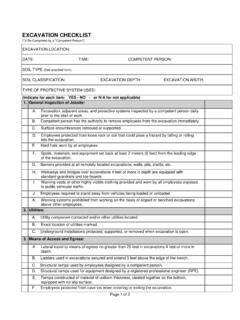
EXCAVATION CHK LST
ors.od.nih.govinto the excavation. rolling E. Hard hats worn by all employees. F. Spoils, materials, and equipment set back at least of the excavation. 2 meters (6 feet) from the leading edge G. Barriers provided at all remotely located excavations, wells, pits, shafts, etc. H. Walkways and bridges over excavations 4 feet or more in depth are equipped
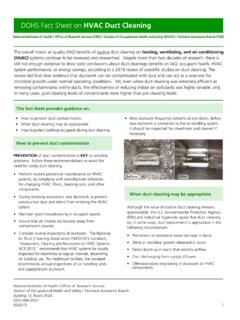
HVAC Duct Cleaning - National Institutes of Health
ors.od.nih.govDivision of Occupational Health and Safety . The dirty filter/vent above indicate a cleaning is needed and should be performed by a professional . DOHS Fact Sheet on . HVAC Duct Cleaning . National Institutes of Health • Office of Research Services (ORS) • Division of Occupational Health and Safety (DOHS) • Technical Assistance Branch (TAB)
Contractor Health and Safety Requirements
ors.od.nih.gova. Contractor Safety Program Assessment: The NIH is committed to providing a safe environment for its employees, guests, and patients. Safety, as demonstrated during previous contracts, may be used in the past performance evaluation of a Contractor. Contractors are required to enroll in the Contractor Safety Assessment Program (CSAP).
Guidance for the Selection of Laboratory Coats
ors.od.nih.govThis reference document provides a general overview for selection of laboratory coats. It does not alter or determine compliance responsibilities in OSHA standards or NIH’s Manual Chapter 1340. Because interpretations and policy may change over time, you should your consult with your Institute's Safety and Health Specialist.
Protocol for Use and Maintenance of Oxygen Monitoring …
ors.od.nih.govdisplacement of oxygen. At a minimum, the following factors should be used in determining if a device should be installed: manufacturer (e.g., magnet) guidance, volume of gas used, location of gas, and air changes/hour in the room/area. The 2008 NIH DRM notes that both ‘carbon dioxide manifold rooms…
ACTIVITY HAZARD ANALYSIS (AHA)
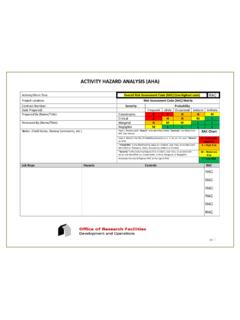
ors.od.nih.govACTIVITY HAZARD ANALYSIS (AHA) Activity/Work Task: Overall Risk Assessment Code (RAC) (Use highest code) Project Location: Risk Assessment Code (RAC) Matrix . ... " is the likelihood to cause an incident, near miss, or accident and identified as: Frequent, Likely, Occasional, Seldom or Unlikely . H = High Risk "
Computer Workstation Ergonomics: Self-Assessment Checklist
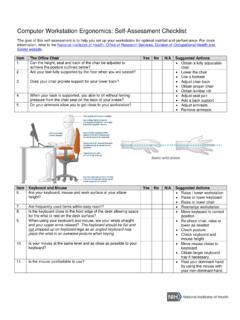
ors.od.nih.govSelf Assessment Computer Workstation Ergonomics: Self-Assessment Checklist . The goal of this self-assessment is to help you set up your workstation for optimal comfort and performance. For more information, refer to the . National Institutes of Health, Office of Research Services, Division of Occupational Health and Safety website.
Chemical Segregation Table
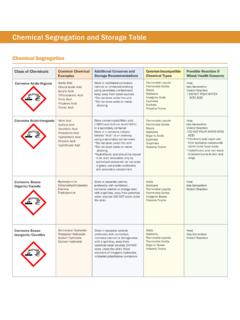
ors.od.nih.govChemical Segregation. Common Chemical Additional Concerns and Common Incompatible Possible Reaction if Examples Storage Recommendations Chemicals Types Mixed/Health Concerns . Class of Chemicals . Flammable Liquids . Ethanol, Ethyl Acetate, Methanol, Acetone, Benzene, Xylene, Toluene Diethyl Ether Tetrahydrofuran Acetonitrile Glacial Acetic Acid
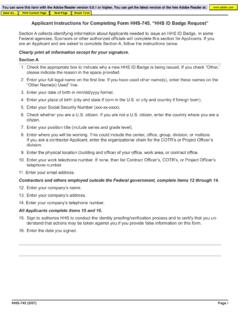
Applicant Instructions for Completing Form HHS-745, “HHS ...
ors.od.nih.govApplicant Instructions for Completing Form HHS-745, “HHS ID Badge Request” Section A collects identifying information about Applicants needed to issue an HHS ID Badge. In some Federal agencies, Sponsors or other authorized offi cials will complete this section for Applicants. If …
NIH Chemical Hygiene Plan
ors.od.nih.govBSC Biological Safety Cabinets CFH Chemical Fume Hood CFR Code of Federal Regulations CHO Chemical Hygiene Officer ... eyes, or mucus membranes. Physical hazards include, but are not limited to, chemicals which are explosive, flammable, or corrosive. (Definition listed in . Appendix F “Glossary of Terms.”) III.
Related documents

A Guide to the New York City Asbestos Regulations
www1.nyc.govof asbestos containing material. Under the law governing asbestos abatement, if you are conducting an asbestos project in New York City, you must notify DEP and follow all its rules and regulations. The Asbestos Reporting and Tracking System (ARTS) If you have an “Abatement Project,” you will need
Introduction to Asbestos essentials
www.hse.gov.ukDisturbing asbestos-containing material (ACM) can release invisible fibres. Once in the air, fibres can be breathed in and cause lung diseases including: • mesothelioma – a cancer of the linings to the lungs and stomach; • lung cancer; • other serious diseases such as asbestosis – a scarring of lung tissue. There are no sudden changes
Asbestos-containing Materials (ACMs) in Workplaces
www.hsa.ie‘Asbestos-containing material (ACM)’ means any material or article that, as part of its design, contains asbestos; ‘Asbestos-contaminated dust or debris (ACD)‘ means dust or debris that has settled within a workplace and is (or is assumed to be) contaminated with asbestos; ‘Asbestos Regulations’ mean the Safety, Health
Asbestos Standard for the Construction Industry
www.osha.govRemoving or encapsulating asbestos-containing material (ACM). Constructing, altering, repairing, maintaining, or renovating asbestos-containing structures or substrates. Installing asbestos-containing products. Cleaning up asbestos spills/emergencies. Transporting, disposing, storing, containing, and

Asbestos: Worker and Employer Guide to Hazards And ...
www.niehs.nih.gov• Workers perform work that disturbs asbestos-containing material (ACM) or presumed asbestos-containing material (PACM) for a combined total of 30 or more days per year; • For workers that wear negative-pressure respirators - the employer must provide a medical evaluation in accordance with Appendix D of OSHA’s asbestos standards.
ASBESTOS (bulk) by PLM 9002 - Centers for Disease Control ...
www.cdc.govmay be asbestos, to preclude exposure to the person collecting the sample and minimize the disruption to the parent material [3]. Disposal of asbestos-containing materials should follow EPA Guidelines [4]. SAMPLING: 1. Place 1 to 10 g of …
Control of Asbestos Regulations 2012 - HSE
www.hse.gov.ukasbestos work and the management of asbestos in buildings. It also includes information on inspection. Introduction . The Control of Asbestos Regulations 2012, together with ACOP L143 ‘Managing and working asbestos’[1] set out the framework for controlling exposure to asbestos and managing asbestos in buildings.