Transcription of Toy Safety and Selection: Choose Developmentally ...
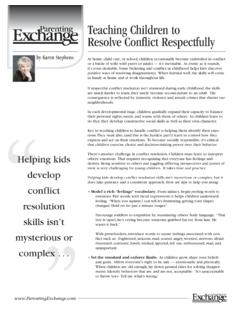
1 Toy Safety and selection : Choose DevelopmentallyAppropriate toys for Safer PlayThere s more to choosing good toys for kids than considering price or toys fit your child s developmental abilities and are constructed withsafety in when well supervised, young children can wiggle into danger. Select safetoys that offer worthwhile play and learning experiences, while also remember, sometimes young children get into older sibling s toys . Teacholder children how to store their toys safely for privacy and siblings below are things to consider as you select safe children s toys .
2 Followingthose tips, you ll find a brief listing of best toys for developmental abilities withinvarying age Toy selection Even if a toy is a gift to your child, or a prize won at an event, read toy boxlabeling before allowing use. Note the toy s age and Safety recommendations,but don t assume they accurately apply to your child. Be familiar with yourchild s personal abilities and inclinations when estimating Safety . Be aware of recalled toys so you don t buy or accept one. (A listing of web siteaddresses is at this article s end.) toys should pass a cylinder parts tester or empty toilet paper roll test.
3 toys forchildren aged two years and under, or older or disabled children very proneto mouthing toys , should neverfit into the tester or they could lodge in thewindpipe to cause choking. Toy construction should prevent hazards such as puncture, choking, cuts,strangulation, burns, shock, electrocution, or drowning. Require smooth, well-sealed edges. Avoid glass, sharp metal edges, and rigid, fragile plastic. Toyswith smaller removable parts should be purchased only for children agedthree years and older. For those under age eight years, avoid buying toys thathave loose strings, straps, or cords longer than 7 inches.
4 Balloons, especiallywhen popped, can cause choking for infants through preschoolers. Batteryor electrical toys should be limited to children age eight years and older. Purchase toys or dress up clothing made of fire retardant materials and onlypurchase non-toxic art materials. Children can mistake a real weapon for a toy. So that children learn not toapproach or play with real weapons, avoid buying look-alike toy weapons,such as guns and knives. Even cap guns and BB guns pose dangers; resistbuying them. If a toy makes sound, make sure it won t damage hearing.
5 And remember,fireworks are never a child s toy. Toy packaging can be hazardous, too. After a toy is opened, safely discard allpacking material out of children s Karen StephensChildren love hands-on toysthat engagetheir minds andsenses, but aplain old fun quotient matters a lot,too! Select toys that are easy to maintain. Damage can occur during play, so regularly check children s toys for or discard broken ones, never donate them to a charity or a child care selection by Age and AbilitiesBy observing your child s play, you ll know what types of toys appeal to them most and will respond to their currentabilities.
6 Gender-neutral toys that are free of stereotypes offer broader play opportunities. Peaceful toys thatencourage cooperation are more likely to support your family s values. Children love hands-on toys that engagetheir mind and senses; and remember, select toys that kids will have fun playing with, too! The following are popular toys by age group. Close supervision is your best Safety insurance. And after play, teachchildren to put toys safely away to limit trip hazards for the whole up to 12 MonthsSoft cuddly items, like stuffed animals, cloth dolls, or puppets (without detachable button noses and eyes), waterplay toys for bath time, crib gyms, floor activity quilts, soft mats to pat, plastic-coated books, rattles or sound-makerslike squeak : Ages 1 year up to 2 yearsItems listed immediately above, plus: cloth-covered foam blocks, cardboard blocks, stacking toys , push-pull toys ,pop-up toys , board books, two to four piece.
7 Ages 2 through 5 yearsItems listed immediately above, plus: balls, wooden blocks, construction toys such as Legos , pretend-play toys ,nesting table toys , wheeled toys , non-toxic art and clay-like modeling materials, simple board and card games, up to16 piece puzzles, train sets or activity play stations such as airport, farm, or : Ages 6 to 10 yearsItems listed immediately above, plus: complex card and board games, arts and crafts kits, car or airplane model kits,natural science collections, hand-held electronic/computer games, jump rope, computer, CD player, bike, chapterbooks and short novels, sports equipment, musical instruments, jigsaw on the Consumer Product Safety Commission Toy Recall Alerts SAFE KIDS Campaign for Small Parts/Choke Tester CylinderChildren s toy stores, Discovery toys , family Safety web sites and catalogs, fire or police department.
8 Some toys fit your child s developmental abilitiesand are constructed with Safety in the Author Karen Stephens is director of Illinois State University Child Care Center and instructor in childdevelopment for the ISU Family and Consumer Sciences Department. For nine years she wrote a weekly parenting column inher local newspaper. Karen has authored early care and education books and is a frequent contributor to Exchange. Karen Stephens 2007