Transcription of WASHINGTON
1 ENERGY RESOURCES MINERAL RESOURCE OF MAPS WASHINGTON BY WAYNE S. MOEN METALLIC MINERALS GM-22 1978 Reprinted 1986 WASHINGTON STATE DEPARTMENT OF ~~ Natural Resources 811cm lloy le commlssloner ol Publlc An Steams Supervlsor Dlvwon 0 1 GeoloQv and Earth Raymond Lasmanls. State Geologtst Printed in the United States of America PITS AND QUARRIES These 4 million-scale maps show locations metallic and nonmetallic minerals, coal fie! sand and gravel pits, stone quarries, and art of potential oil and gas and geothermal sources. Over 500 metallic and nonmetallic posits and almost 450 pits and quarries , shown. For sale by the Department of Natural Resources, Olympia, WASHINGTON Price $ .14 Tax T ,..+ .. I t""'l '"' I STATE OF WASHINGTON DEPARTMENT OF NATURAL RESOURCES Division of Geology and Earth Resources TO ACCOMPANY GM-22 MINERAL RESOURCE MAPS OF WASHINGTON By Wayne S.
2 Moen INTRODUCTION These 4 mineral resource maps of WASHINGTON are the outgrowth of continued demand for maps show-ing the distribution of the state's mineral and energy resources. Prior to the publication of these maps no single map, at a reasonable scale, was available that showed the overall distribution of the different mineral resources. One of the best known sources of mineral maps is in WASHINGTON Division of Geology and Earth Resources Bulletin 37, "Inventory of WASHINGTON Min-erals." This two-part bulletin contains 65 separate maps, at a scale of 1 inch to 25 miles, which shows the locations of most of the state's metallic and non-metallic minerals. This bulletin was used extensively in the compilation of the new mineral resource maps. Mineral resources of WASHINGTON also appear in "Mineral and Water Resources of WASHINGTON " ( Geological Survey, 1966).
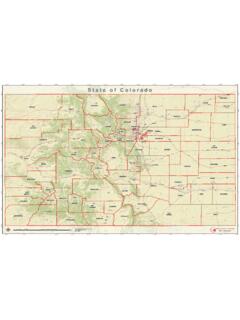
3 Many mineral occurrences in this report are shown on 35 maps at a scale of 1 inch to 60 miles; however, this publication is no longer in print and is out of reach to most people. Many other maps, at a wide variety of scales, may be found in a large number of geologic publications; however, very few of these maps are intended to show the overall distribution of the state's mineral and energy resources. The four new mineral and energy resource (million-scale) maps show locations of metallic and nonmetallic minerals, coal fields, sand and gravel pits, stone quarries, exploratory oil and gas wells, thermal springs, and areas of potential oil and gas and geothermal resources. Over 500 metallic and non-metallic occurrences and about 470 pits and quarries are shown. For convenience of use, the mineral and energy resource data appear on four sheets as fol lows: Sheet 1-Metallic mineral resources Sheet 2-Nonmetallic mineral resources Sheet 3-Sand and gravel pits and stone quarries Sheet 4-Energy resources As can be seen from the maps, every county in WASHINGTON contains minerals of one type or other.
4 Sand, gravel, and stone are widespread and may be found in almost every county. For the most part, metallic occurrences are confined to mountainous regions, whereas deposits of coal and potential oil and gas areas are confined chiefly to the lowland area of the Puget Lowlands of western WASHINGTON . In no way are the mineral and energy resource maps intended to show every occurrence in the state for it would be impossible on million-scale maps to plot a II mineral occurrences. I have, however, attempted to show all past and present mineral pro-ducers, as well as mineral deposits that have yet to be exploited. In doing so I believe that the maps present a fairly accurate picture of the distribution of minerals and energy resources in WASHINGTON . Several excellent publications were used in compiling the data shown on the maps.
5 For the benefit of individuals who seek more information on the mineral and energy re-sources, these publications are cited in the discussion that follows. MAP SHEET 1-METALLIC MINERALS Over 3,000 occurrences, which contain one or more of 31 different metals, are present in Wash-ington. Of the 31 metals, 17 have been produced in the past, or appear to be present in significant amounts; these metals, which are represented by about 500 oc-currences, are shown on sheet l. As can be seen on the map sheet, the occurrences are not randomly dis-tributed throughout the state, but are grouped into definite areas that, for the most part, fall in the mountainous regions of the state. In the northeastern part of the state, the metal occurrences are mainly in the Okanogan Highlands physiographic province. In the central part of the state, they occur mainly in the Cascade Mountains province, which extends from the Canadian border to the Columbia River.
6 In the far western part of the state, metals occur mainly in the Olympic Mountains province. Geologically, the metal occurrences appear to be related chiefly to ig-neous rocks. Base and precious metals deposits pre-dominate in the Okanogan Highlands and Cascade Mountains provinces and coincide with granitic rocks. In the Olympic Mountains province, manganese pre-dominates and coincides with volcanic rocks that bor-der the metasedimentary core of the Olympics. References Huntting, M. T ., 1956, Inventory of WASHINGTON minerals, Part 2, Metallic minerals: WASHINGTON Division of Mines and Geology Bulletin 37, v. 1, 428 p., v. 2, 67 p. United States Geological Survey, 1966, Mineral and water resources of WASHINGTON : WASHINGTON Division of Mines and Geology Reprint 9, 436 p. MAP SHEET 2-NONMETALLIC MINERALS WASHINGTON contains a variety of nonmetallic minerals that are distributed over a wider area of the state than the metallic minerals.
7 As can be seen from map sheet 2, most counties contain one or more occur-rences of nonmetallic minerals. About 50 nonmetallic minerals are present at over 3,500 localities. Of these 50 minerals, 27 have been mined or are present in significant amounts; these occurrences appear on sheet 2. This does not include stone quarries for which rock is mined for concrete and bitumen aggregate or road ballast. Unlike metallic minerals that appear to be related mainly to igneous rocks, the nonmetallic min-erals occur in almost all rock types found in Washing-ton. Whereas on the average of only four metal mines in recent years were major full-time operating mines, upward of 35 nonmetallic properties operate yearly in WASHINGTON . References Valentine, G. M., 1960, Inventory of WASHINGTON minerals, Part 1, Nonmetallic minerals, 2nd edition, revised by Marshall T.
8 Huntting: WASHINGTON Division of Mines and Geology Bulletin 37, v. 1, 175 p., v. 2, 83 p. United States Geological Survey, 1966, Mineral and water resources of WASHINGTON : WASHINGTON Division of Mines and Geology Reprint 9, 436 p. MAP SHEET 3-SAND AND GRAVEL PITS AND STONE QUARRIES Almost every county in the state contains commercial deposits of sand, gravel, and stone. As such, these materials represent the state's major min-eral products. In 1977, around 120 stone quarries and 2 over 350 sand and gravel pits were in operation. As can be seen on map sheet 3, the bulk of the sand and gravel and stone operations occur in the populous regions of the state where great amounts of these mate-rials are required for construction purposes. Although extensive deposits of sand, gravel, and stone occur elsewhere in the state, high freight rates make it im- practical to transp:>rt these low-cast materials over great distances.
9 Sand and gravel in Woshington is mainly of glacial origin, having been formed as glacial moraines or as outwash material from continental and alpine glaciers. In general, the best dep:>sits occur in the Puget Lowlands or in valleys where the valley is wide enough and has moderate to low grades that permit accumulation. In short narrow steep-graded valleys, few dep:>sits of sand and gravel can be found. Vast areas of the state contain dep:>sits of stone but as in the case of sand and gravel, the low cost of stone requires that the quarries be as near as p:>ssible to existing markets. Roughly 60 percent of the stone quarried in WASHINGTON for aggregate and road ballast consists of basalt and andesite. References Valentine, G. M., 1960, Inventory of WASHINGTON minerals, Port 1, Nonmetallic minerals, 2nd edition, revised by Marshall T.
10 Huntting: WASHINGTON Division of Mines and Geology Bulletin 37, v. 1, 175 p., v. 2, 83 p. Milne, Clint; Walker, C. W., 1978, Directory of WASHINGTON mining operations, 1977: WASHINGTON Division of Geology and Earth Resources Information Circular 62 (in print). Moen, W. S., 1967, Building stone of WASHINGTON : WASHINGTON Division of Mines and Geology Bulletin 55, 85 p. MAP SHEET 4-ENERGY RESOURCES The energy resource map of WASHINGTON shows locations of coal fields, limits of coal-bearing rocks, areas favorable for the occurrence of oil and gas, exploratory oil and gas wells, thermal springs, and areas of geothermal potential. WASHINGTON 's greatest energy resource-hydro-is not shown. Uranium, which is also an energy resource, appears on sheet l, "Metallic minerals of WASHINGTON ." As can be seen on map sheet 4, most of the state's coal fields, as well as areas of potential oil and gas, occur in western WASHINGTON in areas under-lain by sedimentary rocks.