Answer Key Chapter 1 - AHIMA
Instructor's Guide AC210610: Basic CPT/HCPCS Exercises Page 1 of 101 Answer Key Chapter 1 Introduction to Clinical Coding 1.1: Self-Assessment Exercise 1. The patient is seen as an outpatient for a bilateral mammogram.
Download Answer Key Chapter 1 - AHIMA

Information
Domain:
Source:
Link to this page:
Documents from same domain
Coding Interventional Radiology Services
campus.ahima.orgTable of Contents AHIMA 2008 Audio Seminar Series Disclaimer .....i
Cardiac Catheterization: Successful Coding and ...
campus.ahima.orgCardiac Catheterization: Successful Coding and Chargemaster Practices AHIMA 2009 Audio Seminar Series 2 Notes/Comments/Questions National Coding Standards
2000 AHIMA Seminar Registration Form
campus.ahima.orgAHIMA Webinar Registration Form—1 . Visit www.ahima.org for more details . AHIMA WEBINAR REGISTRATION FORM – Register Today and Save! Review our versatile pricing structure for more saving opportunities
Facility Coding for ED Services
campus.ahima.orgFacility Coding for ED Services AHIMA 2008 Audio Seminar Series 5 Notes/Comments/Questions HIM Management Issues in the ED Statistical review: • % Admits • % Observation
Coding Pain Management Services
campus.ahima.orgTable of Contents AHIMA 2008 Audio Seminar Series Disclaimer .....i
Procedure Coding for Radiation Oncology
campus.ahima.orgProcedure Coding for Radiation Oncology AHIMA 2009 Audio Seminar Series 1 Notes/Comments/Questions Program Objectives Provide clinical information as it relates to treatments in Radiation
Radiology Coding
campus.ahima.orgFaculty AHIMA 2007 Audio Seminar Series ii Stacie L. Buck, RHIA, CCS-P, LHRM, RCC Ms. Buck has served in several different roles during her 14-year career in health
Benchmarking Coding Productivity
campus.ahima.orgBenchmarking Coding Productivity AHIMA 2008 Audio Seminar Series 3 Notes/Comments/Questions Workgroup Participants • Productivity: • Victoria Chesnik, RHIT • Pamela Heller, RHIA, CCS-P

CPT: Surgery Coding Guidelines
campus.ahima.orgFaculty AHIMA 2007 Audio Seminar Series ii Susan Von Kirchoff, MEd, RHIA, CCS, CCS-P Ms. Kirchoff has seen all sides of the healthcare environment from teacher, to coder,
Coding Central Venous Access Devices
campus.ahima.orgCoding Central Venous Access Devices AHIMA 2008 Audio Seminar Series 2 Notes/Comments/Questions Polling Question #1 Using ultrasound guidance the …
Related documents
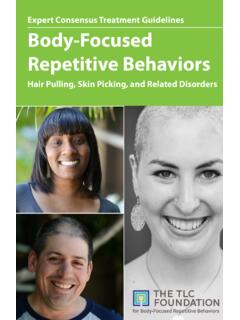
Expert Consensus Treatment Guidelines - BFRB
www.bfrb.orgrepetitive manipulation of the skin causing tissue damage. According to the Diagnostic and Statistical Manual of Mental Disorders (5th Edition) of the American Psychiatric Association, excoriation disorder is defined as meeting the following criteria: • Recurrent picking at the skin resulting in skin lesions.
Conduct Disorder 312.8x (F91.x) - images.pearsonclinical.com
images.pearsonclinical.comA. A repetitive and persistent pattern of behavior in which the basic rights of others or major age-appropriate societal norms or rules are violated, as manifested by the presence of at least three of the following 15 criteria in the past 12 months from any of the categories below, with at least one criterion present in the past 6 months:

Security Control Standards Catalog V1
publishingext.dir.texas.govThe control catalog specifies the minimum information security requirements that state organizations must use to provide the appropriate levels of information security according to risk levels.
Autism Spectrum Disorder 299.00 (F84.0)
images.pearsonclinical.comSeverity is based on social communication impairments and restricted, repetitive patterns of behavior (see Table 1). B. Restricted, repetitive patterns of behavior, interests, or activities, as manifested by at least two of the following, currently or by history (examples are illustrative, not exhaustive; see text): 1.
Autism Spectrum Disorder 299.00 (F84.0)
images.pearsonclinical.comSeverity is based on social communication impairments and restricted, repetitive patterns of behavior (see Table 1). B. Restricted, repetitive patterns of behavior, interests, or activities, as manifested by at least two of the following, currently or by history (examples are illustrative, not exhaustive; see text): 1.

Tendon Gliding Exercises Hand - OrthoNC
orthonc.com1501 North Bickett Blvd. Suite E ~ Louisburg, NC 27549 ~ Phone (919) 497-0445 ~ Fax (919) 497-0118 *If you have any questions about these guidelines – or …
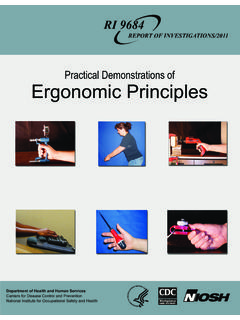
Practical Demonstrations of Ergonomic Principles
www.cdc.govRepetitive. Performing the same motions repeatedly over time. The severity of risk depends on the frequency of repetition, speed of the movement, number of muscle groups involved, and required force. Risk factor. An action and/or condition that may cause an injury or illness, or make an existing injury or illness worse.

Assessing vibration: a technical guideline
www.environment.nsw.gov.au2 Assessing vibration: a technical guideline Evaluation of human exposure to vibration in buildings (1 Hz to 80 Hz), ISO 2631.1–1997, Mechanical vibration and shock – Evaluation of
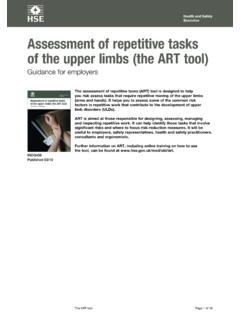
Assessment of repetitive tasks of the upper limbs (the ART ...
www.hse.gov.ukThe assessment of repetitive tasks (ART) tool is designed to help you risk assess tasks that require repetitive moving of the upper limbs (arms and hands). It helps you to assess some of the common risk factors in repetitive work that contribute …