CAUTI.ppt
infection protocol can be located. 5 . ... 5 . CFU/ml. The criteria numbered 2 and 4 have a urinary culture positive for ≥ 10. 3 . and <10. 5 . ... •Microorganisms seen on Gram stain of unspun urine Again, if the catheter was in place at the time of specimen collection, then urgency,
Download CAUTI.ppt

Information
Domain:
Source:
Link to this page:
Documents from same domain
School Chemistry Laboratory Safety Guide
www.cdc.govSchool Chemistry Laboratory Safety Guide. October 2006. U.S. Consumer Safety Product Commission DEPARTMENT OF HEALTH AND HUMAN SERVICES. Centers for Disease Control and Prevention
Biosafety in Microbiological and Biomedical …
www.cdc.goviii. Foreword. Biosafety in Microbiological and Biomedical Laboratories (BMBL) quickly became the cornerstone of biosafety practice and policy in the United States upon first
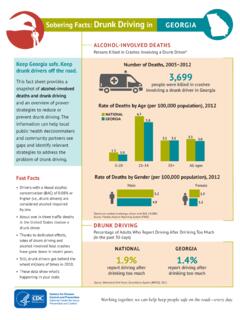
Sobering Facts: Drunk Driving in Georgia
www.cdc.govSobering Facts: Drunk Driving in GEORGIA Keep Georgia safe. Keep drunk drivers off the road. This fact sheet provides a snapshot of alcohol-involved deaths and drunk driving
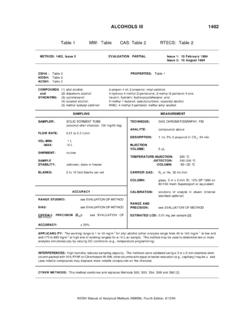
ALCOHOLS III 1402
www.cdc.govALCOHOLS III: METHOD 1402, Issue 2, dated 15 August 1994 - Page 3 of 4 a. Remove and discard back sorbent section of a media blank sampler. b. Inject a known amount of analyte or DE stock solution directly onto front sorbent section
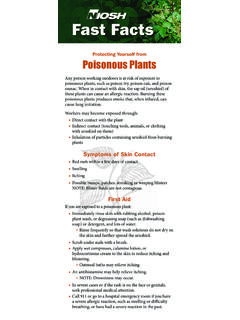
Fast Facts
www.cdc.govAny person working outdoors is at risk of exposure to poisonous plants, such as poison ivy, poison oak, and poison sumac. When in contact with skin, the sap oil (urushiol) of

Trans Fat: The Facts
www.cdc.gov• Read the Nutrition Facts label and ingredient list to compare foods. » Choose products with 0 grams trans fat. » Check the Ingredient List to see if there is any partially hydrogenated oil in the product.

ANTIBIOTIC RESISTANCE THREATS
www.cdc.govApr 23, 2013 · 6. ANTIBIOTIC RESISTANCE THREATS IN THE UNITED STATES, 2013. Executive Summary. Antibiotic Resistance Threats in the United States, 2013. is a snapshot of the complex problem
Chlorine Residual Testing
www.cdc.govChlorine Residual Testing Fact Sheet, CDC SWS Project 4 Methods to Test Free Chlorine in the Field in Developing Countries There are three main methods to test free chlorine residual in drinking water in the field
2018 Combined Recommended Immunization …
www.cdc.govRecommended Immunization Schedule for Children and Adolescents Aged 18 Years or Younger, UNITED STATES, 2018 Approved by the Advisory Committee on …
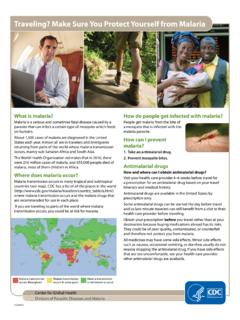
Traveling? Make Sure You Protect Yourself from …
www.cdc.govCS26201 Malaria transmission occurs throughout Malaria transmission occurs in some parts Malaria transmission is not known to occur Center for Global Health
Related documents
Samples, Forms, and Worksheets
conductingclinicalresearch.comVital signs 5 5 $3.00 $15.00 Blood draw 10 5 $8.00 $40.00 Lab processing 60 5 $50.00 $250.00 Adverse events recording 10 5 $8.00 $40.00 Concomitant meds recording 10 5 $8.00 $40.00 Patient diary review 20 5 $16.00 $80.00 Dispensing and accounting for study meds 30 5 $25.00 $125.00 Patient instruction 30 5 $25.00 $125.00
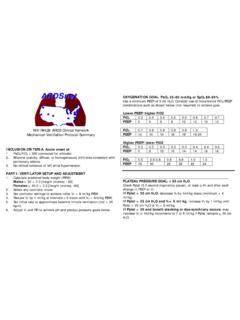
Ventilator Protocol - ARDS Net
www.ardsnet.org5. No neuromuscular blocking agents or blockade. B. SPONTANEOUS BREATHING TRIAL (SBT): If all above criteria are met and subject has been in the study for at least 12 hours, initiate a trial of UP TO 120 minutes of spontaneous breathing with FiO2 < 0.5 and PEEP < 5: 1. Place on T-piece, trach collar, or CPAP ≤ 5 cm H 2O with PS < 5 2.
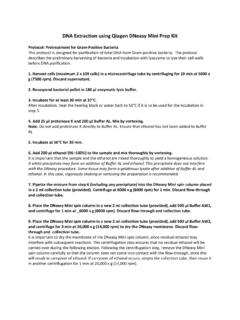
DNA Extraction using Qiagen DNeasy Mini Prep Kit
ag.purdue.eduProtocol: Pretreatment for Gram-Positive Bacteria . This protocol is designed for purification of total DNA from Gram-positive bacteria. The protocol describes the preliminary harvesting of bacteria and incubation with lysozyme to lyse their cell walls before DNA purification. 1.
Notes COMMON STAINING TECHNIQUE
nios.ac.inviolet stain because of the high amount of peptidoglycan in the cell wall. Gram-positive cell walls typically lack the outer membrane found in Gram-negative bacteria. Gram-negative bacteria are those bacteria that do not retain crystal violet dye in the Gram staining protocol. In a Gram stain test, a counter stain (commonly

Aspiration Pneumonitis/Pneumonia
www.ahrq.govIf no or minimal improvement and bacterial pneumonia is suspected, treat for 5–7 days. • Patients with aspiration events not treated initially with no improvement in 48–72 hours . o A proportion of patients ( 20–25%) may develop bacterial pneumonia 48–72 hours after an aspiration event.

Laboratory-identified Event Surveillance for Multidrug ...
www.cdc.govGram-stain positive organisms: • MRSA: Includes . S. aureus. cultured from any specimen source that tests oxacillin-resistant, cefoxitin-resistant, or methicillin-resistant by standard susceptibility testing methods, or any laboratory finding of MRSA (includes but not limited to PCR or other molecular based detection methods). • MSSA: Includes
Isolation &Characterization of Bacteria
www.gbiosciences.comThe primary stain used in this kit for the Gram staining is crystal violet; however methylene blue isan adequate substitute. The microorganisms (bacteria) that retain the primary crystal violet stain appear as apurple brown color under the microscope.The stained bacteria are referred to as Gram rpositive .
STAINING AND BACTERIAL CELL MORPHOLOGY I. …
www.sas.upenn.eduReagents of Gram Stain Because the Gram stain reaction is more widely used and studied than any other stain, it is also the most open to variation in protocol. Four reagents are used in the Gram procedure: 1. A primary stain--originally aniline-gentian violet was used, but this has been replaced by the more stable crystal violet. 2.