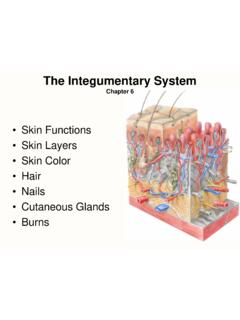
Chapter 7 The Integumentary System
The Integumentary System Chapter 6 •Skin Functions •Skin Layers •Skin Color •Hair •Nails •Cutaneous Glands •Burns . Functions of the Skin •Skin is a barrier to microbes, chemical irritants, water loss. •Vitamin D synthesis begins in skin exposed to UV light.
Download Chapter 7 The Integumentary System

Information
Domain:
Source:
Link to this page:
Documents from same domain

Chapter 14. CHEMICAL EQUILIBRIUM
web.gccaz.eduChapter 14. CHEMICAL EQUILIBRIUM 14.1 THE CONCEPT OF EQUILIBRIUM AND THE EQUILIBRIUM CONSTANT Many chemical reactions do not go to completion but instead attain a ...
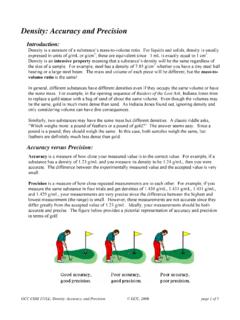
Density: Accuracy and Precision
web.gccaz.eduGCC CHM 151LL: Density: Accuracy, and Precision © GCC, 2008 page 4 of 5 glassware. ... 1. Obtain a set of 4 brass slugs and 1 aluminum slug. 2.
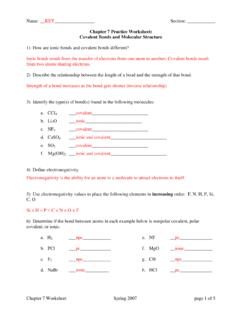
Chapter 7 Practice Worksheet: Covalent Bonds and Molecular ...
web.gccaz.eduChapter 7 Worksheet Spring 2007 page 1 of 5 Chapter 7 Practice Worksheet: Covalent Bonds and Molecular Structure 1) How are ionic bonds and covalent bonds different? ... f. Mg(OH) 2 ___ ionic and covalent _____ 4) Define electronegativity. Electronegativity is the ability for an atom in a molecule to attract electrons to itself. ...

Balancing Equations Worksheet KEY
web.gccaz.eduBalancing Equations Worksheet KEY 1. Zn (s) + 2 AgNO 3 (aq) ⇒ Zn(NO 3) 2 (aq) + 2 Ag (s) 2. N 2 (g) + 3 H 2 (g) ⇒ 2 NH 3 (g) 3. NaCl (aq) + AgC 2H 3O 2 (aq) ⇒ NaC 2H 3O 2 (aq) + AgCl (s) 4. 3 Mg(OH) 2 (aq) + 2 H 3PO 4 (aq) ⇒ 6 H 2O (l) + Mg 3(PO 4 ) 2 (aq) 5. 2 HNO 3 (aq) + Ni (s) ⇒ Ni(NO 3) 2 (aq) + H 2 (g) 6. Ba(HCO 3) 2 (s) ⇒ BaCO 3 (s) + H 2O (g) + CO
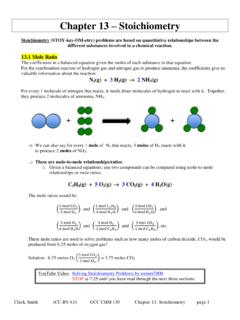
Chapter 13 Stoichiometry - Glendale Community College
web.gccaz.eduChapter 13 – Stoichiometry Stoichiometry (STOY-key-OM-etry) problems are based on quantitative relationships between the different substances involved in a chemical reaction.

Intermolecular and Ionic Forces - web.gccaz.edu
web.gccaz.eduIntermolecular and Ionic Forces ... general, intermolecular forces are much weaker than the ionic and covalent bonds that hold together the atoms and ions in a compound. ... compared in this lab. The alkane used in this activity is pentane, CH 3 CH 2 CH 2 CH 2 CH 3. Alcohols are

Marine Biology: Study Guide - web.gccaz.edu
web.gccaz.eduBIO145: Marine Biology 3 Study Guide Chapter 10 An Introduction to Ecology Ecology is the scientific study of the interactions between organisms and their environment that determine the distribution and abundance of organisms.

CHM 130LL: Electrolytes - Welcome to web.gccaz.edu
web.gccaz.edumainly in body fluids outside the cells. Human body fluids have almost the ... CHM 130LL: Electrolytes Lab . GCC CHM 130LL Spring 2016 page 2 of 7 Understanding ... This makes it possible to identify which substance is in which well (ex: A3 or C2). In your data table (on the next page), ...
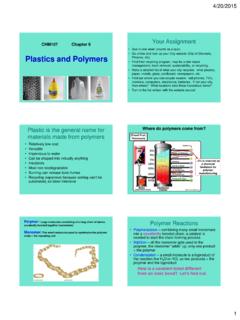
Polymers and Plastics - web.gccaz.edu
web.gccaz.edua chemical feedstock for polymer manufacturing Polymer: ... • Now back to polymers and plastics Given these monomers predict the structure of the polymer Ethylene Vinyl chloride ... recycle numbers are these plastics? • Plastic comes from oil – so less recycling means

CHM 130 Predicting Products Worksheet
web.gccaz.eduCHM 130 Predicting Products Worksheet Circle the appropriate reaction type for each, complete the reaction with products (remember to check charges for ionic compounds), include states, and finally balance each reaction.
Related documents
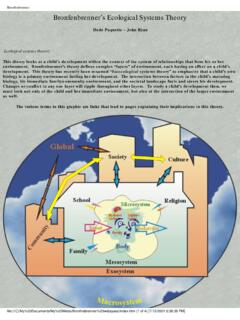
Bronfenbrenner’s Ecological Systems Theory
www.dropoutprevention.orgNov 10, 2009 · The chronosystem – this system encompasses the dimension of time as it relates to a child’s environments. Elements within this system can be either external, such as the timing of a parent’s death, or internal, such as the physiological changes that occur with the …

The Integumentary System - Holly H. Nash-Rule, PhD
hollyrule.webs.comDescribe two integumentary system mechanisms that help in regulating body temperature. (1) When capillary blood flow to the skin is enhanced (by nervous system controls), heat radiates from the skin surface; restriction of blood flow conserves body heat.
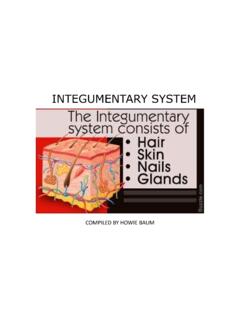
INTEGUMENTARY SYSTEM - University of Cincinnati
www.uc.eduINTEGUMENTARY SYSTEM COMPILED BY HOWIE BAUM. THE SKIN. This extraordinary organ system : Protects the internal structures of the body from damage Prevents dehydration Stores fat Produces vitamins and hormones. Helps to maintain homeostasis within the body by assisting with the

Chapter 12: Age-Related Changes of the Integumentary …
iihsdgn.weebly.comThe skin, hair, nails, and glands form the integumentary system. The skin is the largest organ of the body and accounts for approximately 20 percent of the body’s weight. The primary function of the skin is to pro-tect the body by serving as a barrier against microorganisms, ultraviolet

Home - Buckeye Valley
www.buckeyevalley.k12.oh.usOBJECTIVE 7 c. production of gray pigments. d. reduction of melanocyte activity. 4. The various types of hair are due to the itself.

Nursing Services Basic Skin Assessment (Integumentary ...
www.dshs.wa.govBeginning with any pressure juriesin , number all integumentary issues consecutively, starting with #1, #2, #3, etc. (Skin, Hair and Nails) Skin Issues Specify all types below as numbered / designated above: The number, skin issue type and comments.

The Integumentary System - Los Angeles Mission College
www.lamission.eduFunctions of the Integumentary system 1. protection a) chemical factors in the skin: Sebum (or oil) from the sebaceous glands is slightly acidic, retarding bacterial colonization on the skin surface. Sweat from the sudoriferous glands is slightly hypertonic and can flush off most bacteria on the skin surface.

The Integumentary System Training Handout
www.soinc.org1 The Integumentary System - Training Handout Karen L. Lancour National Rules Committee Chairman – Life Science The integumentary system consists of the skin, hair, nails, the subcutaneous tissue below the skin, and assorted glands. Functions of the Integumentary System Protection against injury and infection