
Chapter 8 Microbiological Control - Biomanufacturing
Concerning the former, certain bacteria and molds secrete proteolytic enzymes into the growth medium, potentially degrading the therapeutic protein. Regarding the latter, Gram-negative bacteria release a component of their cell wall termed endotoxin that can be highly toxic if introduced into patients. It is one example of a pyrogen. Pyrogens ...
Download Chapter 8 Microbiological Control - Biomanufacturing

Information
Domain:
Source:
Link to this page:
Documents from same domain
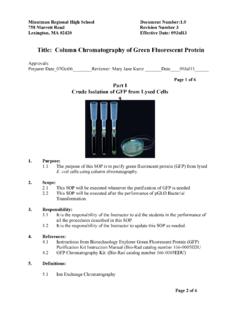
Title: Column Chromatography of Green …
biomanufacturing.orgTitle: Column Chromatography of Green Fluorescent Protein ... 4.1 Instructions from Biotechnology Explorer Green Fluorescent Protein ... (Bio-Rad catalog number 166 ...
Overview Development and Manufacturing of …
biomanufacturing.org2 Development and Manufacturing of Parenteral Drug Products Unit Overview Development and Manufacturing of Injectable (Parenteral) Drug Products From discovering the active ingredient to manufacturing the finished product, the production of

Chapter 11 Downstream Processing - Biomanufacturing
biomanufacturing.orgTable 11-1: Commonly employed downstream processing methods (adapted from Kemp and O’Neil 2003) Processing Method Attributes Benefits Limitations Clarification: (often considered part of the upstream processing train) Sedimentation- based Clarification continuous centrifugation capable of handling very large harvest volumes open process-

Chapter 14 Sterile Filtration, Filling, and Lyophilization ...
biomanufacturing.orgcontainers (pharmaceutical container/closure). This operation exposes the sterile product to the environment, equipment, and manipulative technique of the operators until it can be sealed in the dose container; therefore, this operation is performed with a minimum exposure

Chapter 13 Formulation Development of Parenteral Products
biomanufacturing.org4 Chapter 13 – Formulation of Parenteral Products Introduction to Parenteral Products Basic theory Parenteral (para enteron—beside the intestine) administration is the introduction into the body of nutrition, medications, or other substances other than by the alimentary canal.

Introduction to TFF - Biomanufacturing
biomanufacturing.orgtests to establish a baseline for the device performance. 7. Equilibrate system with the sample buffer (it helps remove air from the system, adjust system temperature and prevent possible precipitation or denaturation of biomolecules resulting from contact with flushing solution). 8. Process the Product (concentration and /or diafiltration, or

Chapter 15 Inspection, Labeling, and Packaging
biomanufacturing.orginspection without impacting overall batch quality. The American National Standards Institute/American Society for Quality Control (ANSI/ASQC) Z1.4-2008, Sampling Procedures and Tables for Inspection by Attributes is the primary reference used for setting AQL levels. Table 15-1. Sample AQL table based on ANSI/ASQC, Z1.4-2008 Batch Size Sample Size
Chapter 10 Upstream Processing - Biomanufacturing
biomanufacturing.orguse of airflow booths and following cleaning protocol explain the in-process controls for assessing media components illustrate the major types of bioreactors and associated instruments used for upstream biomanufacturing evaluate situations in order to make appropriate aseptic decisions
Chapter 10 Upstream Processing - Biomanufacturing
biomanufacturing.orguse of airflow booths and following cleaning protocol • explain the in-process controls for assessing media components • illustrate the major types of bioreactors and associated instruments used for upstream biomanufacturing • evaluate situations in order to make appropriate aseptic decisions
Chapter 11 Downstream Processing - Biomanufacturing
biomanufacturing.org424 Chapter 11 - Downstream Processing Objectives This chapter provides an overview of downstream processing. After completing this chapter, students will be able to: Describe the general elements of the downstream purification process for a typical monoclonal antibody-based therapeutic, starting with the bioreactor harvest pool and
Related documents

Microbiological Spoilage of Fruits and Vegetables
seward.co.ukcellular lytic enzymes that degrade these polymers to release water and the plant’s other intracellular constituents for use as nutrients for their growth. Fungi in partic-ular produce an abundance of extracellular pectinases and hemicellulases that are important factors for fungal spoilage (Miedes & Lorences, 2004). Some spoilage

DR. Shah Ali-UL-Qader PERSONAL INFORMATION
www.pjps.pk28. Enhanced production of cellulose degrading CMCase by newly isolated strain of Aspergillus versicolor Carbohydrate Polymers (2014) 104,199-203 (IF: 4.219) Sofia Qaisar, Rashida Rahmat Zohra, Afsheen Aman, Shah Ali Ul Qader 29. Immobilization of pectin degrading enzyme from Bacillus Licheniformis KIBGE IB-21

Noor Almomani Alaa Bany Amer Diala Abu Hassan
doctor2020.jumedicine.comtwo enzymes (ALT & AST), because they have medical significance. The reaction of ALT goes in both directions, ... In this situation we are producing pyruvate by degrading amino acids, and we are degrading them because we're in the starvation situation to produce energy and provide gluconeogenesis with its own intermediates (e.g., oxaloacetate ...
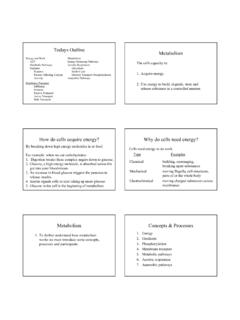
How do cells acquire energy? Why do cells need energy?
ib.berkeley.eduEnzymes Lower Activation Energy activation energy without enzyme activation energy with enzyme energy released by the reaction products starting substance direction of reaction Figure 5.8 from page 78 of your text Features of Enzymes (Cont.) 3. Enzymes are not used up or permanently altered. 4. Enzymes are substrate specific.

98 THE QUARTERLY REVIEW OF BIOLOGY 91 - IU
microbes.sitehost.iu.eduobligate parasite, such as polysaccharide-degrading enzymes, enzymes for anaerobic respiration, and those for utilization of inorganic nitrogen and sul-fates. The author suggested that there is a tradeoff for large genome size in powdery mildews: “the cost of large genomes full of active retrotransposons is

Trichoderma: Mass production, formulation, quality control ...
www.academicjournals.orgexploited in industries as sources of enzymes. A large number of research groups are working on various aspects of Trichoderma viz., diversity, ecology and their applications. In India, about 110 groups representing various universities and research institutes are working with about 15 different species and have published about 460 research papers.

Cellular Injury, Necrosis, Apoptosis
www.life.illinois.edudegrading, but basement membranes intact • Nuclei largely intact, slightly narrowed, pyknotic. ... When enzymes have digested the cytoplasmic organelles, the cytoplasm becomes vacuolated and appears moth- eaten. Dead cells may be replaced by large, whorled phospholipid masses

Exam #3 Review
www.uwyo.eduThis pathway is an alternate glucose degrading pathway. It is used when biosynthesis is the primary focus of the cell! Its purpose is twofold. The purpose of the oxidative stage is to produce NADPH. The purpose of the non-oxidative stage is to produce ribose 5-phosphate (used in nucleotide synthesis). Sometimes