
Chemical Engineering Thermodynamics II - CPP
Chapter 6: Chemical Equilibrium 6.1 Introduction 6-1 Example 6.1-1: Extent of reaction and fractional conversion 6-2 Example 6.1-2: Time to reach 90% conversion in a batch reactor 6-5 6.2 Chemical Reaction and Gibbs Energy 6-6 6.3 The Condition of Equilibrium for a …
Download Chemical Engineering Thermodynamics II - CPP

Information
Domain:
Source:
Link to this page:
Documents from same domain
1 Lecture 2 Simple Molecular Orbitals - Sigma and …
www.cpp.edu1 Lecture 2 Simple Molecular Orbitals - Sigma and Pi Bonds in Molecules bond order = (number of bonding electrons) - (number of antibonding elect rons)
COLLEGE OF EDUCATION & INTEGRATIVE STUDIES …
www.cpp.eduCOLLEGE OF EDUCATION & INTEGRATIVE STUDIES CREDENTIAL SERVICES OFFICE 3801 West Temple Avenue, Pomona, CA …

Packing Checklist - California State Polytechnic ...
www.cpp.eduTraveler’s Name Departure Date Destination Days Local Weather travel essentials toiletries Clothes men women Basics Dressy Casual Outerwear & Accessories
The Chinese Cultural Revolution: A …
www.cpp.edu1 The Chinese Cultural Revolution: A Historiographical Study In 1965, Mao Zedong believed that his socialist campaign was being threatened by Liu
Chem 201/Beauchamp Topic 1: …
www.cpp.eduChem 201/Beauchamp Topic 1: Atoms,Bonding,Dipoles,IP 2 Effective nuclear charge - Zeffective is the net positive charge felt by the valence electrons (bonding and lone pair electrons). It can be estimated by subtracting the number of …
Drawing in MicroStation - California State …
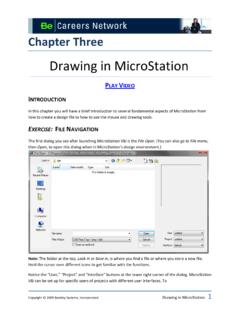
www.cpp.eduon grid points (every inch) or to a keypoint on an object . To snap to a keypoint, the reset and data buttons are pressed simultaneously. A large cursor will appear
Suggestions for success in college - Cal Poly Pomona
www.cpp.eduZ:\classes\Adobe document files\Suggestions for success in college.doc Beauchamp e. Review your notes carefully within one day. f. You might leave 1/3 (vertical) of each note page blank to fill in later with any extra details you want to add.
Chapter 1 Lecture Notes Significant Figures and …
www.cpp.edu2 • If the digit following the last significant figure is a 5 (with no other non-zero digits after the 5), round down if the last sig fig is even and round up if the last sig fig is odd. The rule about "5’s" is necessary to avoid statistical bias in your calculations. Statistically
Bio-Organic Mechanism Game - Cal Poly Pomona
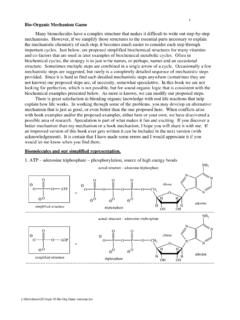
www.cpp.edu1 y:\files\classes\201\topic 10 Bio-Org Game reactions.doc Bio-Organic Mechanism Game Many biomolecules have a complex structure that makes it …
spice - Cal Poly Pomona
www.cpp.edu220-spice-notes.tex Page 3 The Circuit Description A circuit description in spice, which is frequently called a netlist, consists of a statement defining each circuit element. Connections are described by naming nodes.
Related documents
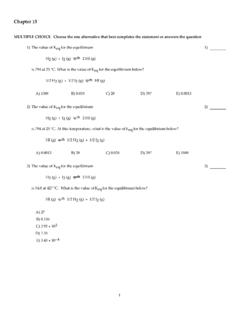
Chapter 15 Practice Questions
alpha.chem.umb.edu4) Consider the following chemical reaction: H2 (g) + I2 (g) 2HI (g) At equilibrium in a particular experiment, the concentrations of H2, I2, and HI were 0.15 M, 0.033 M, and 0.55 M, respectively. The value of Keq for this reaction is _____. A) 61 B) 9.0 × 10⁻³ C) 23 D) 111 E) 6.1 4)

Chapter 11 Density of States, Fermi Energy and Energy Bands
homepages.wmich.edu11-3 ! p k (11.6) Knowing the momentum p = mv, the possible energy states of a free electron is obtained m k m p E mv 2 2 2 1 2 2 ! (11.7) which is called the dispersion relation (energy or frequency-wavevector relation). Effective Mass In reality, an electron in a crystal …

CHAPTER 13 Chemical Equilibrium
www2.tku.edu.twc) The value of the equilibrium constant for a given reaction mixture is the same regardless of the direction from which equilibrium is attained. d) A system moves spontaneously toward a state of equilibrium. e) The equilibrium constant is independent of temperature. ANS: e) The equilibrium constant is independent of temperature. PAGE: 13.1,2 2.

Chapter 15: Chemical Equilibrium
personal.utdallas.eduChapter 15: Chemical Equilibrium Key topics: Equilibrium Constant Calculating Equilibrium Concentrations The Concept of Equilibrium Consider the reaction A ⌦ k1 k1 B At equilibrium there is no net change in [A] or [B], namely d[A] dt =0= d[B] dt But A molecules can react to form B, and B molecules can
Basic Principles and Calculations in Chemical Engineering
ptgmedia.pearsoncmg.com8.6 Multicomponent Vapor-Liquid Equilibrium 466 PART IV ENERGY 487 CHAPTER 9 ENERGY BALANCES 489 9.1 Terminology Associated with Energy Balances 491 9.2 Types of Energy to Be Included in Energy Balances 496 9.3 Energy Balances without Reaction 530 CHAPTER 10 ENERGY BALANCES: HOW TO ACCOUNT FOR CHEMICAL REACTION 597

Chapter 14. CHEMICAL EQUILIBRIUM
web.gccaz.eduChapter 14 Equilibrium Notes page 1 of 6 Chapter 14. CHEMICAL EQUILIBRIUM 14.1 THE CONCEPT OF EQUILIBRIUM AND THE EQUILIBRIUM CONSTANT Many chemical reactions do not go to completion but instead attain a state of chemical equilibrium. Chemical equilibrium: A state in which the rates of the forward and reverse reactions ...

Chapter 8, Acid-base equilibria
www.bu.eduThis equation is called the autoionization of water and its equilibrium constant is known as the water autoionization constant Kw. At 25°C it is equal to Kw =@H3O+D@OH-D=1.0μ10-14 Now, we have seen that the equilibrium constant of a sum of two reactions is the product of the equilibrium constants of the summed reactions.