
Experiment 6 — Thin-Layer Chromatography
Thin-layer chromatography (TLC) is an extremely valuable analytical technique in the organic lab. It provides a rapid separation of compounds, and thereby gives an indication of the number and nature of the components of a mixture. TLC can also be used to identify compounds
Download Experiment 6 — Thin-Layer Chromatography

Information
Domain:
Source:
Link to this page:
Documents from same domain
Math 17: Intro Stats Final Exam - amherst.edu
www.amherst.eduFinal Exam December 19, 2010 ... When describing center and spread, which set of summary statistics should we use? Mean and standard deviation, or median and IQR?
Economic, social, and environmental sustainability …
www.amherst.eduEconomic, social, and environmental sustainability in development theory and urban planning practice A. D. BASIAGO* ... impact on the environment can be embodied in

Special Section: Global Environmental History - …
www.amherst.eduSpecial Section: Global Environmental History Beginning in the Belly, ... An Environmental History of Africa, 1800-1990 (Portsmouth, NH: Heinemann, 1999).
2008 Vertebrate Organ Systems - Amherst College
www.amherst.eduLab 9 - Vertebrate Organ Systems Objectives: ... An overview of how to approach your dissection of the fetal pig is on the next two pages.
creation of the “queer” Butler‟s Gender Trouble ...
www.amherst.eduof race, class, the environment and the nation. Texts include feminist philosopher Judith Butler‟s Gender Trouble , anthropologist Kamala Visweswaran‟s Fictions of Feminist
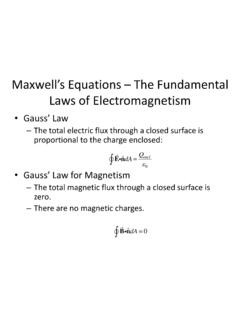
The Fundamental Laws of Electromagnetism - amherst.edu
www.amherst.eduMaxwell’s Equations –The Fundamental Laws of Electromagnetism •Faraday’s Law –When the magnetic flux through some loop (C) changes, it induces an emf around the loop proportional to the rate at which the flux changes. –If loop has N turns, the emf is N times larger.
Localization in Epilepsy - amherst.edu
www.amherst.eduLocalization in Epilepsy DimitrisG.Placantonakis,MD, PhD, TheodoreH.Schwartz,MD* Pharmacologic therapy represents the first line of treatment of epilepsy and is effec-tive in most patients.
![[Fill-in-the-blank] tests measure and multiple choice ...](/cache/preview/5/e/e/9/b/f/1/7/thumb-5ee9bf17e1539b3a63fea89d05cad259.jpg)
[Fill-in-the-blank] tests measure and multiple choice ...
www.amherst.eduThe self-reference effect refers to improved memory for information when: A) someone told the person directly B) the person saw the event first-hand C) that information holds personal meaning D) the person has been directly accused of something
Making Sense of Olive Oil: Simple Experiments To Connect ...
www.amherst.eduexperience oils: color, aroma, bitterness, and pungency. We also describe experiments to explore some of the characteristics of olive oil related to its status as a new health food.
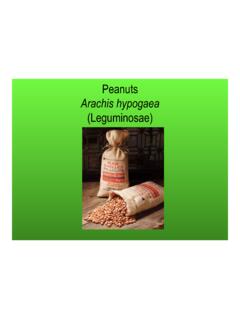
Peanuts - Amherst College
www.amherst.edu• Peanuts were spread to Africa, Europe, and Asia primarily by Portuguese traders • Peanuts were very likely spread to the United States through slave trade Origination
Related documents
Paper Chromatography of Amino Acids
classes.kvcc.eduCHM250 Paper Chromatography Lab 5 | P a g e 7. After the hydrolysis is complete, cool the hydrolysate, stopper it and save the solution for the analysis by paper chromatography. Separation of Amino Acids by Paper Chromatography 1. Obtain a 24 x 15.5 cm rectangle of Whatman No. 1 filter paper. Handle this paper by the top edge only.

Answer Key for Chromatography Lab - Weebly
davidson-biochs.weebly.comHonors Biology: Chromatography Lab Answer Key Terms and Definitions (1 Point Each): 1. Chromatogram 2. Mobile Phase 3. Stationary Phase 4. Solute 5. Solvent 6. Heterogeneous Mixture 7. Homogenous Mixture 8. Endergonic Reaction 9. Exergonic Reaction 10. Heterotroph 11. Autotroph 12. Photosynthesis 13. Pigment 14. Adenosine Tri-phosphate 15 ...
Paper Chromatography of Amino Acids
faculty.buffalostate.eduPaper Chromatography Chromatography is an analytical tool for distinguishing different biomolecule based on their chemical properties. One of the oldest and most reliable forms of chromatograpy is paper chromatography. In this assay, a biomolecule (or mixture of biomolecules) is spotted on a piece of filter paper.
Lab 6: Paper Chromatography - Texas Christian University
geo1.tcu.eduLab 6: Paper Chromatography Pages145-154 Pre-lab page 151 No Post lab – Chromatogram must be turned in attached to lab report. Chromatography • Chromatography is an analytical technique used to separate the components of a mixture. • All forms of …
EXPERIMENT 4: COLUMN CHROMATOGRAPHY AND THIN …
academic.macewan.caperform column chromatography in the fume hood, tlc on the bench. to save time, run the tlc experiment while the column chromatography is underway. keep an eye on solvent labels and dispose of all waste in the appropriate containers. no lab report is required for experiment 4. there will be a quiz on experiments 3 & 4 next week.
PAPER CHROMATOGRAPHY - Chem Lab
chemlab.truman.eduPAPER CHROMATOGRAPHY Chromatography is a technique that is used to separate and to identify components of a mixture. This analytical technique has a wide range of applications in the real world since many substances are mixtures of chemical compounds. In …
Thin layer chromatography TLC
people.chem.umass.eduThin Layer Chromatography. Thin layer chromatography, or TLC, is a method for analyzing mixtures by separating the compounds in the mixture. TLC can be used to help determine the number of components in a mixture, the identity of compounds, and the purity of a compound. By observing the appearance of

Thin Layer Chromatography (TLC) - Boston College
www.bc.educhromatography paper on a piece of notebook paper, and draw a line in pencil, not pen, 1.5 cm above the bottom. Make small marks along the line using the dimensions given in Figure 1 on the Figs. 1, Expt. 4 page (you may bring the figure pages …