
Experiment 6 — Thin-Layer Chromatography
Thin-layer chromatography (TLC) is an extremely valuable analytical technique in the organic lab. It provides a rapid separation of compounds, and thereby gives an indication of the number and nature of the components of a mixture. TLC can also be used to identify compounds
Download Experiment 6 — Thin-Layer Chromatography

Information
Domain:
Source:
Link to this page:
Documents from same domain
Math 17: Intro Stats Final Exam - amherst.edu
www.amherst.eduFinal Exam December 19, 2010 ... When describing center and spread, which set of summary statistics should we use? Mean and standard deviation, or median and IQR?
Economic, social, and environmental sustainability …
www.amherst.eduEconomic, social, and environmental sustainability in development theory and urban planning practice A. D. BASIAGO* ... impact on the environment can be embodied in

Special Section: Global Environmental History - …
www.amherst.eduSpecial Section: Global Environmental History Beginning in the Belly, ... An Environmental History of Africa, 1800-1990 (Portsmouth, NH: Heinemann, 1999).
2008 Vertebrate Organ Systems - Amherst College
www.amherst.eduLab 9 - Vertebrate Organ Systems Objectives: ... An overview of how to approach your dissection of the fetal pig is on the next two pages.
creation of the “queer” Butler‟s Gender Trouble ...
www.amherst.eduof race, class, the environment and the nation. Texts include feminist philosopher Judith Butler‟s Gender Trouble , anthropologist Kamala Visweswaran‟s Fictions of Feminist
The Fundamental Laws of Electromagnetism - amherst.edu
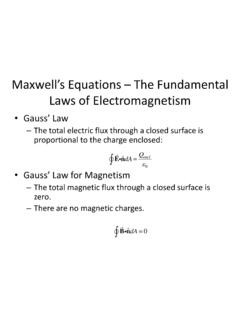
www.amherst.eduMaxwell’s Equations –The Fundamental Laws of Electromagnetism •Faraday’s Law –When the magnetic flux through some loop (C) changes, it induces an emf around the loop proportional to the rate at which the flux changes. –If loop has N turns, the emf is N times larger.
Localization in Epilepsy - amherst.edu
www.amherst.eduLocalization in Epilepsy DimitrisG.Placantonakis,MD, PhD, TheodoreH.Schwartz,MD* Pharmacologic therapy represents the first line of treatment of epilepsy and is effec-tive in most patients.
![[Fill-in-the-blank] tests measure and multiple choice ...](/cache/preview/5/e/e/9/b/f/1/7/thumb-5ee9bf17e1539b3a63fea89d05cad259.jpg)
[Fill-in-the-blank] tests measure and multiple choice ...
www.amherst.eduThe self-reference effect refers to improved memory for information when: A) someone told the person directly B) the person saw the event first-hand C) that information holds personal meaning D) the person has been directly accused of something
Making Sense of Olive Oil: Simple Experiments To Connect ...
www.amherst.eduexperience oils: color, aroma, bitterness, and pungency. We also describe experiments to explore some of the characteristics of olive oil related to its status as a new health food.
Peanuts - Amherst College
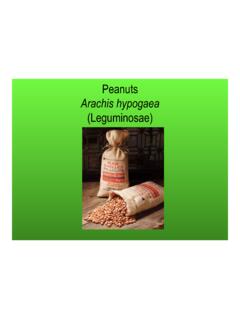
www.amherst.edu• Peanuts were spread to Africa, Europe, and Asia primarily by Portuguese traders • Peanuts were very likely spread to the United States through slave trade Origination
Related documents
Stains for Developing TLC Plates - McMaster University
www.chemistry.mcmaster.caStains for Developing TLC Plates Once a TLC has been developed, it is frequently necessary to aid in the visualization of the components of a reaction mixture. This is true ... • Handbook of Thin-Layer Chromatography J. Sherman and B. Fried, Eds., Marcel Dekker, New York, NY, …
Thin layer chromatography TLC - BMB & Chemistry IT
people.chem.umass.eduThin Layer Chromatography. Thin layer chromatography, or TLC, is a method for analyzing mixtures by separating the compounds in the mixture. TLC can be used to help determine the number of components in a mixture, the identity of compounds, and the purity of a compound. By observing the appearance of

An Introduction to Gas Chromatography Mass Spectrometry
www.ucl.ac.ukAdsorption chromatography The stationary phase is a solid on which the sample components are adsorbed. The mobile phase may be a liquid (liquid-solid chromatography) or gas (gas-solid chromatography); the components distribute between two phases through a combination of sorption and desorption processes. Thin-layer chromatography (TLC)
Thin layer chromatography TLC - BMB & Chemistry IT
people.chem.umass.eduThin Layer Chromatography. Thin layer chromatography, or TLC, is a method for analyzing mixtures by separating the compounds in the mixture. TLC can be used to help determine the number of components in a mixture, the identity of compounds, and the purity of a compound.

Introduction to Liquid Chromatography - Texas A&M …
www.chem.tamu.eduChromatography (TLC) by Kirchner in the U.S. 1952: Martin and Synge receive Nobel Prize for “invention of partition chromatography” or plate theory to describe column efficiency 1966: HPLC was first named by Horvath at Yale University but HPLC didn’t “catch on” until the 1970s 1978: W.C. Stills introduced “flash chromatography”,
Thin Layer Chromatography (TLC) - Delhi University
chemistry.du.ac.inThin Layer Chromatography (TLC) Thin layer chromatography (TLC) is a quick, sensitive, and inexpensive technique used to determine the number of components in a mixture, verify the identity and purity of a compound, monitor the progress of a reaction, determine the solvent composition for preparative separations, and analyze the

Paper Chromatography of Pigments in a Spinach Leaf
weissman.baruch.cuny.educhromatography (‘chroma’ refers to color) to separate out the different pigments. Here we will use the simplest of chromatography techniques called paper chromatography. Chromatography is an analytical method permitting the separation of a mixture into its molecular components. In this

Teaching notes: Chromatography - AQA
filestore.aqa.org.ukthin-layer chromatography column chromatography gas chromatography. Thin-layer chromatography (TLC) Figures 1.1 and 1.2 show the apparatus required to analyse a mixture (m) believed to contain some components (a, b and c). Figure 1.1: apparatus at the start of the experiment. A plate made from glass or aluminium or an inert plastic is coated ...
Separation by Chromatography Methods - Sinica
www.phys.sinica.edu.twThin Layer Chromatography (송뱨뱨꩒ꩫ) 1. The surface of the plate consists of a very thin layer of silica on a plastic or aluminum backing. The silica is very polar the stationary phase. 2. Spot the material at the origin (bottom) of the TLC plate. 3. Place the …