
Explosions and Blast Injuries
introduces information relevant to the care of casualties from explosives and blast injuries. As the risk of terrorist attacks increases in the U.S., disaster response personnel must understand the unique pathophysiology of injuries associated with explosions and must be prepared to assess and treat the people injured by them.
Download Explosions and Blast Injuries

Information
Domain:
Source:
Link to this page:
Documents from same domain
School Chemistry Laboratory Safety Guide
www.cdc.govSchool Chemistry Laboratory Safety Guide. October 2006. U.S. Consumer Safety Product Commission DEPARTMENT OF HEALTH AND HUMAN SERVICES. Centers for Disease Control and Prevention
Biosafety in Microbiological and Biomedical …
www.cdc.goviii. Foreword. Biosafety in Microbiological and Biomedical Laboratories (BMBL) quickly became the cornerstone of biosafety practice and policy in the United States upon first
Sobering Facts: Drunk Driving in Georgia
www.cdc.govSobering Facts: Drunk Driving in GEORGIA Keep Georgia safe. Keep drunk drivers off the road. This fact sheet provides a snapshot of alcohol-involved deaths and drunk driving
ALCOHOLS III 1402
www.cdc.govALCOHOLS III: METHOD 1402, Issue 2, dated 15 August 1994 - Page 3 of 4 a. Remove and discard back sorbent section of a media blank sampler. b. Inject a known amount of analyte or DE stock solution directly onto front sorbent section
Fast Facts
www.cdc.govAny person working outdoors is at risk of exposure to poisonous plants, such as poison ivy, poison oak, and poison sumac. When in contact with skin, the sap oil (urushiol) of

Trans Fat: The Facts
www.cdc.gov• Read the Nutrition Facts label and ingredient list to compare foods. » Choose products with 0 grams trans fat. » Check the Ingredient List to see if there is any partially hydrogenated oil in the product.

ANTIBIOTIC RESISTANCE THREATS
www.cdc.govApr 23, 2013 · 6. ANTIBIOTIC RESISTANCE THREATS IN THE UNITED STATES, 2013. Executive Summary. Antibiotic Resistance Threats in the United States, 2013. is a snapshot of the complex problem
Chlorine Residual Testing
www.cdc.govChlorine Residual Testing Fact Sheet, CDC SWS Project 4 Methods to Test Free Chlorine in the Field in Developing Countries There are three main methods to test free chlorine residual in drinking water in the field
2018 Combined Recommended Immunization …
www.cdc.govRecommended Immunization Schedule for Children and Adolescents Aged 18 Years or Younger, UNITED STATES, 2018 Approved by the Advisory Committee on …
Traveling? Make Sure You Protect Yourself from …
www.cdc.govCS26201 Malaria transmission occurs throughout Malaria transmission occurs in some parts Malaria transmission is not known to occur Center for Global Health
Related documents
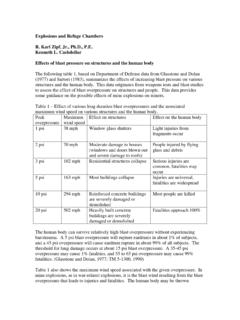
1) Effects of blast pressure on the human body
www.cdc.govTable 1 also shows the maximum wind speed associated with the given overpressure. In mine explosions, as in war-related explosions, it is the blast wind resulting from the blast overpressure that leads to injuries and fatalities. The human body may be thrown . violently into objects and receive blunt force trauma; conversely, large objects may ...

NFPA 70E SERIES - mi-wea.org
www.mi-wea.orgBy The Numbers How Often Number Effect United States Annual Average 4,000 Non-Disabling electrical contact injuries United States Annual Average 3,600 Disabling electrical contact injuries Every Day 1 Person is electrocuted in the workplace Electrocutions are 4th Leading cause of traumatic occupational fatalities Each year +2,000 Workers are sent to burn centers …
American Petroleum Institute Guide to Reporting Process ...
www.api.orgA release of energy that causes a pressure discontinuity or blast wave (e.g. detonations, deflagrations, and rapid releases of high pressure caused by rupture of equipment or piping). 2.18 facility The buildings, containers, or equipment that contain a process. 2.19 fire Any combustion resulting from a LOPC, regardless of the presence of flame.

Joint Pain in Children: Initial Evaluation and When to Refer
www.scaap.org•Can be associated with Marfan’s, Stickler’s syndrome, Ehler’s-Danlos, Down’s syndrome •8-20% of population, + family history •More common in girls, Chinese, West Africans •Decreases with age (peak ages 3-10 years) •Symptoms often intermittent •No disability •Reassurance, PT for joint protection and stretching program ...

Traumatic Brain Injury
www.ninds.nih.govinjuries, blast injury, or being struck by an object. Some accidents such as explosions, natural disasters, or other extreme events can cause both penetrating and non- …
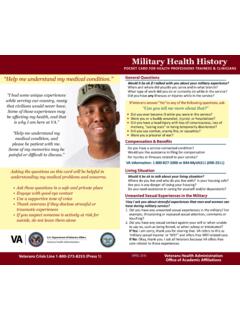
Military Health History - Veterans Affairs
www.va.govCold Injuries Contaminated Water (benzene, trichloroeth-ylene, vinyl chloride) Endemic Diseases Malaria Prevention: Mefloquine – Lariam Animal Bites/Rabies Blunt Trauma Burn Injuries (Blast Injuries) Chemical or Biological Agents Chemical Munitions Demolition Combined Penetrating Injuries Depleted Uranium (DU) Dermatologic Issues Embedded ...
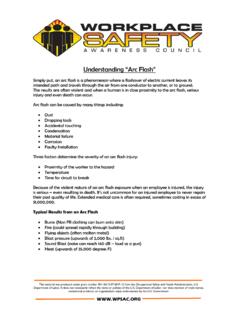
Understanding “Arc Flash”
www.osha.govelectric shock or other injuries resulting from either direct or indirect electrical contacts. The specific safety-related work practices shall be consistent with the nature and extent of the associated electrical hazards. These safety related work practices could include: Energized Electrical Work Permit Personal Protective Equipment

Clinical Practice Guidelines: Trauma/Burns
www.ambulance.qld.gov.austages of a burn implies an associated injury (e.g. blast injury). However, major burn patients are at risk for multi-organ failure due to fluid losses and inflammatory processes. Fluid resuscitation should commence as soon as it is safe to do so. For airway and facial burns, fluid resuscitation should commence as soon as the airway is secure.