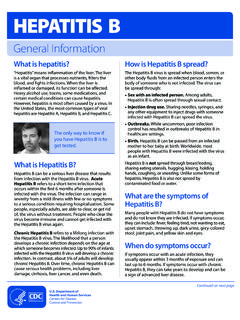
Hepatitis B - Basic Information
the Hepatitis B virus again. Chronic Hepatitis B. refers to a lifelong infection with the Hepatitis B virus. The likelihood that a person develops a chronic infection depends on the age at which someone becomes infected. Up to 90% of infants infected with the Hepatitis B virus will develop a chronic infection.
Download Hepatitis B - Basic Information

Information
Domain:
Source:
Link to this page:
Documents from same domain
School Chemistry Laboratory Safety Guide
www.cdc.govSchool Chemistry Laboratory Safety Guide. October 2006. U.S. Consumer Safety Product Commission DEPARTMENT OF HEALTH AND HUMAN SERVICES. Centers for Disease Control and Prevention
Biosafety in Microbiological and Biomedical …
www.cdc.goviii. Foreword. Biosafety in Microbiological and Biomedical Laboratories (BMBL) quickly became the cornerstone of biosafety practice and policy in the United States upon first
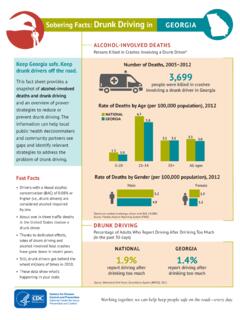
Sobering Facts: Drunk Driving in Georgia
www.cdc.govSobering Facts: Drunk Driving in GEORGIA Keep Georgia safe. Keep drunk drivers off the road. This fact sheet provides a snapshot of alcohol-involved deaths and drunk driving
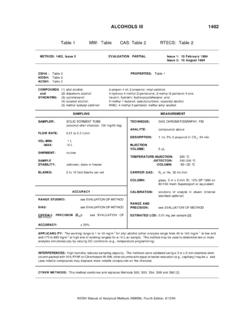
ALCOHOLS III 1402
www.cdc.govALCOHOLS III: METHOD 1402, Issue 2, dated 15 August 1994 - Page 3 of 4 a. Remove and discard back sorbent section of a media blank sampler. b. Inject a known amount of analyte or DE stock solution directly onto front sorbent section
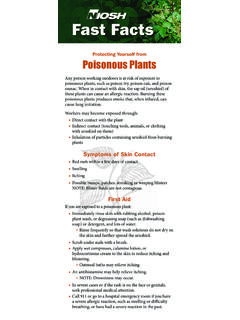
Fast Facts
www.cdc.govAny person working outdoors is at risk of exposure to poisonous plants, such as poison ivy, poison oak, and poison sumac. When in contact with skin, the sap oil (urushiol) of

Trans Fat: The Facts
www.cdc.gov• Read the Nutrition Facts label and ingredient list to compare foods. » Choose products with 0 grams trans fat. » Check the Ingredient List to see if there is any partially hydrogenated oil in the product.
ANTIBIOTIC RESISTANCE THREATS
www.cdc.govApr 23, 2013 · 6. ANTIBIOTIC RESISTANCE THREATS IN THE UNITED STATES, 2013. Executive Summary. Antibiotic Resistance Threats in the United States, 2013. is a snapshot of the complex problem
Chlorine Residual Testing
www.cdc.govChlorine Residual Testing Fact Sheet, CDC SWS Project 4 Methods to Test Free Chlorine in the Field in Developing Countries There are three main methods to test free chlorine residual in drinking water in the field
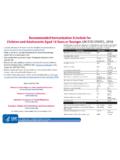
2018 Combined Recommended Immunization …
www.cdc.govRecommended Immunization Schedule for Children and Adolescents Aged 18 Years or Younger, UNITED STATES, 2018 Approved by the Advisory Committee on …
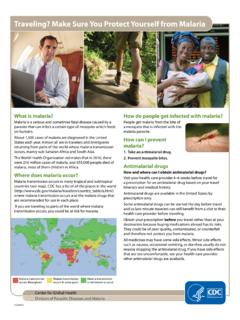
Traveling? Make Sure You Protect Yourself from …
www.cdc.govCS26201 Malaria transmission occurs throughout Malaria transmission occurs in some parts Malaria transmission is not known to occur Center for Global Health
Related documents
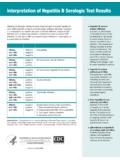
Interpretation of Hepatitis B Serologic Test Results
www.cdc.govHepatitis B serologic testing involves measurement of several hepatitis B virus (HBV)-specifi c antigens and antibodies. Different serologic “markers” or combinations of markers are used to identify different phases of HBV infection and to determine whether a patient has acute or chronic HBV

Hepatitis C General Information
www.cdc.govhepatitis B, and hepatitis C. Although all types of viral hepatitis can cause similar symptoms, they are spread in different . ways, have different treatments, and some are more serious than others. All adults, pregnant women, and people with risk . factors . should get tested for hepatitis C. Hepatitis C . Hepatitis C is a liver disease caused by
Hepatitis B Factsheet - NHS England
www.england.nhs.ukHepatitis B Factsheet What is hepatitis B? Hepatitis B is a type of virus that can infect the liver. Symptoms can include: • feeling sick • being sick • lack of appetite • flu-like symptoms, such as tiredness, general aches and pains, and headaches • yellowing of the skin and eyes (jaundice).

Chemicals, Cancer, and You - Agency for Toxic Substances ...
www.atsdr.cdc.govcancer; hepatitis B and C viruses, which can cause liver cancer; and the Epstein-Barr virus, which may cause a type of lymphoma. Also, the H. pylori bacterium can cause gastric cancer. •Exposure to chemicals: As we have discussed, being exposed to …
OSHA FACTSHEET BLOODBORNE PATHOGENS …
www.osha.govexposure, hepatitis B vaccine, and medical eval-uation and post-exposure follow-up procedures. Employers must offer this training on initial assignment, at least annually thereafter, and when new or modified tasks or procedures affect a worker’s occupational exposure. Also, HIV and HBV laboratory and production facility