Indole Test Protocol
Dissolve components and store solution at room temperature in a brown glass bottle. To test for indole production, inoculate a 4 -ml tryptone broth tube with one loopful of culture. After 24 to 48 hours of incubation, add to the culture 1.0 ml of either ether or xylene. Mix well and then allow organic solvent to rise to the top of the medium.
Download Indole Test Protocol

Information
Domain:
Source:
Link to this page:
Documents from same domain
Catalase Test Protocol - American Society for Microbiology
asm.orgThe catalase test is also valuable in differentiating aerobic and obligate anaerobic bacteria, as anaerobes are generally known to lack the enzyme (8, 9). In this context, the catalase test is valuable in differentiating aerotolerant strains of Clostridium, which are catalase negative, fromBacillus, which are catalase positive (8). Theory
Luria Broth (LB) and Luria Agar (LA) Media and Their Uses ...
asm.orgDownloaded from www.asmscience.org by IP: 71.127.236.37 On: Mon, 12 Aug 2019 20:18:49 American Society for Microbiology © 2016 1 Luria Broth (LB) and Luria Agar (LA ...
Blood Agar Plates and Hemolysis Protocols
asm.org"Blood Agar" is not a consistently defined medium. The term "blood agar" generally refers to an enriched base medium to which defibrinated mammalian blood has been added. In the US "blood agar" is usually prepared from Tryptic Soy Agar or Columbia Agar base with 5% Sheep blood. Rabbit or horse blood may be
Gram Stain Protocols
asm.org7. Wash slide in a gentile and indirect stream of tap w ater until no color appears in the effluent and then blot dry with absorbent paper. 8. Observe the results of the staining procedure under oil immersion using a Brightfield microscope. At the completion of the Gram Stain, gram-negative bacteria will stain pink/red and gram-positive ...
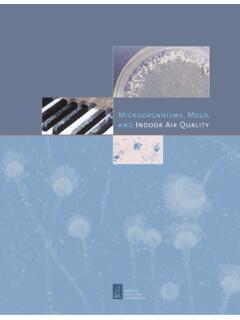
Microorganisms, Mold, and Indoor Air Quality
asm.orgings with poor indoor air quality anywhere in this or other countries. 2 Water stained ceiling tile from an office building with chronic roof leakage. Culture of Trichoderma showing fluffy,spreading growth on the agar surface. Visible mold growing on a floor joistin the crawl space under a residence with chronic water seepage.
Kirby-Bauer Disk Diffusion Susceptibility Test Protocol
asm.orgInstitute Performance Standards for Antimicrobial Disk Susceptibility Tests: Approved Standards 9th Edition (3). RECIPE Sterile saline in 2-ml tubes 0.5 McFarland standard Wickerham card Mueller-Hinton agar plates, 100 mm or 150 mm Caliper or ruler Antibiotic disksb Forceps Antibiotic disk dispenser (optional) 18- to 24-ho Vortex
Urease Test Protocol
asm.orgPeptone 1 g Dextrose 1 g Sodium chloride 5 g Potassium phosphate, monobasic 2 g Urea 20 g Phenol red 0.012 g Agar 15 to 20 g To prepare the urea base, dissolve the first six ingredients in 100 ml of distilled water and filter sterilize (0.45-mm pore size). Suspend the agar
Oxidase Test Protocol - American Society for Microbiology
asm.orgFIG. 3. On the left is oxidase-positive Pseudomonas aeruginosa and on the right is oxidase-negative Escherichia coli. Both organisms were rubbed on a dry filter that was then treated with one drop of Kovács oxidase reagent. Direct Plate Method (7, 10) (Fig. 4) 1. Grow a fresh culture (18 to 24 hours) of bacteria on nutrient agar
Related documents

Nutrient Agar - himedialabs.com
himedialabs.comPeptone 5.000 Sodium chloride 5.000 HM peptone B# 1.500 Yeast extract 1.500 Agar 15.000 Final pH ( at 25°C) 7.4±0.2 **Formula adjusted, standardized to suit performance parameters Directions Suspend 28.0 grams in 1000 ml purified / distilled water. Heat to boiling to dissolve the medium completely. Sterilize
Lactobacilli MRS Agar • Lactobacilli MRS Broth
legacy.bd.compeptone and dextrose. These ingredients supply nitrogen, carbon and other elements necessary for growth. Polysorbate 80, acetate, ... Solution: 7.0% solution, soluble in purified water upon boiling. Solution is medium amber, clear to slightly opalescent.

Interpretation Guide
multimedia.3m.comButterfield’s phosphate buffered dilution water, peptone salt diluent, 0.1% peptone water, buffered peptone water, quarter-strength Ringer’s solution, saline solution (0.85-0.90%), bisulfite-free letheen broth, or distilled water. For optimal growth and recovery of the microorganisms, adjust the pH of the sample suspension to 6-8.
2.6.12. MICROBIOLOGICAL EXAMINATION OF NON-STERILE ...
uk.vwr-cmd.comchloride-peptone solution pH 7.0 or in another suitable liquid. In general a one in ten dilution is prepared. However, the characteristics of the product or the required sensitivity may necessitate the use of other ratios. If the product is known to have antimicrobial activity, an inactivating agent may be added to the diluent.
2.6.12. MICROBIOLOGICAL
www.drugfuture.comUse buffered sodium chloride-peptone solution pH 7.0 or phosphate buffer solution pH 7.2 to make test suspensions; to suspend A. brasiliensis spores, 0.05 per cent of polysorbate 80 may be added to the buffer. Use the suspensions within 2 h or within 24 h if stored at 2-8 °C. As an alternative to preparing and then diluting a fresh suspension ...

MINISTRY OF HEALTH MALAYSIA MICROBIAL …
www.npra.gov.my90ml of Buffered NaCl Peptone Solution + ≤100 cfu S. aureus Enrichment: 90ml of Tryptone Soya Broth (TSB), 30 - 35ºC, 18 – 24hrs 10 ml Selective Agar: Mannitol Salt Agar (MSA) Subculture on 30 -35ºC, 18 – 72hrs ≤100 cfu Ps. aeruginosa Cetrimide Agar (CETA)

Culture media and their preparation
www.rpcau.ac.inPeptone dextrose rose Bengal agar medium (Fungi) Peptone : 5.0 g Chloramphenicol 0.1 g Glucose : 10.0 g Rose bengal : 0.025 g Agar-agar : 20.0 g Dichloran : 0.002 g KH 2 PO 4 1.0g Distt. water : Makeup 1 lit. MgSO 4.7H 2 O : 0.5 g pH 6.0-6.5