Kirby-Bauer Disk Diffusion Susceptibility Test Protocol
Determination of bacterial resistance to antimicrobials is an important part of the management of infections in patients. The disk diffusion method of Kirby and Bauer has been standardized and is a viable alternative to broth dilution methods for laboratories without the resources to utilize the newer automated methods for broth microdilution
Download Kirby-Bauer Disk Diffusion Susceptibility Test Protocol

Information
Domain:
Source:
Link to this page:
Documents from same domain
Catalase Test Protocol - American Society for Microbiology
asm.orgThe catalase test is also valuable in differentiating aerobic and obligate anaerobic bacteria, as anaerobes are generally known to lack the enzyme (8, 9). In this context, the catalase test is valuable in differentiating aerotolerant strains of Clostridium, which are catalase negative, fromBacillus, which are catalase positive (8). Theory
Luria Broth (LB) and Luria Agar (LA) Media and Their Uses ...
asm.orgDownloaded from www.asmscience.org by IP: 71.127.236.37 On: Mon, 12 Aug 2019 20:18:49 American Society for Microbiology © 2016 1 Luria Broth (LB) and Luria Agar (LA ...
Indole Test Protocol
asm.orgDissolve components and store solution at room temperature in a brown glass bottle. To test for indole production, inoculate a 4 -ml tryptone broth tube with one loopful of culture. After 24 to 48 hours of incubation, add to the culture 1.0 ml of either ether or xylene. Mix well and then allow organic solvent to rise to the top of the medium.
Blood Agar Plates and Hemolysis Protocols
asm.org"Blood Agar" is not a consistently defined medium. The term "blood agar" generally refers to an enriched base medium to which defibrinated mammalian blood has been added. In the US "blood agar" is usually prepared from Tryptic Soy Agar or Columbia Agar base with 5% Sheep blood. Rabbit or horse blood may be
Gram Stain Protocols
asm.org7. Wash slide in a gentile and indirect stream of tap w ater until no color appears in the effluent and then blot dry with absorbent paper. 8. Observe the results of the staining procedure under oil immersion using a Brightfield microscope. At the completion of the Gram Stain, gram-negative bacteria will stain pink/red and gram-positive ...
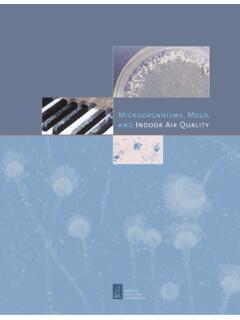
Microorganisms, Mold, and Indoor Air Quality
asm.orgings with poor indoor air quality anywhere in this or other countries. 2 Water stained ceiling tile from an office building with chronic roof leakage. Culture of Trichoderma showing fluffy,spreading growth on the agar surface. Visible mold growing on a floor joistin the crawl space under a residence with chronic water seepage.
Urease Test Protocol
asm.orgPeptone 1 g Dextrose 1 g Sodium chloride 5 g Potassium phosphate, monobasic 2 g Urea 20 g Phenol red 0.012 g Agar 15 to 20 g To prepare the urea base, dissolve the first six ingredients in 100 ml of distilled water and filter sterilize (0.45-mm pore size). Suspend the agar
Oxidase Test Protocol - American Society for Microbiology
asm.orgFIG. 3. On the left is oxidase-positive Pseudomonas aeruginosa and on the right is oxidase-negative Escherichia coli. Both organisms were rubbed on a dry filter that was then treated with one drop of Kovács oxidase reagent. Direct Plate Method (7, 10) (Fig. 4) 1. Grow a fresh culture (18 to 24 hours) of bacteria on nutrient agar
Related documents
Guidelines English Module 3 P part - moph
moph.gov.lbprofile determination. • The dissolution measurements of the test and reference batches should be made under exactly the same conditions. The dissolution time points for both the profiles should be the same (e.g., for IR products 15, 30, 45, 60 minutes; for ER products 1,2,3,5,and 8 hours). • For products which are rapidly dissolving, i.e.,
Test Method Protocol for Solubility Determination (2003)
ntp.niehs.nih.govTest Method Protocol for Solubility Determination Phase III - Validation Study September 24, 2003 . TEST METHOD PROTOCOL. Solubility Determination Phase III. I. PURPOSE . The purpose of this study is to evaluate the cytotoxicity of test chemicals using the BALB/c 3T3 Neutral Red Uptake (NRU) and normal human keratinocyte (NHK) cytotoxicity tests.

Why purify proteins? - UAB
www.uab.eduSolubility of Proteins • Solubility of a protein depends on ionic strength of the solution • Ionic strength is defined as I = (1/2) ∑ i C i Z i 2 • The sum is over all ionic species • Because the charge Zi is squared, divalent and trivalent ions contribute greatly to I. • Ci is the molar concentration of species i

Annex 7 - WHO
www.who.intAnnex 7 133 10.3.3 Dissolution profile comparison for biowaivers based on dose- proportionality of formulations 177 10.4 In vitro equivalence testing for non-oral dosage forms 177 10.5 In vitro equivalence testing for scale-up and post-approval changes 180 References 180 Appendix 1 Recommendations for conducting and assessing comparative

Content and Format of Chemistry, Manufacturing, and ...
www2.rsna.orgApr 14, 2010 · – Stability Protocol and Data Evaluation – Forced Degradation/Stress Testing ... • (e.g., solubility, partition coefficient, ionic charge, dissociation constants, etc.) ... laboratory determination to ensure that each batch of a PET drug product conforms to specifications, except for sterility ...