
Myeloid Malignancies
Feb 01, 2014 · Acute myeloid leukemia. AML results from the clonal expansion of myeloid blasts in the peripheral blood, bone marrow or other tissue. It is caused when either the myeloid stem cells produce abnormal myeloblasts which do not become healthy white blood cells or too many myeloid stem cells become abnormal red blood cells or platelets.
Download Myeloid Malignancies

Information
Domain:
Source:
Link to this page:
Documents from same domain
School Chemistry Laboratory Safety Guide
www.cdc.govSchool Chemistry Laboratory Safety Guide. October 2006. U.S. Consumer Safety Product Commission DEPARTMENT OF HEALTH AND HUMAN SERVICES. Centers for Disease Control and Prevention

Biosafety in Microbiological and Biomedical …
www.cdc.goviii. Foreword. Biosafety in Microbiological and Biomedical Laboratories (BMBL) quickly became the cornerstone of biosafety practice and policy in the United States upon first
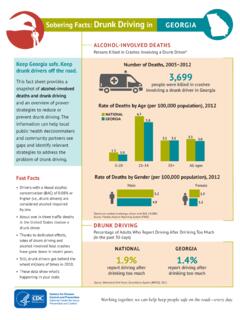
Sobering Facts: Drunk Driving in Georgia
www.cdc.govSobering Facts: Drunk Driving in GEORGIA Keep Georgia safe. Keep drunk drivers off the road. This fact sheet provides a snapshot of alcohol-involved deaths and drunk driving
ALCOHOLS III 1402
www.cdc.govALCOHOLS III: METHOD 1402, Issue 2, dated 15 August 1994 - Page 3 of 4 a. Remove and discard back sorbent section of a media blank sampler. b. Inject a known amount of analyte or DE stock solution directly onto front sorbent section
Fast Facts
www.cdc.govAny person working outdoors is at risk of exposure to poisonous plants, such as poison ivy, poison oak, and poison sumac. When in contact with skin, the sap oil (urushiol) of

Trans Fat: The Facts
www.cdc.gov• Read the Nutrition Facts label and ingredient list to compare foods. » Choose products with 0 grams trans fat. » Check the Ingredient List to see if there is any partially hydrogenated oil in the product.

ANTIBIOTIC RESISTANCE THREATS
www.cdc.govApr 23, 2013 · 6. ANTIBIOTIC RESISTANCE THREATS IN THE UNITED STATES, 2013. Executive Summary. Antibiotic Resistance Threats in the United States, 2013. is a snapshot of the complex problem
Chlorine Residual Testing
www.cdc.govChlorine Residual Testing Fact Sheet, CDC SWS Project 4 Methods to Test Free Chlorine in the Field in Developing Countries There are three main methods to test free chlorine residual in drinking water in the field
2018 Combined Recommended Immunization …
www.cdc.govRecommended Immunization Schedule for Children and Adolescents Aged 18 Years or Younger, UNITED STATES, 2018 Approved by the Advisory Committee on …

Traveling? Make Sure You Protect Yourself from …
www.cdc.govCS26201 Malaria transmission occurs throughout Malaria transmission occurs in some parts Malaria transmission is not known to occur Center for Global Health
Related documents

CYTARABINE (ARA-C) HIGH DOSE - Haematology
nssg.oxford-haematology.org.ukMyeloid group This is a controlled document and therefore must not be changed Page ML.4 CYTARABINE Prof HD Authorised by Myeloid Lead Adam Mead Oct 2019 Version 4.2 1 of 3 CYTARABINE (ARA-C) HIGH DOSE INDICATION Consolidation chemotherapy for AML …
Acute Myeloid Leukemia: A Review
www.rimed.orgAcute myeloid leukemia (AML) is a malignancy of the stem cell precursors of the myeloid lineage (red blood cells, platelets, and white blood cells other than B and T cells). Like other malignancies, it is due to genetic variations that lead to neoplastic changes and clonal pro -

Acute Appendicitis: Efficient Diagnosis and Management
www.aafp.orgJul 01, 2018 · Appendicitis is one of the most common causes of acute ... level, and myeloid reactive protein level) in children and adults is shown in Table 4.5,16,17 In children, the APPY1

Acute Promyelocytic Leukemia Facts
www.lls.orgMay 07, 2015 · Acute promyelocytic leukemia (APL) is a unique subtype of acute myeloid leukemia. APL is classified as the M3 subtype of AML according to the French-American-British (FAB) system and as APL with translocation between chromosomes 15 and 17 [ t(15;17) ] in the World Health Organization (WHO) classification system. It accounts for about 10 to

NCCN Guidelines for Patients Acute Lymphoblastic Leukemia
www.nccn.orgAcute Lymphoblastic Leukemia, 2021 1 ALL basics Blood There are 2 types of blood progenitor cells: Lymphoid Myeloid Both lymphoid and myeloid progenitor cells form into blast cells called lymphoblasts or myeloblasts depending on the type. Blasts are committed to becoming a type of blood cell. Lymphoblasts are supposed to mature
NCCN Guidelines for Patients: Acute Myeloid Leukemia
www.nccn.orgDec 02, 2021 · Acute Myeloid Leukemia, 2022 1 AML basics Acute myeloid leukemia Blasts A blast is an immature white blood cell. Both lymphoid and myeloid progenitor cells form into blast cells called lymphoblasts or myeloblasts depending on the type. Blasts are committed to becoming a type of blood cell. Lymphoblasts normally mature into lymphocytes, a type of
Acute lymphoblastic leukemia: a comprehensive review and ...
www.who.intAcute lymphoblastic leukemia: a comprehensive review and 2017 update T Terwilliger1 and M Abdul-Hay1,2 Acute lymphoblastic leukemia (ALL) is the second most common acute leukemia in adults, with an incidence of over 6500 cases per year in the United States alone. The hallmark of ALL is chromosomal abnormalities and genetic alterations involved in

ACUTE MYELOGENOUS LEUKEMIA (Including Acute …
www.who.intAcute myelogenous leukemia or acute myeloid leukemia (AML) is a heterogenous hematological malignancy involving the clonal expansion of myeloid blasts in the bone marrow and peripheral blood with possible spread to liver and spleen. An estimated 18,860 people were diagnosed in USA in 2014, 10,460 of whom will die from their disease.