工程材料實驗 - ncyu.edu.tw
( and Retained Austenite ) s: 0073% 13 ( and Nodular Traastite ) Title: Microsoft PowerPoint - 3.ppt Author: Created Date: 3/9/2010 4:50:11 PM ...
Download 工程材料實驗 - ncyu.edu.tw

Information
Domain:
Source:
Link to this page:
Documents from same domain
與生活上的應用 - web.ncyu.edu.tw
web.ncyu.edu.tw超音波(Ultrasound) 與生活上的應用 嘉義大學生物機電工程學系 洪滉祐
Chapter 4 Shear and Moment In Beams - ncyu.edu.tw
web.ncyu.edu.twFigure 4.1 (a) Statically determinate beams. 4.2 Supports and Loads Beams are classified according to their supports. A simply supported beam, shown in Fig. 4.1 (a). The pin support prevents displacement of the end of the beams, but not its
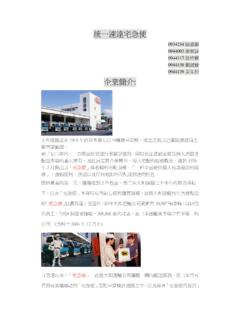
統一速達宅急便 - web.ncyu.edu.tw
web.ncyu.edu.tw統一速達宅急便 0934234 陳姿縈 0944093 麥智詠 0944117 徐仲賢 0944138 劉懿賢 0944139 黃朱伸 企業簡介: 大和運輸是在1919年於日本東京以四輛貨車草創,成立之初以 …
期刊名稱與縮寫(20130218初稿) 期刊名稱 期刊縮寫
web.ncyu.edu.tw期刊名稱 期刊縮寫 Academic radiology Acad. Radiol. American journal of medical genetics part B: neuropsychiatric genetics Am. J. Med. Genet.
Chapter 6 Deflection of Beams - ncyu.edu.tw
web.ncyu.edu.twFigure 6.1 (a) Deformation of a beam. a. Differential equation of the elastic curve As shown, the vertical deflection of A, denoted by v, is considered to be positive if directed in the positive direction of the y-axis- that is, upward in Fig . 6.1 (a).
(The Structures of Crystalline Solid)
web.ncyu.edu.tw3.1 簡介(Introduction) 原子排列、結晶學(方向及平面) 晶體結構(Crystal Structures) 3.2 基本概念(Fundamental Concepts) z結晶(crystalline)材料的原子在大於原子間距離的範圍 內重覆且週期的排列;也就是說長程有序排列。
VB與PLC通訊控制 - web.ncyu.edu.tw
web.ncyu.edu.twNCYU_BME 19 SerialPort操控原則 a. 物件:首先瞭解所要操作的物件是什麼? b. 屬性:設定該物件所具備的特性。 c. 事件:該物件在系統執行的過程中會因其他
Chapter 3 Torsion
web.ncyu.edu.tw3.1 Introduction In many engineering applications, members are required to carry torsional loads. Consider the torsion of circular shafts. Because a circular cross section is an efficient shape for resisting torsional loads.
Chapter 2 Strain
web.ncyu.edu.twStress and strain are two fundamental concepts of mechanics of materials. Their relationship to each other defines the mechanical properties of a material, the knowledge of which is of the utmost importance in design. Use force-deformation relationships in conjunction with
Chapter 5 Stresses In Beams - ncyu.edu.tw
web.ncyu.edu.twMechanics of Materials Chapter 5 Stresses In Beams. 5.1 Introduction In previous chapters, the stresses in bars caused by axial loading and torsion. Here consider the third fundamental loading : bending. Make certain simplifying assumptions. the resulting equations
Related documents
STEEL CASTINGS HANDBOOK Supplement 8 High Alloy Data ...
www.sfsa.orgcontain appreciable amounts of retained austenite because thsi structure provides the optimum combination of strength, ductility, hardness, and toughness. Variations in heat treatment can be selected to enhance one or more of these properties. Improved corrosion resistance, particularly resistance to sulfide stress corrosion, can be obtained
Lecture 19: Eutectoid Transformation in Steels: a typical ...
my.eng.utah.educarbide, and retained austenite. In these cases it is similar in constitution to pearlite, but with the ferrite forming by a displacive mechanism similar to martensite formation, usually followed by precipitation of carbides from the supersaturated ferrite or austenite. The
Basic Understanding of Weld Corrosion
www.asminternational.orgence of retained austenite in high-strength steel weld deposits. Another common dissimilar metal combina-tion involves the use of high-nickel alloys for weld repair of cast iron. Fe-55Ni welding elec-trodes are used to make weld deposits that can hold in solid solution many of the alloying ele-ments common to cast iron. Furthermore, weld

Casting Material Stainless Steel ASTM A351 CF8, ASTM A743 ...
www.castingquality.comHigh impact strength is retained at cryogenic temperatures, while conversely it may be used for service up to 1300oF. The alloy normally consists of austenite and 10% ferrite. However, non-magnetic castings are required in some applications and to meet this need the compositional balance is altered to produce 100% austenite.

マルテンサイト系ステンレス鋼の延性に及ぼす 残留オーステ …
www.nipponsteel.comwhere about 30% is the austenite phase and the rest is the martensitic phase, could be acquired by applying a quenching and partitioning method to martensitic stainless steel. The mechanical properties of the quenching material and partitioning material, and stability of the retained austenite phase, were examined.

UDDEHOLM STAVAX ESR
www.uddeholm.comRetained austenite % 14 12 10 8 6 4 2 Retained Holding time austenite 20 min. Holding time 60 min. 1050°C 1020°C Retained austenite 1030°C Quenching media • Fluidized bed or salt bath at 250–550°C (480–1020°F), then cool in air blast •Vacuum with sufficient positive pressure