NHSN Biovigilance Component Protocol
Incidents Related to Transfusion and Adverse Reaction . Transfusion-Related Activities Transfusions Incidents Reactions . Key Terms (see Fig. 1) • Adverse event: An unintended and undesirable occurrence before, during or after transfusion of blood or blood components. Adverse events include both incidents and adverse reactions. • Adverse ...
Download NHSN Biovigilance Component Protocol

Information
Domain:
Source:
Link to this page:
Documents from same domain
School Chemistry Laboratory Safety Guide
www.cdc.govSchool Chemistry Laboratory Safety Guide. October 2006. U.S. Consumer Safety Product Commission DEPARTMENT OF HEALTH AND HUMAN SERVICES. Centers for Disease Control and Prevention
Biosafety in Microbiological and Biomedical …
www.cdc.goviii. Foreword. Biosafety in Microbiological and Biomedical Laboratories (BMBL) quickly became the cornerstone of biosafety practice and policy in the United States upon first
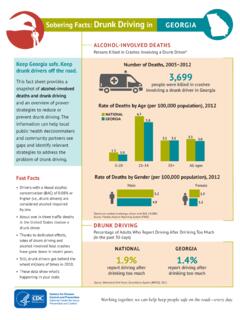
Sobering Facts: Drunk Driving in Georgia
www.cdc.govSobering Facts: Drunk Driving in GEORGIA Keep Georgia safe. Keep drunk drivers off the road. This fact sheet provides a snapshot of alcohol-involved deaths and drunk driving
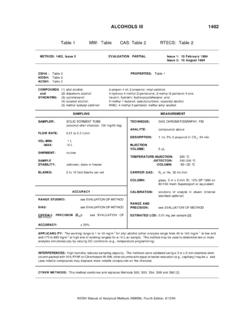
ALCOHOLS III 1402
www.cdc.govALCOHOLS III: METHOD 1402, Issue 2, dated 15 August 1994 - Page 3 of 4 a. Remove and discard back sorbent section of a media blank sampler. b. Inject a known amount of analyte or DE stock solution directly onto front sorbent section
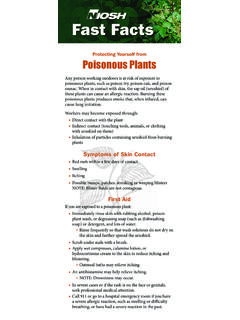
Fast Facts
www.cdc.govAny person working outdoors is at risk of exposure to poisonous plants, such as poison ivy, poison oak, and poison sumac. When in contact with skin, the sap oil (urushiol) of
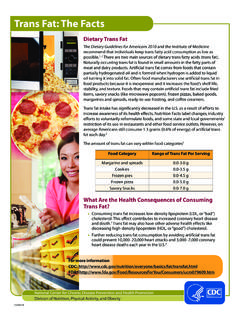
Trans Fat: The Facts
www.cdc.gov• Read the Nutrition Facts label and ingredient list to compare foods. » Choose products with 0 grams trans fat. » Check the Ingredient List to see if there is any partially hydrogenated oil in the product.
ANTIBIOTIC RESISTANCE THREATS
www.cdc.govApr 23, 2013 · 6. ANTIBIOTIC RESISTANCE THREATS IN THE UNITED STATES, 2013. Executive Summary. Antibiotic Resistance Threats in the United States, 2013. is a snapshot of the complex problem
Chlorine Residual Testing
www.cdc.govChlorine Residual Testing Fact Sheet, CDC SWS Project 4 Methods to Test Free Chlorine in the Field in Developing Countries There are three main methods to test free chlorine residual in drinking water in the field
2018 Combined Recommended Immunization …
www.cdc.govRecommended Immunization Schedule for Children and Adolescents Aged 18 Years or Younger, UNITED STATES, 2018 Approved by the Advisory Committee on …

Traveling? Make Sure You Protect Yourself from …
www.cdc.govCS26201 Malaria transmission occurs throughout Malaria transmission occurs in some parts Malaria transmission is not known to occur Center for Global Health
Related documents
Blood Transfusion Guidelines in Clinical Practice
hematology-sa.org4. Previous repeated febrile reactions to red blood cells Guidelines for routine blood leucodepletion 1.Intrauterine transfusion (IUT) and neonates received IUT. 2.One week prior to stem cell collection, and for 12 months post autografting or allografting. 3.Hodgkin’s disease 4.Treatment with purine analogues (fludarabine, 2-CdA, deoxycofomycin)
Medical Surgical RN Assessment Content Outline
nt.prophecyhealth.comMed-Surg unit, including classification, indications and actions, side effects, adverse reactions, and when they are contraindicated. b. Knowledge of medication administration, including safe administration principles (right patient, right drug, right dose, right …
Clinical indications for Apheresis and Whole Blood Platelets
www.blood.gov.auevidence and expert opinion taking into account relevant Patient Blood Management (PBM) guidelines Based on the indications for use of each platelet component type, a recommendation of a national target of the split between apheresis and whole blood derived platelets to meet clinical demand
EDITION 2021 GUIDELINES FOR THE MANAGEMENT OF …
www.thalassemia.orgGUIDELINES FOR THE MANAGEMENT OF TRANSFUSION DEPENDENT THALASSAEMIA (TDT) FOREWORD Dear doctors, On behalf of the Board of Directors of the Thalassaemia International Federation (TIF), it is my great privilege to write the foreword to the 4th edition of the Guidelines for the Management of Transfusion-Dependent Thalassaemia (TDT).
Blood Transfusion Policy and Procedures
www.transfusionguidelines.orgBlood Transfusion Policy Version 4.0 - June 2012 Page 1 of 32 Blood Transfusion Policy and Procedures Category: Policy and Procedures Summary: A blood transfusion is a potentially hazardous procedure. Stringent procedures must be followed to ensure that the correct blood is given and that any adverse reactions are dealt with

Protocol for the use of Intravenous Iron Sucrose (Venofer
www.transfusionguidelines.orgpatients. Non-serious anaphylactoid reactions occurred rarely. 3.1 Management of adverse events In the event of a serious anaphylactic or allergic reaction stop the infusion/ IM adrenaline should be administered and appropriate resuscitation measures initiated. Mild allergic reactions should be managed by stopping the infusion and administering
Version 2.0. 26.03.2018. Review date: 01.03.2020 © UKONS ...
www.ukons.orgTerminology Criteria for Adverse Events (CTCAE Version 4.3) an international standard set of criteria for defining adverse events (AE) and their grading within clinical trials and the routine management of Oncology/Haematology patients has been applied to assist with recognition and management of Adverse Events:
The Clinical Use of Blood - WHO
www.who.int2 Transfusion carries the risk of adverse reactions and transfusion-transmissible infections. Plasma can transmit most of the infections present in whole blood and there are very few indications for its transfusion. 3 Blood donated by family/replacement donors carries a higher risk of transfusion-transmissible infections than blood donated by