NMAM 7903 Acids, Inorganic
ACIDS, INORGANIC: METHOD 7903, Issue 2, dated 15 August 1994 - Page 3 of 6. NOTE: Particulate salts of the volatile acids (HCl, HB, HF, and HNO. 3), if present in the air sample, will collect on the glass fiber filter plug. To estimate the concentration these salts, analyze the plug separately from the front sorbent section. 6.
Download NMAM 7903 Acids, Inorganic

Information
Domain:
Source:
Link to this page:
Documents from same domain
School Chemistry Laboratory Safety Guide
www.cdc.govSchool Chemistry Laboratory Safety Guide. October 2006. U.S. Consumer Safety Product Commission DEPARTMENT OF HEALTH AND HUMAN SERVICES. Centers for Disease Control and Prevention
Biosafety in Microbiological and Biomedical …
www.cdc.goviii. Foreword. Biosafety in Microbiological and Biomedical Laboratories (BMBL) quickly became the cornerstone of biosafety practice and policy in the United States upon first
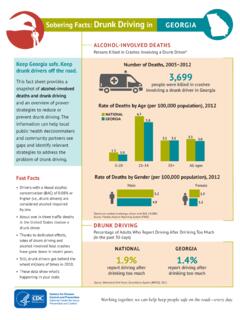
Sobering Facts: Drunk Driving in Georgia
www.cdc.govSobering Facts: Drunk Driving in GEORGIA Keep Georgia safe. Keep drunk drivers off the road. This fact sheet provides a snapshot of alcohol-involved deaths and drunk driving
ALCOHOLS III 1402
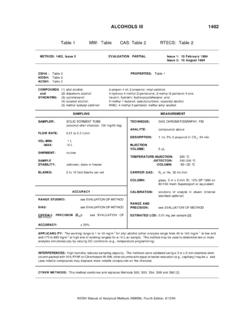
www.cdc.govALCOHOLS III: METHOD 1402, Issue 2, dated 15 August 1994 - Page 3 of 4 a. Remove and discard back sorbent section of a media blank sampler. b. Inject a known amount of analyte or DE stock solution directly onto front sorbent section
Fast Facts
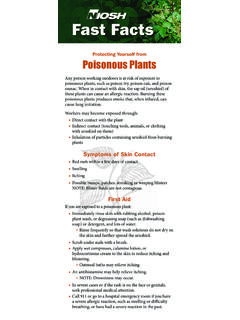
www.cdc.govAny person working outdoors is at risk of exposure to poisonous plants, such as poison ivy, poison oak, and poison sumac. When in contact with skin, the sap oil (urushiol) of
Trans Fat: The Facts
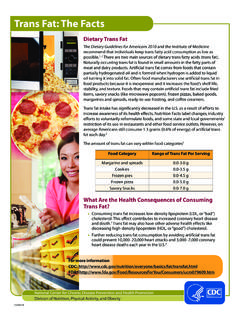
www.cdc.gov• Read the Nutrition Facts label and ingredient list to compare foods. » Choose products with 0 grams trans fat. » Check the Ingredient List to see if there is any partially hydrogenated oil in the product.

ANTIBIOTIC RESISTANCE THREATS
www.cdc.govApr 23, 2013 · 6. ANTIBIOTIC RESISTANCE THREATS IN THE UNITED STATES, 2013. Executive Summary. Antibiotic Resistance Threats in the United States, 2013. is a snapshot of the complex problem
Chlorine Residual Testing
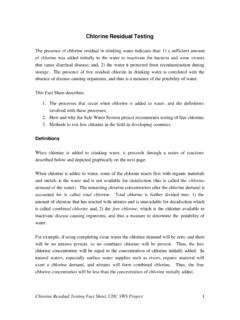
www.cdc.govChlorine Residual Testing Fact Sheet, CDC SWS Project 4 Methods to Test Free Chlorine in the Field in Developing Countries There are three main methods to test free chlorine residual in drinking water in the field
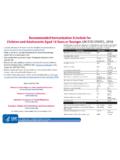
2018 Combined Recommended Immunization …
www.cdc.govRecommended Immunization Schedule for Children and Adolescents Aged 18 Years or Younger, UNITED STATES, 2018 Approved by the Advisory Committee on …

Traveling? Make Sure You Protect Yourself from …
www.cdc.govCS26201 Malaria transmission occurs throughout Malaria transmission occurs in some parts Malaria transmission is not known to occur Center for Global Health
Related documents
DRUG ABSORPTION, DISTRIBUTION AND ELIMINATION ...
www.columbia.eduVolatile anesthetics, as well as many drugs which affect pulmonary function, are administered as aerosols. Other obvious examples include ... Weak acids and neutral drugs bind particularly to albumin, while basic drugs tend to bind to alpha-1-acid glycoprotein (orosomucoid). Some drugs even bind to red cell surface proteins.
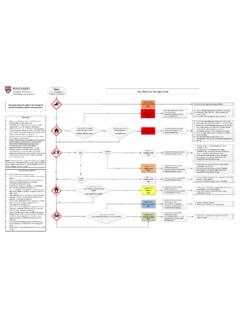
Lab Chemical Storage Guide - Harvard University
www.ehs.harvard.eduDo not store any organic acids in a storage cabinet containing perchloric acid. Vent Corrosive/Acid storage cabinets, if feasible. Avoid placing in unvented metal cabinet unless designed for corrosive/acid storage. Use a secondary containment bin to separate from acids if stored in same cabinet. Vent Corrosive/Acid storage cabinets, if feasible.
4. CHEMICAL AND PHYSICAL INFORMATION
www.atsdr.cdc.govThe volatile component is not shown separately because it varies with the composition of the ... some tar acids and tar bases; it is heavier than water and has a continuous boiling range beginning at about 200 EC. Coal tar creosote is now commonly defined by function, and refers to "the fractions or blends of fractions ...
Total Solids, Volatile Solids - University of Florida
biogas.ifas.ufl.eduTotal Solids, Volatile Solids Total Solids (TS)= Dry matter content of substrate Inverse of moisture content one of the most variable parameters between substrates water Volatile Solids (VS)= Combustible proportion of TS, organic matter Non-volatile Solids (Ash)= Inorganic material (Minerals, salts), does not contribute to methane
12.112.112.1 Nomenclature and Structure of Carbonyl Group
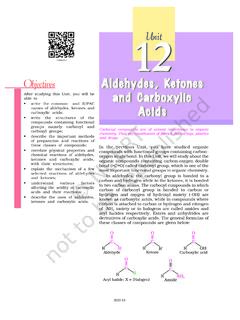
ncert.nic.in365 Aldehydes, Ketones and Carboxylic Acids The physical properties of aldehydes and ketones are described as follows. Methanal is a gas at room temperature. Ethanal is a volatile liquid. Other aldehydes and ketones are liquid or solid at room temperature. The boiling points of aldehydes and ketones are higher than
The Use of Medium-Chain Triglycerides in Gastrointestinal ...
med.virginia.edufatty acids: short chain (< 6 carbons), medium chain (6 to 12 carbons), long chain (13 to 21 carbons), and very long chain ( ≥ 22 carbons). Triglycerides are lipid ... (the temperature when volatile substances are produced and a blue-colored smoke is seen as a result of oxidation of oil) and are liquid at room temperature. MCTs only contain ...
Reactions of Fats and Fatty Acids - University of Illinois ...
butane.chem.uiuc.eduFatty acids Some of the common fatty acids are listed in the table below. Some of these have alkyl chains that are completely saturated (no double bonds). Steric acid, for example, is a major component of animal fat. Unsaturated fats have C-C double bonds in their fatty acids. Oleic acid is one of the components of olive oil.
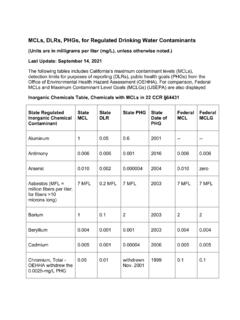
MCLs, DLRs, PHGs, for Regulated Drinking Water Contaminants
www.waterboards.ca.govSep 14, 2021 · Volatile Organic Chemicals (VOCs) State Regulated Volatile Organic Contaminants State MCL State DLR State PHG State Date of PHG Federal MCL Federal MCLG Benzene 0.001 0.0005 0.00015 2001 0.005 zero Carbon tetrachloride 0.0005 0.0005 0.0001 2000 0.005 zero 1,2-Dichlorobenzene 0.6 0.0005 0.6 1997 (rev2009) 0.6 0.6 1,4-Dichlorobenzene (p …
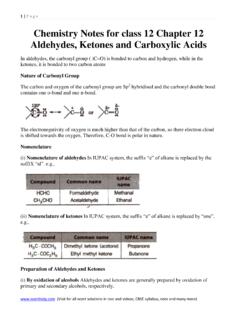
Chemistry Notes for class 12 Chapter 12 ... - NCERT help
ncerthelp.comCHO) is a volatile liquid. Other aldehydes and ketones are liquid or solid at ... Monocarboxylic acids have higher boiling points as compared to the alcohols of comparable molecular masses due to the presence of stronger intermolecular hydrogen bonding as shown below. 4. Melting points of aliphatic monocarboxylic acids shows alternation or ...