
Nutrient Management Guide (RB209) - .NET Framework
Nitrate leaching 10 Release of crop-available nitrogen from organic materials 10 Phosphate, potash and magnesium 12 Sulphur 12 Using organic materials and fertilisers together 13 Practical aspects of organic material use 13 Application management 14 Livestock manures 15 Cattle, pig, sheep, duck, horse and goat farmyard manure (FYM) 15
Download Nutrient Management Guide (RB209) - .NET Framework

Information
Domain:
Source:
Link to this page:
Documents from same domain
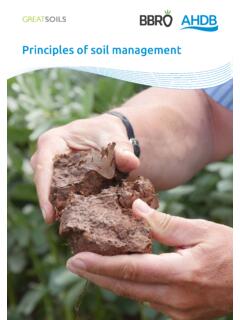
Principles of soil management - .NET Framework
projectblue.blob.core.windows.netOrganic matter Structure Water 12 Principles to improve soil health 15 Soil-related problems 18 Soil assessments Physical condition Chemical condition Biological condition 19 Further information This publication was created as part of the …

Barley growth guide - .NET Framework
projectblue.blob.core.windows.netstages (GS21, GS31, GS39, GS59, GS71 and GS87). Detailed information on the growth stages is published near the back of this guide. Development can only be altered by variety choice and sowing date. Subsequent management decisions aim to influence growth during development (eg by controlling disease or applying fertiliser).

Understand how to influence farmers' decision-making …
projectblue.blob.core.windows.netexchange with farmers and other practitioner groups. 6. Recruit ‘peer champions’ to shape AHDB advice and literature – where face-to-face knowledge exchange is not possible, consider the value of including testimonies of peer groups (e.g. fellow farmers or advisors) in advice booklets. Results suggest that farmers listen more

Principles, installations and maintenance
projectblue.blob.core.windows.netDrainage may be needed to reduce vulnerability to compression, slaking and compaction Light-textured soils: These soils are highly permeable but drainage may be required to provide water table control in low-lying areas Springs: Drains are used to intercept springs before they reach the surface; this helps prevent erosion,

2019 pig cost of production in selected countries
projectblue.blob.core.windows.netFigure 1. Cost of production in selected countries, 2019 The average cost of production in the EU in 2019 for the countries above was £1.42 per kg deadweight – a 1% decrease on the previous year. Costs of production in Great Britain for pork from indoor sows were the same as the EU average at £1.42,

Nutrient Management Guide (RB209)
projectblue.blob.core.windows.net3. Assess soil structure and take action to remove soil compaction if necessary. Poor soil structure can restrict crop growth and results in poor nutrient use efficiency. 4. Carry out soil analysis for pH, P, K and Mg every 3–5 years (page 19). Target values to maintain in arable rotations are: • Soil pH 6.5 (5.8 on peat soils) • Soil P ...
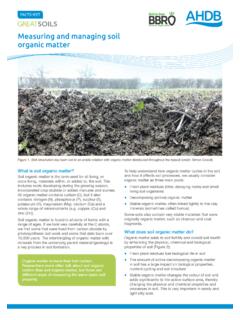
Measuring and managing soil organic matter
projectblue.blob.core.windows.netWell structured clay loam soil in an arable rotation with organic matter distributed throughout the topsoil (credit: Simon Cowell) ... Measuring and managing soil organic matter ... soil organic matter in the field is often a slow process. The presence of roots or added organic materials (residues, manures, composts) in the sample can give ...

Nutrient Management Guide (RB209)
projectblue.blob.core.windows.net2. Understand if the field is within a nitrate vulnerable zone (NVZ) and check the rules for application rates and timing for organic materials and fertilisers. 3. Assess soil structure. 4. Ensure drainage systems are maintained and functioning correctly. 5. Calibrate the fertiliser spreader. 6.
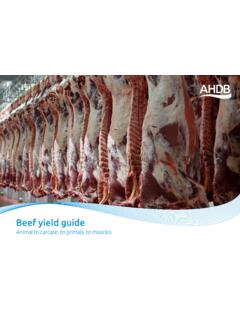
Beef yield guide - .NET Framework
projectblue.blob.core.windows.netBeef carcase to primal cuts – yield information The information in this brochure is based on a 303kg carcase (side weight 151.5kg) , Classification R4H (after 2 weeks maturation). Therefore, the weights/percentages of cuts are intended to act as a guide only, as butchery techniques, carcase weights and types may vary from one business to another.
Related documents
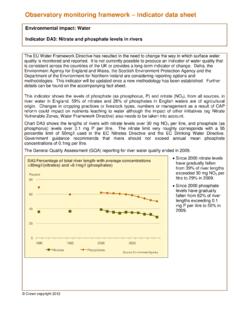
>30mg/l (nitrates) and >0.1mg/l (phosphates) DA3 ...
assets.publishing.service.gov.ukNitrate levels are also a concern in both surface and ground waters used to supply drinking water, because of possible effects on human health. The General Quality Assessment (GQA) adopts an average of 30mg/l to indicate “high” nitrate concentrations to allow for a better comparison of regional differences and monitoring of trends.

eeal efiae ea a
ccea.org.uk*24GCM1210* *24GCM1210* 12461 3 Nitric acid is a strong acid and has many uses in food processing and in the manufacture of fertilisers and explosives. (a) Complete the table below. Indicator Colour in nitric acid phenolphthalein methyl orange [2] (b) Nitric acid is used to remove magnesium deposits in dairy processing factories. The reaction between magnesium and nitric …
Fertilisers in the EU - European Commission
ec.europa.euThe main producing countries of nitrogen fertilisers close to the EU are located in North Africa (Egypt, Algeria) and in Eastern Europe (Belarus, Russia and Ukraine). EU imports of nitrate-based fertilisers originate mainly from Russia, Egypt and Algeria. Since 2010, ammonia is largely imported into the EU from
Fertiliser Calculations - Department of Primary Industries
www.dpi.nsw.gov.auexample, nitrate poisoning with excessive nitrogen application)? Edited by Michel Dignand Information Delivery Program Wagga Wagga December 2004 Agdex 540. 5263. Calculating the cost for more than one nutrient You can use a range of fertilisers, including blends, to apply the same amount of nutrients. For the

INDG230 - STORING AND HANDLING AMMONIUM NITRATE
www.hse.gov.ukFertilisers that contain 28% or less nitrogen (see the label or data sheets for the percentage of nitrogen present) do not normally present an explosion hazard and therefore, to identify the precautions required, ammonium nitrate based fertilisers can be divided into two groups: Fertilisers that contain more than 28% nitrogen. Most of these

Oxford Cambridge and RSA Thursday 23 May 2019 – Morning
www.ocr.org.uk2 Magnesium nitrate is used in fertilisers as a source of nitrogen. (a)* A student plans to prepare 250.0 cm3 of a 0.4000 mol dm–3 solution of magnesium nitrate, starting from magnesium nitrate crystals, Mg(NO 3) 2•6H 2O. Describe how the student would prepare the solution, giving full details of quantities, apparatus and method. [6]

PRODUCT RANGE - Prayon
www.prayon.comfertilisers. HORTIPRAY® micronutri Fe 0-42-48 + 2.8% Fe 2.5 42 10 48 POTASSIUM NITRATE - KNO 3 Made in Bulk density N % indicative pH 10% indicative K 2 O indicative Water-soluble fertilisers. g/cm 3lbs/ft HORTIPRAY® NOP Horticultural Grade 1.1 69 13.7 6 46.3

MAIZE GROWERS GUIDE - Seedco
www.seedcogroup.comammonium nitrate (34.5% N) Facts: The yield potential largely depends on the variety, expected rainfall and on the management applied to the crop. The addition of manure and ash will greatly improve the response of maize to the applied fertiliser.