
PROTOCOL PRESSURE ULCER PREVENTION
pressure ulcer prevention, risk factors and early treatment. 8. a. Teach patient/family about the causes and risk factors for pressure ulcer development and ways to minimize risk. Provide Preventing Pressure Ulcers Patient and Family Information handout. Provide patient info, preventing pressure ulcers via patient care standards. b.
Download PROTOCOL PRESSURE ULCER PREVENTION

Information
Domain:
Source:
Link to this page:
Documents from same domain
Hospital: Parenteral Nutrition Consultation and …
www.mnhospitals.orgParenteral Nutrition Consultation & Monitoring Service Page 1 of 12 Hospital: Parenteral Nutrition Consultation and Monitoring Service for Adults and Adolescents Reference #: RX356 Effective Date: Revision Date: 06/2011

Cleaning Protocol for Environmental - MHA
www.mnhospitals.orgCleaning Protocol for Environmental ... or even between rooms with the same person. Background ... to clean for the patient

Environmental Services Cleaning Guidebook - MHA
www.mnhospitals.orgEnvironmental Services Cleaning Guidebook ... High touch surface monitoring tool ... For Isolation precaution rooms: Take a clean pad from the basin and attach to mop ...
Studies Show that Mandatory Nurse Ratios Are …
www.mnhospitals.orgStudies Show that Mandatory Nurse Ratios Are Not the Answer ... communications requirements with potential for ... that impact the level of staff a patient should ...
Neecham Confusion Tool - Minnesota Hospital Association
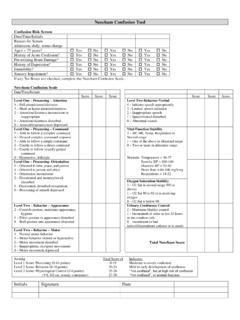
www.mnhospitals.orgNeecham Confusion Tool Confusion Risk Screen Date/Time/Initials Reason for Screen admission, daily, status change Age> = 75 years? Yes No Yes No Yes No
Road Map to Controlled Substance Diversion Prevention 2
www.mnhospitals.orgto Controlled Substance Diversion Prevention 2.0 ... Road Map to Controlled Substance Diversion Prevention Applies to health care professionals, patients, families, visitors, others. ... (Perpetual inventory is a Minnesota Board of Pharmacy requirement to monthly maintain and reconcile Schedule II
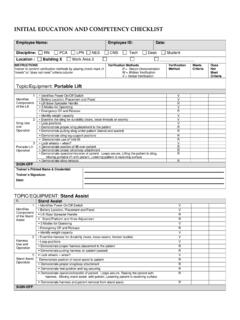
INITIAL EDUCATION AND COMPETENCY CHECKLIST
www.mnhospitals.orgMoving portable lift with patient, Lowering patient to receiving surface R Demonstrat e sling removal R SIGN -OFF ... Demonstrate position of stand assist to patient R Demonstrate proper sling/loop attachment ... up Demonstrates setting bed (surface) height R ...
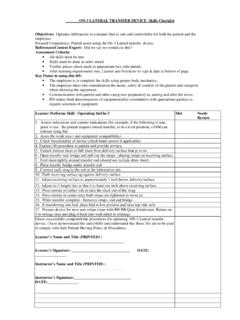
ON-3 LATERAL TRANSFER DEVICE Skills Checklist Objectives …
www.mnhospitals.orgEnsure patient ends up in a safe position with access to call light and detach sling. Remove sling if patient’s skin is compromised or if patient will be up for more than 30 minutes.

2016 Community Benefit Report Minnesota’s hospitals ...
www.mnhospitals.orgMinnesota Hospital Association healthy communities. The report covers community benefit contributions made by Minnesota’s hospitals in 2015, the most recent year of available data.

2012 Community Benefit Report - MHA
www.mnhospitals.org2012 Community Benefit Report — Improving health in our communities. Minnesota hospitals’ community contributions total . $3.6 billion . The 144 hospitals and health systems which are members of the Minnesota Hospital Association provide
Related documents

Using Pressure Ulcer Risk Assessment Tools in Care Planning
www.ahrq.gov•Pressure ulcer risk factor assessment •Pressure ulcer risk assessment tools •Using pressure ulcer risk assessment tools in care planning These topics were introduced in your 1-day training. Today, we will revisit them in depth. Please make a note of your questions. Your Quality Improvement (QI) Specialists will follow

Measuring Pressure Ulcer Rates and Prevention Practices
www.ahrq.govPressure ulcer development is a learning opportunity. Study in detail what led to each Stage III or IV pressure ulcer. Development of full thickness pressure ulcers may reflect a system failure or high acuity level. Root cause analysis is a systematic technique for understanding reasons for pressure ulcer development. Are best practices being ...
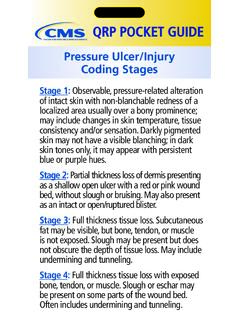
Pressure Ulcer/Injury Coding Pocket Guide
www.cms.govPressure ulcer known but not stageable due to coverage of wound bed by slough and/or eschar. Deep-Tissue Injury (DTI): Purple or maroon area of discolored intact skin due to damage of underlying soft tissue. The area may be preceded by tissue that is painful, firm, mushy, boggy, warmer, or cooler than adjacent tissue. Unstageable Pressure Ulcer/

Pressure ulcer core curriculum - england.nhs.uk
www.england.nhs.ukpressure ulcer development or further damage to an existing pressure ulcer is undertaken to ensure safe, effective and person-centred care. People at risk of developing pressure ulcers receive advice on the benefits and frequency of repositioning. A care plan is developed and implemented to reduce the risk of pressure ulcer development and to
Quick Reference Guide Prevention - Pressure ulcer
www.epuap.orgA pressure ulcer is localized injury to the skin and/or underlying tissue usually over a bony prominence, as a result of pressure, or pressure in combination with shear. A number of contributing or confounding factors are also associated with

Pressure Ulcer Staging - mnhospitals.org
www.mnhospitals.orgPressure Ulcer Staging Stage 1 Stage 2: Partial thickness loss of fi Stage 3: Full thickness tissue loss. Stage 4 Unstageable: Full thickness tissue Suspected Deep Tissue Injury (sDTI): Purple or maroon localized area of discolored intact skin or blood-fi lled blister due to damage of underlying soft tissue from pressure and/or shear.