
Recognizing and Responding to Anaphylaxis
Recognizing and Responding to Anaphylaxis. How to recognize anaphylaxis. Healthcare personnel should consider anaphylaxis when patients present with generalized signs or symptoms such as . hives, serious or life-threatening symptoms (e.g., hypotension, respiratory distress, or significant swelling of the tongue or lips), or
Download Recognizing and Responding to Anaphylaxis

Information
Domain:
Source:
Link to this page:
Documents from same domain
School Chemistry Laboratory Safety Guide
www.cdc.govSchool Chemistry Laboratory Safety Guide. October 2006. U.S. Consumer Safety Product Commission DEPARTMENT OF HEALTH AND HUMAN SERVICES. Centers for Disease Control and Prevention
Biosafety in Microbiological and Biomedical …
www.cdc.goviii. Foreword. Biosafety in Microbiological and Biomedical Laboratories (BMBL) quickly became the cornerstone of biosafety practice and policy in the United States upon first
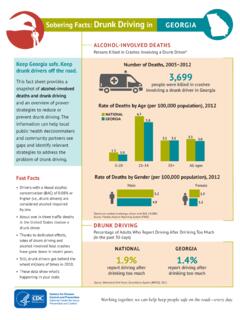
Sobering Facts: Drunk Driving in Georgia
www.cdc.govSobering Facts: Drunk Driving in GEORGIA Keep Georgia safe. Keep drunk drivers off the road. This fact sheet provides a snapshot of alcohol-involved deaths and drunk driving
ALCOHOLS III 1402
www.cdc.govALCOHOLS III: METHOD 1402, Issue 2, dated 15 August 1994 - Page 3 of 4 a. Remove and discard back sorbent section of a media blank sampler. b. Inject a known amount of analyte or DE stock solution directly onto front sorbent section
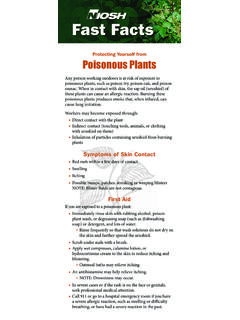
Fast Facts
www.cdc.govAny person working outdoors is at risk of exposure to poisonous plants, such as poison ivy, poison oak, and poison sumac. When in contact with skin, the sap oil (urushiol) of

Trans Fat: The Facts
www.cdc.gov• Read the Nutrition Facts label and ingredient list to compare foods. » Choose products with 0 grams trans fat. » Check the Ingredient List to see if there is any partially hydrogenated oil in the product.

ANTIBIOTIC RESISTANCE THREATS
www.cdc.govApr 23, 2013 · 6. ANTIBIOTIC RESISTANCE THREATS IN THE UNITED STATES, 2013. Executive Summary. Antibiotic Resistance Threats in the United States, 2013. is a snapshot of the complex problem
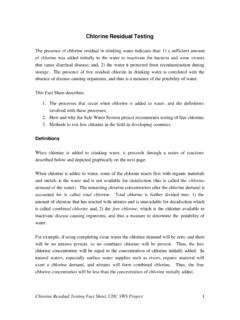
Chlorine Residual Testing
www.cdc.govChlorine Residual Testing Fact Sheet, CDC SWS Project 4 Methods to Test Free Chlorine in the Field in Developing Countries There are three main methods to test free chlorine residual in drinking water in the field
2018 Combined Recommended Immunization …
www.cdc.govRecommended Immunization Schedule for Children and Adolescents Aged 18 Years or Younger, UNITED STATES, 2018 Approved by the Advisory Committee on …
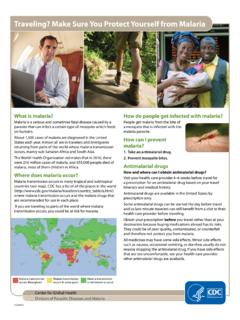
Traveling? Make Sure You Protect Yourself from …
www.cdc.govCS26201 Malaria transmission occurs throughout Malaria transmission occurs in some parts Malaria transmission is not known to occur Center for Global Health
Related documents

or suspicious substance.
about.usps.comSUSPICIOUS MAIL OR PACKAGES Protect yourself, your business, and your mailroom. If you receive a suspicious letter or package: Stop. Don't handle.

RECOGNIZING A MINORITY INTEREST IN CONSOLIDATED …
www.swlearning.comRECOGNIZING A MINORITY INTEREST IN CONSOLIDATED FINANCIAL STATEMENTS LEARNING OBJECTIVE Adapt the consolidation work sheet procedure to recognize a minority interest. Chapter 11 illustrates the consolidation procedure when the parent owns 100 percent of a subsidiary. Parent companies may, however, own less than 100 percent for several reasons: 1.

Incident Management Bulletin: Recognizing Incidents
palms-awss3-repository.s3-us-west-2.amazonaws.comThe Recognizing Incidents webcasts are intended to be viewed in order. Each webcast is approximately 20 –40 minutes in length. It is recommended to limit the amount of time between viewing each part of the series as the Post‐test will cover the content of all nine webcasts.

Recognizing Your Sponsors - sgmpaustin.org
sgmpaustin.orgRecognizing Your Sponsors Recognition opportunities at the local level: • List the names of your donors and sponsors in flyers, event invitations, and other print materials promoting your project. If their gifts vary widely in amount, you can list the largest donors first and you can vary the …

Juneteenth: Fact Sheet - Federation of American Scientists
sgp.fas.orgJun 21, 2021 · In addition to the federal government recognizing Juneteenth as a federal holiday, 49 states and the District of Columbia have passed legislation recognizing it as a holiday or observance. In Texas, New York, Virginia, Washington, and Illinois, Juneteenth is an official paid holiday for state employees. Table 1.

December 2021 - wala.memberclicks.net
wala.memberclicks.netFrom Support to Solidarity: Recognizing the Nonhierarchical Mentoring Environment Within ..... 9 By Bridgette Flamenco, Wendy Lee Spaček, and Erin A. Sulla Shape-Shifting: Personal and Career Strategies for Moving Fluidly Between
Recognizing Child Abuse and Neglect: Signs and Symptoms
www.childwelfare.govRecognizing Child Abuse and Neglect: Signs and Symptoms www.childwelfare.gov This material may be freely reproduced and distributed. However, when doing so, please credit Child Welfare 4 Information Gateway.
What Is Child Abuse and Neglect? Recognizing the Signs and ...
www.childwelfare.govRecognizing the Signs and Symptoms. The first step in helping children who have been abused or neglected is learning to recognize the signs of maltreatment. The presence of a single sign does not necessarily mean that child maltreatment is occurring in a family, but a closer look at the

Addressing Client Resistance: Recognizing and Processing ...
www.counseling.orgAddressing Client Resistance: Recognizing and Processing In-Session Occurrences These clients are often called oppositional, reactionary, noncompliant, intractable, and unmotivated (Dowd, 1989). The behaviors displayed by these difficult clients are often collectively referred to …