
Respiratory Therapy Normal Values
C. Cardiac Index of 3.7 L/min/m2 D. CVP of 5 cmH2O To get this one correct, you simply needed to know the normal values of the hemodynamic data that is listed in the answer choices. If you can interpret that, you can easily come up with the correct answer. • Normal shunt is 5% or less. • Normal SVR is 1400 dyn/s/cm-5
Download Respiratory Therapy Normal Values

Information
Domain:
Source:
Link to this page:
Documents from same domain

Fundamentals of Respiratory Care Final Exam Study Guide
www.respiratorytherapyzone.com29. The respiratory therapist observes low exhaled volumes during volume-cycled, pressure-limited, mechanical ventilation. To determine if the low volumes are caused by inaccurate ventilator volume control, the therapist should measure the tidal volume at the: A. Machine outlet B. Patient connector C. Exhalation valve D. Humidifier outlet 30.

RRT Cheat Sheet - Respiratory Therapy Zone
www.respiratorytherapyzone.comneed to increase the respiratory rate in order to blow off some of that CO 2 to help the pH get back into the normal range. So just be sure to study up on setting up and making changes to the patient’s respiratory rate. 4. Strategy for Treating a Patient That is Hyperventilating This tip is a little more technical.

Breath Sounds Study Guide - Respiratory Therapy Zone
www.respiratorytherapyzone.comRespiratory Therapy Zone is not affiliated with ... discussed earlier in this guide. Adventitious breath sounds are commonly associated with a wide array of heart and lung conditions. The type, duration, location, and intensity of each adventitious breath sounds can help the

Disclaimer - Respiratory Therapy Zone
www.respiratorytherapyzone.comDisclaimer: Medicine and respiratory therapy are continuously changing practices. The author and publisher have reviewed all information in this report with resources believed to be reliable and accurate and have made every effort to provide information that is up to date with the best practices at the time of publication. Despite our

Respiratory Therapy Formulas and Calculations
www.respiratorytherapyzone.comFirst and foremost, before we get into the calculations, let’s first learn the formulas. These are the formulas and equations that you will be required to learn in Respiratory Therapy School. ... 2 = Cardiac Output x C(a-v)O 2 Oxygen Extraction Ratio (O 2ER) O 2ER = (CaO 2 – CvO 2) / CaO 2 FiO 2 Estimation for Nasal Cannula FiO

99 TMC Practice Questions for Respiratory Therapy Students
www.respiratorytherapyzone.comB. left ventricular failure C. an electrolyte imbalance D. ARDS 16. A doctor orders a changeover to CPAP for a patient receiving bi-level positive airway pressure (BiPAP) via a device with separate IPAP and EPAP controls. To effect this change you would: A. set IPAP less than EPAP B. set IPAP greater than EPAP C. set EPAP = 0 cm H2O

Mechanical Ventilation Final Exam (Study Guide)
www.respiratorytherapyzone.com17. The blood gases and related parameters of a patient are as follows: pH = 7.43, PaCO2 = 40 mm Hg, PaO2 = 80 mm Hg, PECO2 = 30 mm Hg. What portion of the tidal volume is considered wasted (deadspace) ventilation? A. 15% B. 25% C. 50% D. 75% 18. A patient has the following oxygen content measurements: CcO2 = 20 vol%, CaO2 = 18 vol%, CvO2 = 13 ...

Clinical Sims Exam Preparation Manifesto - Respiratory …
www.respiratorytherapyzone.comthe NBRC, AARC, or any other group at the time of this publication. ... Each problem represents a clinical setting or patient situation that is designed to simulate real-life situations in the clinical practice of respiratory care. Keep These Rules in Mind for the Exam:

Pharmacology Final Exam Study Guide - Respiratory …
www.respiratorytherapyzone.comB. How to use metered-dose inhalers (MDI) C. How to determine which peak flow meter test is best D. All of the above 31. Which of the following is an indication for exogenous surfactant therapy? A. Prevention of sudden infant death syndrome in premature infants B. Prevention of RDS in low birth weight infants
Related documents

The Gross Physiology of the Cardiovascular System
cardiac-output.infoAppendix: Clinical Measurement of the Mean Cardiovascular Pressure 61 About the Author 63 Additional Resources 64 . The Gross Physiology of the Cardiovascular System │ 1 Introduction At a time when knowledge about microvascular physiology and subcellular ... increase cardiac output.
Basic Cardiac Rhythms Identification and Response
utmc.utoledo.eduCardiac output (CO) Amount of blood pumped by the left ventricle in one minute Normal cardiac output is 4 – 8 L/min Cardiac Output = ... measurement of: Time (rate) Measured on the horizontal line Amplitude (voltage) Measured on the vertical line .

MITRAL VALVE STENOSIS - asecho.org
asecho.orgDepends on cardiac output 4. 1.5 cm2 PHT = 29% of total deceleration time (DT) MVA = 220 / Pressure half time MVA = 750 / Deceleration time Deceleration time. 11 ... • Mitral valve area measurement – > 1.5 cm2-Mild – 1.1 to 1.5 cm2-Moderate – < or = 1.0 cm2-Severe . Title: Microsoft PowerPoint - 0506-1000-Levine-Mitral Stenosis ...
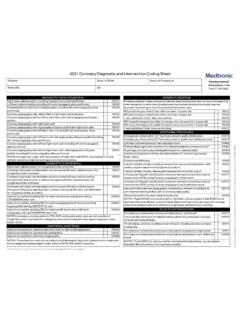
Coronary Diagnostic and Intervention Coding Sheet - Medtronic
asiapac.medtronic.comcardiac output measurement (separate procedure) 93561 Indicator dilution studies, subsequent measurement of cardiac output 93562 Intravascular Doppler velocity and/or pressure-derived coronary flow reserve +93571 Intravascular Doppler …

DETAILED STATISTICAL ANALYSIS PLAN (SAP) - ClinicalTrials.gov
clinicaltrials.govvariables urine output and capillary refill time an example (7). In our design paper, the SD of cardiac index was 0.99 and the SD of urine output was 0.98, with a slope estimate of 0.040 obtained when cardiac index was regressed against urine output. The SD of capillary refilltime was 2.4, with a slope

Biopotential Amplifiers - Michigan State University
www.egr.msu.edu• output impedance of the amplifier ... • dipole represented as a cardiac vector M • Mi th di l tM is the dipole moment ... source of the electric field and the measurement systemsource of the electric field and the measurement system • very important for EEG measurement
ISUOG Practice Guidelines: performance of firsttrimester ...
www.isuog.orgconfirm the presence of an embryo with cardiac activity at the time of examination. Embryonic cardiac activity has been documented in normal pregnancies at as early as 37 days of gestation29, which is when the embryonic heart tube starts to beat30. Cardiac activity is often evident when the embryo measures 2 mm or more31, but is not