SELF-ASSESSMENT CHECKLIST FOR GOOD TESTING PRACTICES
sample and testing? Do you properly label the sample collection device? Do you follow all test requisition, sample collection and handling specifications of the referral laboratory if applicable? Do you clean your hands and change gloves between patients? Do you keep disinfectants nearby for sanitizing bench tops and treating spills?
Download SELF-ASSESSMENT CHECKLIST FOR GOOD TESTING PRACTICES

Information
Domain:
Source:
Link to this page:
Documents from same domain
School Chemistry Laboratory Safety Guide
www.cdc.govSchool Chemistry Laboratory Safety Guide. October 2006. U.S. Consumer Safety Product Commission DEPARTMENT OF HEALTH AND HUMAN SERVICES. Centers for Disease Control and Prevention
Biosafety in Microbiological and Biomedical …
www.cdc.goviii. Foreword. Biosafety in Microbiological and Biomedical Laboratories (BMBL) quickly became the cornerstone of biosafety practice and policy in the United States upon first
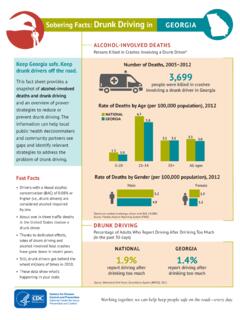
Sobering Facts: Drunk Driving in Georgia
www.cdc.govSobering Facts: Drunk Driving in GEORGIA Keep Georgia safe. Keep drunk drivers off the road. This fact sheet provides a snapshot of alcohol-involved deaths and drunk driving
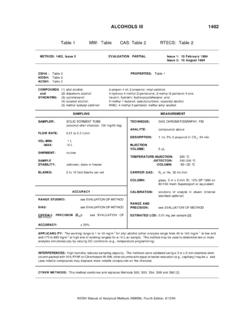
ALCOHOLS III 1402
www.cdc.govALCOHOLS III: METHOD 1402, Issue 2, dated 15 August 1994 - Page 3 of 4 a. Remove and discard back sorbent section of a media blank sampler. b. Inject a known amount of analyte or DE stock solution directly onto front sorbent section
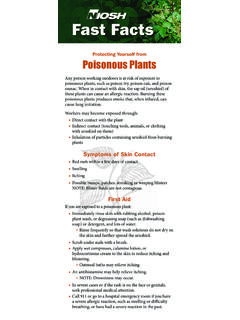
Fast Facts
www.cdc.govAny person working outdoors is at risk of exposure to poisonous plants, such as poison ivy, poison oak, and poison sumac. When in contact with skin, the sap oil (urushiol) of
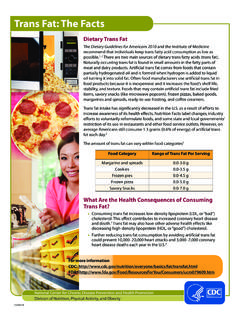
Trans Fat: The Facts
www.cdc.gov• Read the Nutrition Facts label and ingredient list to compare foods. » Choose products with 0 grams trans fat. » Check the Ingredient List to see if there is any partially hydrogenated oil in the product.
ANTIBIOTIC RESISTANCE THREATS
www.cdc.govApr 23, 2013 · 6. ANTIBIOTIC RESISTANCE THREATS IN THE UNITED STATES, 2013. Executive Summary. Antibiotic Resistance Threats in the United States, 2013. is a snapshot of the complex problem
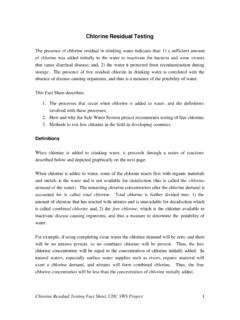
Chlorine Residual Testing
www.cdc.govChlorine Residual Testing Fact Sheet, CDC SWS Project 4 Methods to Test Free Chlorine in the Field in Developing Countries There are three main methods to test free chlorine residual in drinking water in the field
2018 Combined Recommended Immunization …
www.cdc.govRecommended Immunization Schedule for Children and Adolescents Aged 18 Years or Younger, UNITED STATES, 2018 Approved by the Advisory Committee on …
Traveling? Make Sure You Protect Yourself from …
www.cdc.govCS26201 Malaria transmission occurs throughout Malaria transmission occurs in some parts Malaria transmission is not known to occur Center for Global Health
Related documents
Environmental Monitoring - CERHB
www.cerhb.ufl.eduViable Particle Testing (Settling Plates, Air Samplers, RODAC Plates) • Use a growth medium with low selectivity i.e. capable of supporting a broad spectrum of microorganisms including bacteria, fungi, yeast and molds. – TSA (Tryptone Soya Agar) supports general microbial colonies. – SDA (Sabouraud Dextrose Agar) supports yeast and fungal
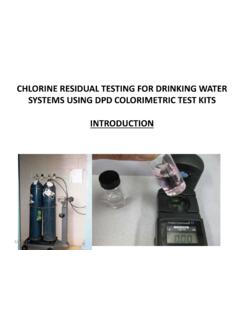
Chlorine Testing DPD Method
health.hawaii.govMar 06, 2017 · disinfectants. 3/6/2017. OVERVIEW OF WATER DISINFECTION. Water Disinfection and the History of Chlorination Disinfection of water practiced for millenniums. ... any adverse effects, it is essential that proper testing procedures be used with a …

A Simple Guide to TDS Testing
images-na.ssl-images-amazon.comTesting TDS in pool and spa water Testing the TDS in swimming pools and spas is easy. Simply place the meter into the water, preferably near flowing water. Hold the meter until the TDS reading stabilizes. Thoroughly rinse the meter after each use. The water contains disinfectants and body oils that must be rinsed from the probe after each use.
Legionella Sampling Procedure and Potential Sampling Sites
www.cdc.govSterile plastic 500 mL or 1 L bottle for testing chlorine level, pH, and temperature. pH test kit. Chlorine test kit sensitive enough to detect chlorine level below 2 ppm and up to 10 ppm (may need two kits). Free chlorine may be measured when it is known that chlorine is the method of disinfection (as opposed to

Disinfectants and sanitizers for use on food contact surfaces
www.ncceh.caof disinfectants for food premises which contain chlorine compounds (e.g., bleach), peroxide and peroxyacid mixtures, carboxylic acids, quaternary ammonium compounds, acid anionic, and iodine compounds for use on food-contact surfaces. • Disinfectants. for use in food premises must have a drug identification number (DIN) and meet criteria ...

Specimen Collection Handbook - SAMHSA
www.samhsa.govHuman Services Mandatory Guidelines for Federal Workplace Drug Testing Programs (82 FR 7920) dated January 23, 2017 (effective October 1, 2017). This manual does not apply to specimens submitted for testing under U.S. Department of Transportation (DOT) Procedures for Transportation Workplace Drug and Alcohol Testing Programs (49 CFR Part 40).

Jar Testing: How to Design and Perform Representative Jar ...
www.tceq.texas.govSep 08, 2019 · disinfectants. For example, a Cryptosporidium oocyst remains infective after half-an-hour of contact with 25 mg/L of free chlorine. Therefore, some pathogens must be physically removed from the water.
Revised October 26, 2021 COVID-19 Guidance for Taxi and ...
www.toronto.ca• Passengers with symptoms of COVID-19 should be directed to an assessment centre for testing as soon as possible, and to self-isolate at home until their results are available. • For shared rides, passengers from different households should be seated two metres apart. If this is not possible, minimize shared rides.