
SINGLE-DOSE MUL TI-DOSE?
DURING THE PROCEDURE. Use aseptic technique. Use a new needle and syringe for every injection. Be sure to clean your hands immediately before handling any medication. Disinfect the medication vial by rubbing the diaphragm with alcohol. Draw up all medications in a clean medication preparation area. AFTER THE PROCEDURE. Discard all used needles ...
Download SINGLE-DOSE MUL TI-DOSE?

Information
Domain:
Source:
Link to this page:
Documents from same domain
School Chemistry Laboratory Safety Guide
www.cdc.govSchool Chemistry Laboratory Safety Guide. October 2006. U.S. Consumer Safety Product Commission DEPARTMENT OF HEALTH AND HUMAN SERVICES. Centers for Disease Control and Prevention
Biosafety in Microbiological and Biomedical …
www.cdc.goviii. Foreword. Biosafety in Microbiological and Biomedical Laboratories (BMBL) quickly became the cornerstone of biosafety practice and policy in the United States upon first
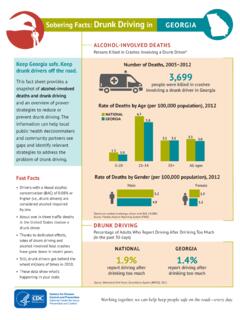
Sobering Facts: Drunk Driving in Georgia
www.cdc.govSobering Facts: Drunk Driving in GEORGIA Keep Georgia safe. Keep drunk drivers off the road. This fact sheet provides a snapshot of alcohol-involved deaths and drunk driving
ALCOHOLS III 1402
www.cdc.govALCOHOLS III: METHOD 1402, Issue 2, dated 15 August 1994 - Page 3 of 4 a. Remove and discard back sorbent section of a media blank sampler. b. Inject a known amount of analyte or DE stock solution directly onto front sorbent section
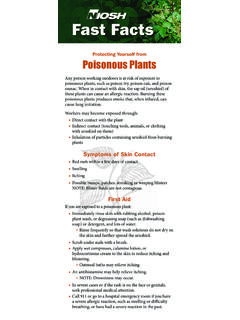
Fast Facts
www.cdc.govAny person working outdoors is at risk of exposure to poisonous plants, such as poison ivy, poison oak, and poison sumac. When in contact with skin, the sap oil (urushiol) of
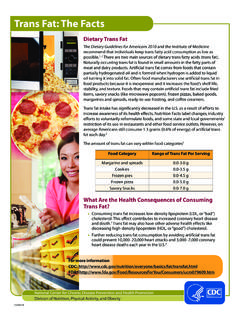
Trans Fat: The Facts
www.cdc.gov• Read the Nutrition Facts label and ingredient list to compare foods. » Choose products with 0 grams trans fat. » Check the Ingredient List to see if there is any partially hydrogenated oil in the product.
ANTIBIOTIC RESISTANCE THREATS
www.cdc.govApr 23, 2013 · 6. ANTIBIOTIC RESISTANCE THREATS IN THE UNITED STATES, 2013. Executive Summary. Antibiotic Resistance Threats in the United States, 2013. is a snapshot of the complex problem
Chlorine Residual Testing
www.cdc.govChlorine Residual Testing Fact Sheet, CDC SWS Project 4 Methods to Test Free Chlorine in the Field in Developing Countries There are three main methods to test free chlorine residual in drinking water in the field
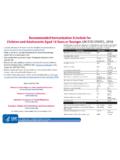
2018 Combined Recommended Immunization …
www.cdc.govRecommended Immunization Schedule for Children and Adolescents Aged 18 Years or Younger, UNITED STATES, 2018 Approved by the Advisory Committee on …
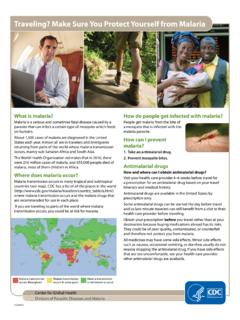
Traveling? Make Sure You Protect Yourself from …
www.cdc.govCS26201 Malaria transmission occurs throughout Malaria transmission occurs in some parts Malaria transmission is not known to occur Center for Global Health
Related documents
Environmental Monitoring - CERHB
www.cerhb.ufl.edu– Personnel - operator status (grade), level of training, health, technique, wash up – Cleaning procedures – Changing procedure – HEPA filter integrity of room/clean air device – Processes carried out – Previous test results for trends or other identified problems. •Liasewith – Aseptic personnel – Microbiology personnel

Hand Hygiene: Why, How & When? - WHO | World Health ...
www.who.int5Before clean / aseptic procedure WHY? To protect the patient against infection with harmful germs, including his/her own germs, entering his/her body WHEN? Clean your hands immediately before accessing a critical site with infectious risk for the patient (e.g. a mucous membrane, non-intact skin, an invasive medical device)*
Novel Coronavirus (SARS-CoV-2) Real-Time Multiplex RT-PCR …
www.who.intApr 09, 2020 · of nucleases into samples during and after the extraction procedure. Proper aseptic technique should always be used when working with nucleic acids. Maintain separate, dedicated equipment (e.g., pipettes, microcentrifuges) and supplies (e.g., microcentrifuge tubes, pipette tips) for assay setup and handling of extracted nucleic acids.

AstraZeneca COVID-19 Vaccine Multidose Vial Preparation
www.dhhs.vic.gov.auUsing aseptic technique, firmly attach 23G or 25G needle to a 1mL syringe. 4 Draw air Using aseptic technique, draw up 0.5mL of air into the empty syringe. 5 Puncture vial Puncture the bung of the vial, equalising pressure by injecting the air into the vial. 6 Invert and draw Invert vial and draw up 0.5 mL of the vaccine into the 1ml syringe. 7

AstraZeneca COVID-19 Vaccine Multidose Vial Preparation
www.dhhs.vic.gov.auUsing aseptic technique, firmly attach drawing up needle to a 1mL syringe. ATAGI strongly recommends using a 19-21 gauge bevelled needle to reduce the risk of coring. 4 Draw air Using aseptic technique, draw up 0.5mL of air into the empty syringe 5 Puncture vial Puncture the bung of the vial, equalising pressure by injecting the air into the vial.

Guidelines for hand hygiene in Irish healthcare settings
www.hpsc.ieClean hands according to the WHO ‘5 moments for hand hygiene’: - ldiately before each episode of direct patient contact or care (IB)imme ldiately before a clean/aseptic procedure (IB)imme ldiately after contact with body fluids or excretions, mucous membranes, non-intact skin or wound imme dressings (IA)