
Specimen Collection Guidelines
BAL fluid, tracheal aspirate, pleural fluid . Collect specimens in sterile containers. Centrifuge half of the specimen, and fix the cell pellet in formalin. Place the remaining uncentrifuged fluid into sterile vials with external caps and internal O-ring seals. If there is no internal O-ring seal, then seal tightly with the available cap and secure
Download Specimen Collection Guidelines

Information
Domain:
Source:
Link to this page:
Documents from same domain

School Chemistry Laboratory Safety Guide
www.cdc.govSchool Chemistry Laboratory Safety Guide. October 2006. U.S. Consumer Safety Product Commission DEPARTMENT OF HEALTH AND HUMAN SERVICES. Centers for Disease Control and Prevention

Biosafety in Microbiological and Biomedical …
www.cdc.goviii. Foreword. Biosafety in Microbiological and Biomedical Laboratories (BMBL) quickly became the cornerstone of biosafety practice and policy in the United States upon first
Sobering Facts: Drunk Driving in Georgia
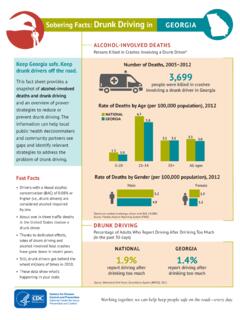
www.cdc.govSobering Facts: Drunk Driving in GEORGIA Keep Georgia safe. Keep drunk drivers off the road. This fact sheet provides a snapshot of alcohol-involved deaths and drunk driving
ALCOHOLS III 1402
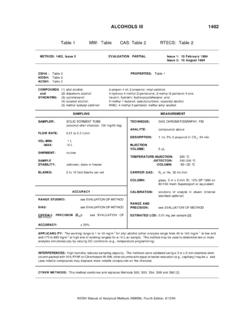
www.cdc.govALCOHOLS III: METHOD 1402, Issue 2, dated 15 August 1994 - Page 3 of 4 a. Remove and discard back sorbent section of a media blank sampler. b. Inject a known amount of analyte or DE stock solution directly onto front sorbent section
Fast Facts
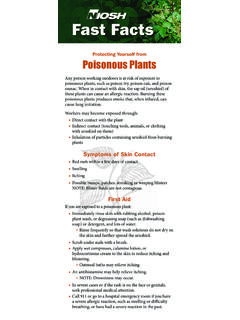
www.cdc.govAny person working outdoors is at risk of exposure to poisonous plants, such as poison ivy, poison oak, and poison sumac. When in contact with skin, the sap oil (urushiol) of

Trans Fat: The Facts
www.cdc.gov• Read the Nutrition Facts label and ingredient list to compare foods. » Choose products with 0 grams trans fat. » Check the Ingredient List to see if there is any partially hydrogenated oil in the product.

ANTIBIOTIC RESISTANCE THREATS
www.cdc.govApr 23, 2013 · 6. ANTIBIOTIC RESISTANCE THREATS IN THE UNITED STATES, 2013. Executive Summary. Antibiotic Resistance Threats in the United States, 2013. is a snapshot of the complex problem
Chlorine Residual Testing
www.cdc.govChlorine Residual Testing Fact Sheet, CDC SWS Project 4 Methods to Test Free Chlorine in the Field in Developing Countries There are three main methods to test free chlorine residual in drinking water in the field
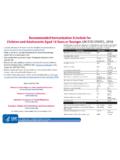
2018 Combined Recommended Immunization …
www.cdc.govRecommended Immunization Schedule for Children and Adolescents Aged 18 Years or Younger, UNITED STATES, 2018 Approved by the Advisory Committee on …

Traveling? Make Sure You Protect Yourself from …
www.cdc.govCS26201 Malaria transmission occurs throughout Malaria transmission occurs in some parts Malaria transmission is not known to occur Center for Global Health
Related documents

Pleural effusions: Evaluation and management
internal.medicine.ufl.eduJun 05, 2012 · pleural fluid, its distribution and accessibility, and possible associated intrathoracic abnor-malities. Chest radiography Standard posteroanterior and lateral chest radiography remains the most important tech-nique for the initial diagnosis of pleural effu-sion. Free pleural fluid flows to …
Focused Endocrine Assessment Print Version
lms.rn.comAn accumulation of serous fluid in various tissues and cavities of the body. Cushing’s syndrome ... Examples of endocrine abnormalities you may percuss are an enlarged pancreas, a pleural effusion associated with specific endocrine abnormalities, or a hormone-secreting tumor (Jarvis, 2011; Shaw, 2012).
The modern diagnosis and management of pleural effusions
www.bmj.comA pleural effusion describes an excess of fluid in the pleural cavity, usually resulting from an imbalance in the normal rate of pleural fluid production or absorption, or both. Pleural effusions are common, with an estimated 1-1.5 mil - lion new cases in the United States and 200 000-250 000 in the United Kingdom each year. 1 This review describes

Intrapleural Fibrinolytics (tPA + DNase) for Pleural Infection
www.gloshospitals.nhs.uk(1) Intrapleural bleeding – Haemorrhagic pleural fluid is a common observation following administration but frank intrapleural bleeding is rare (2%). Rarely, a blood transfusion may be necessary as a result. (2) Discomfort/pain – Normal Saline (0.9% NaCl) flushes cause pain in approximately 3% of patients.
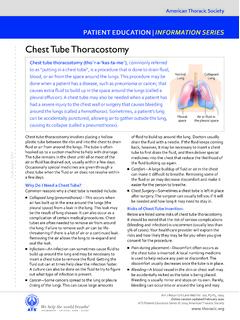
Chest Tube Thoracostomy - American Thoracic Society
www.thoracic.orgpleural space) from a leak in the lung. This leak may be the result of lung disease. It can also occur as a complication of certain medical procedures. Chest tubes are often needed to remove air from around the lung. Failure to remove such air can be life- ... fluid out can at times help clear the infection faster.
Malignant Pleural Effusion - American Thoracic Society
www.thoracic.orgA pleural effusion is an abnormal build-up of fluid in the pleural space. What causes a pleural effusion? A pleural effusion can be caused by many diseases. It can be seen in infections and other diseases in addition to various cancers. In general, fluid builds up in the pleural space if there is an overproduction of fluid, decreased