Summary - WHO
of crops, and animals who consume the crops, and their resulting food output. The production of food itself may also be directly affected by climate change through the alteration of survival and/ or multiplication rates of some food-borne pathogens. For example, the multiplication of Salmonella spp., a . climate.
Download Summary - WHO

Information
Domain:
Source:
Link to this page:
Documents from same domain
INVESTING IN HEALTH FOR ECONOMIC …
www.who.int2 INVESTING IN HEALTH FOR ECONOMIC DEVELOPMENT Report by the Mexican Commission on Macroeconomics and health 3 The …
WHO GOOD PRACTICES FOR PHARMACEUTICAL …
www.who.intworking document qas/09.297/rev.2 page 2 schedule for the proposed adoption process of document qas/09.297/rev.2: who good practices for pharmaceutical microbiology laboratories
NORMES ET STANDARDS EN INFRASTRUCTURES …
www.who.intnormes et standards en infrastructures et equipements du centre de sante et de promotion sociale, du centre medical avec antenne chirurgicale et du …
Heterotrophic Plate Count Measurement in …
www.who.intWorld Health Organization Sustainable Development and Healthy Environments Heterotrophic Plate Count Measurement in Drinking Water Safety Management
Annex 3 WHO good manufacturing practices for ...
www.who.int96 Introduction The fi rst WHO draft text on good manufacturing practices (GMP) was prepared in 1967 by a group of consultants at the request of the Twentieth
Annex 5 WHO good distribution practices for …
www.who.int236 1. Introduction Distribution is an important activity in the integrated supply-chain management of pharmaceutical products. Various people and entities are
Annex 2 WHO good practices for pharmaceutical …
www.who.int71 Introduction and scope of document Pharmaceutical microbiology laboratories may be involved in: — sterility testing; — detection, isolation, enumeration and identifi cation of microorganisms

LABORATORY BIOSAFETY MANUAL - WHO
www.who.intinterim guidelines WHO/CDS/CSR/LYO/2003.4 LABORATORY BIOSAFETY MANUAL SECOND EDITION (REVISED) WORLD HEALTH ORGANIZATION Geneva 2003
Mycobacteriology Laboratory Manual - WHO
www.who.intMycobacteriology Laboratory Manual ii Edita Pimkina, Infectious Diseases and Tuberculosis Hospital Affi liate of Public institution …
Laboratory Guidelines for enumerating CD4 T …
www.who.intSEA-HLM-392 Distribution: Limited Laboratory Guidelines for enumerating CD4 T Lymphocytes in the context of HIV/AIDS Regional Office for South-East Asia
Related documents
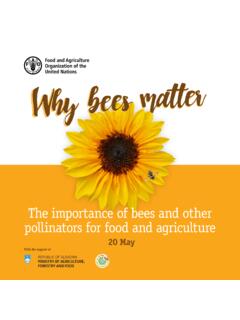
The importance of bees and other pollinators for food and ...
www.fao.orgThree out of four crops across the globe producing fruits or seeds for human use as food depend, at least in part, on pollinators. Improving pollinator density and diversity boosts crop yields – pollinators affect 35 percent of global agricultural land, supporting the production of 87 of the leading food crops worldwide.

Written Food Safety Plans: Policies, Procedures, and ...
ag.purdue.eduWritten Food Safety Plans: Policies, Procedures, and Documentation. Purdue University is an Equal Opportunity/Equal Access Institution. Funded in part by a USDA Specialty Crops Block Grant from the Indiana State Department of Agriculture. Scott Monroe. Food Safety Educator. Purdue Extension

Genetically Modified (GM) Crops: Techniques and Applications
extension.colostate.eduAgency (EPA), and the Food and Drug Administration (FDA). They do not, however, individually regulate all GM crops. For example, USDA is involved in approving the field release of most GM plants, but EPA is involved only in pest and pesticide resistance traits, and FDA only regulates crops destined for food, feed, or pharmaceuticals.
CLASSIFICATION OF CROPS - Food and Agriculture ...
www.fao.orgwetland/dryland rice), crop use (for example, pumpkin for food/fodder), type of product (for example, fresh/dried beans), how the crop is processed (for example, industrial crops), and cultivation methods (for example, crops grown under protective cover). ICC has been developed based on the Central Product Classification (CPC) (UN, 2004a).
Climate-Smart Agriculture
www.worldbank.orgresilient food crops and risk insurance. 1 Foreword Feeding people in decades to come will require ingenuity and innovation to produce more food on less land in more sustainable ways. Climate change will exacerbate already tight resource constraints by making weather more extreme and variable and by
Cereal Crops: Rice, Maize, Millet, Sorghum, Wheat
www.afdb.orgpoorest and most food-insecure places in the world. 4. Poor mechanization: The low level of mechanization in African agriculture has continued to serve as a huge impediment towards advancing cereal production, especially of wheat and rice which, in turn, results in the high cost of producing these crops. 5.
The Columbian Exchange: A History of Disease, Food, and Ideas
www.kellogg.northwestern.edunnels; namely, the biological exchange of food crops and disease. Our hope is that els; namely, the biological exchange of food crops and disease. Our hope is that oour broad descriptive overview of some of the neglected aspects of the Columbian ur broad descriptive overview of some of the neglected aspects of the Columbian
The Facts about Rats - FWS
www.fws.govRats cause great damage to agricultural crops such . as sugarcane, macadamia nuts, pineapple, coconuts, coffee, and other fruit and vegetable crops. Rats climb trees, eat eggs, and prey on nestlings and adult birds. They are considered a leading . cause of the accelerated decline and extirpation of endemic Hawaiian forest birds and a major factor

USDA Coexistence Factsheets - Soybeans
www.usda.govOrganic food-grade soybeans are used in food products like tofu, tempeh or soymilk, and can be produced in the United States or abroad. Organic feed-grade soybeans are used to develop organic ... Additionally, conventionally grown crops can be identity-preserved and grown for specific end-use markets, and therefore also receive premium prices ...