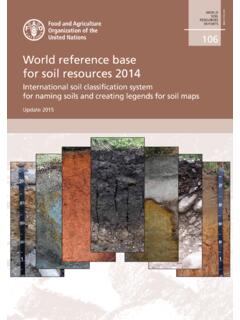
World reference base for soil resources 2014
The first edition of the World Reference Base for Soil Resources (WRB) was released at the 16th World Congress of Soil Science at Montpellier in 1998. At the same event, it was also endorsed and adopted as the system for soil correlation and international communication of the International Union of Soil Sciences (IUSS). The second edition
Download World reference base for soil resources 2014

Information
Domain:
Source:
Link to this page:
Documents from same domain
Forest and landscape restoration
www.fao.orgForest and landscape restoration An international journal of forestry and forest industries Vol. 66 2015/3 245 ISSN 0041-6436
i1379e - Good Practices for the Feed Industry ...
www.fao.orgFOOD AND AGRICULTURE ORGANIZATION OF THE UNITED NATIONS Rome, 2010 FAO ANIMAL PRODUCTION AND HEALTH 9 manual GOOD PRACTICES FOR THE FEED INDUSTRY Implementing the Codex Alimentarius
Adoption of Climate-Smart Agricultural Practices: …
www.fao.org1 Adoption of Climate-Smart Agricultural Practices: Barriers, Incentives, Benefits and Lessons Learnt from the MICCA Pilot Site in Kenya FINAL REPORT
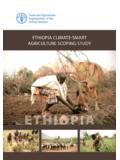
Ethiopia Climate-Smart Agriculture Scoping Study
www.fao.orgFOOD AND AGRICULTURE ORGANIZATION OF THE UNITED NATIONS Addis Ababa 2016 ETHIOPIA CLIMATE-SMART AGRICULTURE SCOPING STUDY Melaku Jirata, Sebastian Grey and Edward Kilawe
Climate-Smart Agriculture Sourcebook
www.fao.orgClimate-Smart Agriculture Sourcebook Summary Second Edition Food and Agriculture Organization of the United Nations Rome, 2017
FAO Statistical Pocketbook 2015 World Food and …
www.fao.orgFAO Statistical Pocketbook 2015 Food and Agriculture Organization of the United Nations, Rome, 2015
SOLOMON ISLANDS FORESTRY OUTLOOK STUDY
www.fao.orgasia-pacific forestry sector outlook study ii working paper series working paper no. apfsos ii/wp/2009/31 solomon islands forestry outlook study1 by
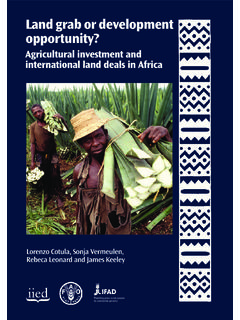
Landgrabordevelopment opportunity?
www.fao.orgLandgrabordevelopment opportunity? Agricultural investment and international land deals in Africa Enabling poor rural people to overcome poverty Lorenzo Cotula, Sonja …
The State of Food Insecurity in the World
www.fao.org2015 The State of Food Insecurity in the World Meeting the 2015 international hunger targets: taking stock of uneven progress
STATE OF THE WORLD’S FORESTS
www.fao.orgforests and agriculture: land-use challenges and opportunities state of the world’s forests 2016 state of the world’s forests 2016 fao
Related documents

Overconsumption? Our use of the world's natural resources
cdn.friendsoftheearth.ukOur use of the world’s natural resources | 3 Natural resources, including materials, water, energy and fertile land, are the basis for our life on Earth. However, humanity’s rapidly growing consumption of these resources is causing severe damage. Our climate is changing; fresh water reserves, fish stocks and forests are shrinking; fertile

Impact of a Growing Population on Natural Resources: The ...
files.eric.ed.govwater, and fossil energy exist in many regions of the world (Worldwatch Institute, 1992; WRI, 1994). This should serve as a warning to all people. Status of World Environmental Resources The quantity and quality of arable land, water, energy, and biodiversity balanced against human
GLOBAL WATER CRISIS - UNU-INWEH
inweh.unu.edupopulation - will live in severely water-stressed river basins². It is not just population that is pressuring water resources. Excessive use is also evident: the global population tripled in the 20th century, but the use of water increased six-fold³. Between now and 2050, water demands are expected to increase by 400% from
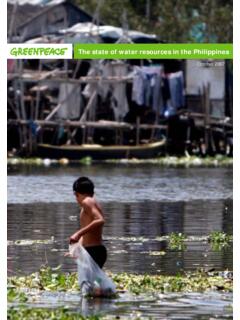
G The state of water resources in the Philippines
www.greenpeace.orgMay 11, 2019 · 11 I. Surface water and groundwater resources 13 II. Quality of water resources A. Water quality classification B. Water quality assessment C. Groundwater quality assessment D. Pollution hotspots E. Health and environmental impacts F. Efforts to address problems on water quality 26 III. Status of water use and supply
A Handbook for Integrated Water Resources Management …
www.inbo-news.orginternational network whose vision is for a water-secure world. The GWP mission is to support the sustainable development and management of water resources at all levels. GWP was created in 1996 to foster integrated water resources management (IWRM), and to ensure the co-ordinated development and management of water, land and related
Water Wise Worksheet
www.niwater.comWater plays a vital role in all our lives and is a precious resource. So it’s not surprising that its study offers exciting and fun opportunities for learning on a cross curriculum basis. H20’s Wonderful World of Water can have application in: The World Around Us e.g. making observations; noting weather changes;

Sustainable Management of Water Resources in Agriculture
www.oecd.orgSustainable Management of Water Resources in Agriculture Agriculture is the major user of water in most countries. It also faces the enormous challenge of ... An OECD Perspective on Pricing and Financing at the World Water Forum in Istanbul in March 2009. Information on water resource management in agriculture across OECD countries
INTEGRATED WATER RESOURCE MANAGEMENT - World …
www.worldwatercouncil.orgwater resources. They called for mobilisation of community action, water resources assessments, the sensitisation of lawmakers and better flow of information on water to the public. The basic building blocks for the actions that will make us better at water resources management were articulated in 1977.