Transcription of Calcium Fact Sheet for Consumers - National Institutes of ...
1 What is Calcium and what does it do? Calcium is a mineral your body needs to build and maintain strong bones and to carry out many important functions. Calcium is the most abundant mineral in the all Calcium in the body is stored in bones and teeth, giving them structure and body needs Calcium for muscles to move and for nerves to carry messages between your brain and every part of your body. Calcium also helps blood vessels move blood throughout your body and helps release hormones that affect many functions in your much Calcium do I need?
2 The amount of Calcium you need each day depends on your age and sex. Average daily recommended amounts are listed below in milligrams (mg):Life StageRecommended AmountBirth to 6 months200 mgInfants 7 12 months260 mgChildren 1 3 years700 mgChildren 4 8 years1,000 mgChildren 9 13 years1,300 mgTeens 14 18 years1,300 mgAdults 19 50 years1,000 mgAdult men 51 70 years1,000 mgAdult women 51 70 years1,200 mgAdults 71 years and older1,200 mgPregnant and breastfeeding teens1,300 mgPregnant and breastfeeding adults1,000 mgWhat foods provide Calcium ?
3 Calcium is found in many foods. You can get recommended amounts of Calcium by eating a variety of foods, including the following: Milk, yogurt, and cheese are the main food sources of Calcium for most people in the United States. Canned sardines and salmon with bones contain Calcium . Certain vegetables, such as kale, broccoli, and Chinese cabbage (bok choi) also contain Calcium . Calcium is added to some beverages, including many fruit juices and milk sub-stitutes such as soy and almond beverages, as well as some brands of tofu and ready-to-eat cereals.
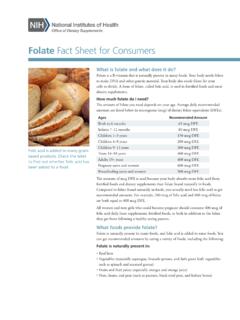
4 To find out whether these foods have Calcium added, check the product labels. Most grains (such as breads, pastas, and unfortified cereals) do not have high amounts of Calcium . However, because people eat them often, what they contribute adds Fact Sheet for ConsumersCalcium-rich foods include milk, cheese, and yogurt; vegetables like kale, broccoli, and Chinese cabbage; and canned sardines and salmon with soft bones that you kinds of Calcium dietary supplements are available? Calcium is found in many multivitamin-mineral supplements, in Calcium supplements, and in supplements that contain Calcium and other nutrients such as vitamin D.
5 Check the Supplement Facts label to determine the amount of Calcium in the two main forms of Calcium in dietary supplements are Calcium carbonate and Calcium citrate. Calcium carbonate is absorbed best when taken with food. Some over-the- counter antacids, such as Tums and Rolaids, also contain Calcium citrate is well absorbed on an empty stomach or a full stomach. People with low levels of stomach acid a condition most common in older people absorb Calcium citrate more easily than Calcium forms of Calcium in supplements and fortified foods include Calcium sulfate, Calcium ascorbate, Calcium microcrystalline hydroxyapatite, Calcium gluconate, Calcium lactate, and Calcium is absorbed best when you take 500 mg or less at one time.
6 If you take 1,000 mg/day of Calcium from supplements, for example, it is better to take a smaller dose twice a day than to take it all at supplements might cause gas, bloating, and constipation in some people. If you have any of these symptoms, try spreading out the Calcium dose throughout the day, taking the supplement with meals, or switching the form of Calcium you I getting enough Calcium ?Many people in the United States get less than recommended amounts of Calcium from food and supplements, especially: Children and teens aged 4 to 18 years People who are Black or Asian Adults aged 50 years and older living in povertyCertain groups of people are more likely than others to have trouble getting enough Calcium , including: Postmenopausal women.
7 The body absorbs and retains less Calcium after menopause. Over time, this can lead to fragile bones. People who don t drink milk or eat other dairy products. Dairy products are rich sources of Calcium , but people with lactose intolerance, people with milk allergies, and vegans (people who don t consume any animal products) must find other sources of Calcium . Options include lactose-free or reduced-lactose dairy products; canned fish with bones; certain vegetables, such as kale, broccoli, and Chinese cabbage; Calcium -fortified fruit juices and milk substitutes such as soy and almond beverages, tofu, and ready-to-eat cereals; and dietary supplements that contain happens if I don t get enough Calcium ?
8 Getting too little Calcium can cause several conditions, including the following: Osteoporosis, which causes weak, fragile bones and increases the risk of falling Rickets, a disease in children that causes soft, weak bones Osteomalacia, which causes soft bones in children and adultsWhat are some effects of Calcium on health?Scientists are studying Calcium to understand how it affects health. Here are several examples of what this research has shown: Bone health in older adultsAfter about age 30, bones slowly lose Calcium . In middle age, bone loss speeds up and can lead to weak, fragile bones (osteoporosis) and broken bones (fractures).
9 Although bone loss is more common in women, it can affect men health of your bones is measured with a bone mineral density test, which will tell whether your bones are healthy and strong, or weak and thin. Some studies have found that Calcium supplements with or without vitamin D increase bone mineral density in older adults, but others do not. In addition, it is not clear whether Calcium supplements help prevent fractures. More research is needed to better understand whether consuming more Calcium from food or supplements improves bone health in older Some research shows that people who have high intakes of Calcium from food and supplements have a lower risk of cancers of the colon and rectum, but other studies do not.
10 Some studies have shown that men with high intakes of Calcium from dairy foods have an increased risk of prostate cancer. For other types of cancer, Calcium does not appear to affect the risk of getting cancer or dying of cancer. More research is needed to better understand whether Calcium from foods or dietary supplements affects cancer DiseaseCalcium can attach to fats and reduce the amount of fat that your body absorbs. Some studies show that Calcium supplements have no effect on heart disease, while others show Calcium supplements might even increase the risk of heart disease.