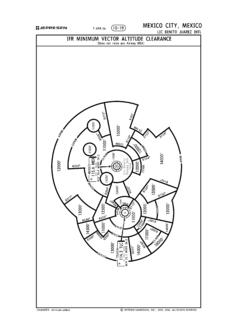
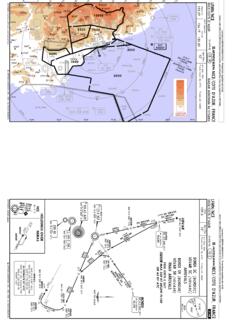
Transcription of JeppView : EHAM (87 charts)
1 | JEPPESEN SANDERSON, INC., 2005. ALL RIGHTS JUN 05 CHANGES:EHAM/AMS SCHIPHOLAMSTERDAM, NETHERLANDSJEPPESEN1. GENERALU sually, the braking action at Shiphol APT is good, even when the RWY is wet. The braking action will be less than good only in case of extreme rainfall or LOW VISIBILITY PROCEDURES (LVP) TAXI PROCEDURESW eatherRVR less than 550m and/orcloud base less than 200'CrossTailGoodCrossTailMedium to goodMediumMedium to poorPoorBrakingactionWindcomponentRVR 550m or more andcloud base 200' or more20 KT10 KT5 KT7 KT0 KT15 KT10 KT5 KT7 KT0 KTThe ATC low visibility procedures are categorized in four phases (A, B, C, D), that are based on RVR values and cloud base. LVP become effective when the TDZ RVR equals or drops below 1500m and/or the cloud base is equal to or less than 300'.
2 First, the minimum separation for arriving ACFT and the departure interval will be increased. Next, RWY use will be restricted. Ultimately (in phase C and D), only one RWY with ILS CAT III will be available for landing and one for departure. Taxi guidance based on surface movement radar (SMR) information will be provided (shared pilot/ATC responsibility for routing and avoidance of inadvertent RWY entry in phase C & D). pilots should not request start-up permission unless the RVR values for the take-off RWY are above the take-off limits for the flight. pilots should be informed about the RVR minimums that apply to their flights, so that they can readily respond to requests about these minimums. If the SMR and /or the RWY stop bars are out of sevice, additional restrictions apply.
3 If the RVR values drop below 200m and the SMR is out of service, the APT will ultimately be closed for all traffic (ATIS/RTF: "Schiphol below operational limits"). During LVP all RWY exits, entries and crossings (except RWY 04/22) are safeguarded by switchable (remote controlled) or fixed stop bars. Crossing of activated stop bars is prohibited. Traffic may proceed only after ATC clearance when the stop bar lights are switched off. - Some RWY crossings are safeguarded under all visibility conditions. At these positions crossing of activated stop bars is also prohibited. Traffic may proceed only after ATC clearance when the stop bar lights are switched During LVP taxi between Schiphol-Centre & Schiphol-East via RWY 18L/36R is only possible as follows: - from Schiphol-East to Schiphol-Centre taxi via twy E3 or G5.
4 - from Schiphol-Centre to Schiphol-East taxi via twy E4 or During LVP, intersection departures are not RULES:- All ACFT give way to ACFT vacating All ACFT give way to ACFT on TWY A & B (except if first rule is applicable). For wing span restrictions refer to 10-9 to BRITISH AIRWAYS PLC, . Printed from JeppView disc : After 0901Z this chart should not be used without first checking JeppView or NOTAMs.| JEPPESEN SANDERSON, INC., 2005. ALL RIGHTS OCT information. Visual :EHAM/AMS SCHIPHOLAMSTERDAM, NETHERLANDSJEPPESEN1. PARKING VISUAL DOCKING GUIDANCE SYSTEMSS ystemOperational on gatesSAFEDOCKSAFEGATE display,in combination withSAFEDOCK lasersystemB9 thru B15, B17, B18, B19, D3, D4, D5, D7, D8, D10, D12, D14, D16, D18, D22, D24, D26, D28,D41A/B, D43A/B, D88, D90, D92 thru D95, E2 thru E9, E17 thru E20, E22, E24, E72, E75, E77, F3, F4, F5, F8, F9 and G2 thru , D21, D23, D25, D27, D29, D31.
5 SAFEGATEAGNIS/PAPAFor stand graphic of visual docking guidance systems refer to 10-9 USE OF APUI nstead of using the APU it is urgently requested to use external power supplies, 400Hz or GPU. If absolutely necessary, APU may be used during the periodneeded to cool or heat the cabin. Where necessary, it may also be used for OTHER GENERALC18, D42, D44, D46 thru D49, D51A/B thru D57A/B, F2, F6 and in vicinity of reported for RWY in use at TDZ, MID and Rollout, identified by A, B and RWYs have an anti-skid JETBLAST HAZARDCAUTION: Jetblast hazard exists, when the following RWY combinations in use:- Departure RWY 18L with departure RWY Departure RWY 24 with landing RWY Departure RWY 18L (E5) with landing RWY 27 or departure RWY will time all departures from RWY 18L, from RWY 24 and all heavy departures from RWY 24 (S6).
6 B51, B52, B53, B61, B62, B63, C4 thru C10, C12, H1 thru H7, S72, S74, S77, S79, S82, S84 all parking positions except GA, GA1, J72 thru J80 and M71 thru M77nose-in parking and push-back procedures are applicable. Self docking procedure (w/o marshaller or visual docking guidance system)on apron B implemented (except stands B31, B32 & B34).ACFT shall stop at the indicated stop position when the marking is in line withpilots eye view at an angle of 90^ to the lead in line. Push-pull for B757-200 and larger from stands E8, E18, H2, H4, on TWY A16 from stands E3, E5, E7, E9, F2, F4 and F6. On TWY A14 push-pull from stands E17 and E19. Push-pull for B757-200 and larger and MD11, but not for B747, B777, A300, A330and A340 from stands E2, E4 and E6.
7 Push-back on TWY A14 for ACFT up to including B737-900 from stand E3. Push-back on TWY A for B747, B777, A330, A340 and MD11 from stand F3. CAUTION: Compass deviations, caused by underground train may occur when an ACFT is parked at the stands of the E-pier, in the area between the E- and F-pier, or when following the TWYs in the vicinity of the E-pier. In order to prevent dazzling the marshaller or the push-back crew, pilots arerequested when reaching or leaving the parking position on the apron, to switch-off their landing lights and, when equipped with both a conventional red anti-collision light and a sequenced white strobe light system, to switch-off the lattersystem as to BRITISH AIRWAYS PLC.
8 Printed from JeppView disc : After 0901Z this chart should not be used without first checking JeppView or NOTAMs.| JEPPESEN SANDERSON, INC., 2005. ALL RIGHTS OCT :EHAM/AMSSCHIPHOLAMSTERDAM, NETHERLANDSJEPPESEN1. OPERATION OF MODE S TRANSPONDERSACFT operators should ensure that the Mode S transponders are able to operate when the ACFT is on the ground according to ICAO specifications. pilots shall select the assigned Mode A (squawk) code and activate the Mode S transponder:- from request of push-back or taxi whichever is after landing, continuously until the ACFT is fully parked on stand. The transponder shall be deactivated immediately after parking. Aviation of the Mode S transponder means selecting AUTO Mode, ON, XPNDR, or equivalent according to specific of the STAND-BY Mode will NOT activate the Mode S transponder.
9 Depending on the hardware configuration, selecting ON could overrule the required suppression of SSR replies and Mode S all-call replies when the transponder is on the ground. Whenever the ACFT is capable of reporting ACFT identification ( call sign used in flight), the ACFTs identification should be entered before the activation of the transponder. To ensure that the performance of systems based on SSR frequencies (including airborne TCAS units and SSR radars) is not compromised, TCAS should not be selected before receiving the clearance to line up. It should then be deselected after vacating the RWY. For ACFT taxiing without flight plan, Mode A code 1000 should be to BRITISH AIRWAYS PLC, . Printed from JeppView disc : After 0901Z this chart should not be used without first checking JeppView or | JEPPESEN SANDERSON, INC.
10 , 2005, 2006. ALL RIGHTS APPROACH & CALLSIGNSCHIPHOL ARRIVAL & CALLSIGNRNAV OCT :EHAM/AMSSCHIPHOLAMSTERDAM, NETHERLANDSJEPPESEN2. ARRIVAL APPROACH GENERALB etween IAFs and interception of final approach the navigation is based on The routes between IAFs ARTIP/SUGOL/RIVER and interception of finalduring NIGHT. RADAR VECTORS provided by ATC, except in case of RNAV are used in case of com-failure, except in case of RNAV approaches TRANSFER TO SCHIPHOL APPROACH RNAV DURING NIGHTW hile being transferred from AMSTERDAM Radar to SCHIPHOL Approach, initial contact shall be restricted toavoid frequency congestion. In specific situations, AMSTERDAM Radar may requestpilots on report additional information to SCHIPHOL Approach in the initial in order TRANSFER TO SCHIPHOL ARRIVAL only in order to avoidThe RNAV transition procedures for RWY 06 (11-2) or 18R (11-5) must be executed by all jet ACFT at transitions provide lateral guidance only, ATC will issue the clearance for further descent below FL 70 and the instruction to reduce speed below 250 descent from transition level or from 4000' or above begins at SOKSI forRWY 06 (11-2) and at NIRSI for RWY 18R (11-5).