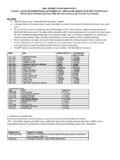
Transcription of A PROFILE OF THE SOUTH AFRICAN HIDES, SKINS …
1 A PROFILE OF THE SOUTH AFRICAN HIDES, SKINS AND leather MARKET VALUE CHAIN 2010 Directorate Marketing Private Bag X 15 Arcadia 0007 Tel: 012 319 8455 Fax: 012 319 8131 Email: Table of Contents 1. DESCRIPTION OF THE INDUSTRY. 3 2. PRODUCTION, PRICES AND CHANGES IN EMPLOYMENT IN HIDES, 4 SKINS AND leather INDUSTRY 45563045495152525353545656599. GOVERNMENT SUPPORT 70 Production bovine (cattle) hides Prices of SKINS , hides and leather (2010) 3. EXPORTS VOLUMES 4. IMPORTS VOLUMES Share Analysis 5. SKINS , HIDES AND leather VALUE CHAIN 6.
2 BLACK ECONOMIC EMPOWERMENT 7. MARKET ACCESS Export tariffs of SKINS , hides and leather in 2009 Non tariff barriers (NTB) European Union Japan China Error! Bookmark not defined. United States of America Import tariffs of SKINS , hides and leather 8. MARKET INTELLIGENCE 10.
3 APPENDIX A: GOODS AND FOOTWEAR leather 11. APPENDIX B: AUTOMOTIVE leather 13. APPENDIX C: SOUTH AFRICAN TANNARIES 14. APPENDIX D: INDUSTRY ASSOCIATIONS 215. ACKNOWLEDGEMENTS 1. DESCRIPTION OF THE INDUSTRY. Hides, SKINS and leather are by-products of farming stock and wild animals bred primarily for meat consumption. Thus, hides and SKINS are mainly recovered from slaughterhouses and farms.
4 Because the leather industry depends on the recovery of hides and SKINS of the farming stock and wild animals, availability of raw material directly depends on the size of the animal population, the take off ratio and the weight/size of the hide / skin recovered. The quality of SOUTH AFRICAN hides has been positively influenced by the rise in the number of feedlots operating in the meat industry, with animals thus spending less time in the open veldt. These hides are rated to be superior to other sub-Saharan AFRICAN and most Asian hides, but inferior to most hides from Australia, Argentina, the US and Europe. Their relatively small size compared with the last two origins ( to 4m2) and the use of non-hump breeds that produce large panels renders them just marginally suited for upholstery and automotive leather .
5 Over 60% of SOUTH AFRICAN hides are regarded as suitable for automotive leather . In SOUTH Africa SKINS and hides are given the following status types when they leave the abattoir: a. Gold status. This is the skin or hide that had been sourced from an approved registered abattoir where ante and post mortem examinations are routinely performed. These SKINS and hides must not originate from OIE recognized foot and mouth disease controlled areas of the Limpopo, Mpumalanga, Kwazulu Natal or the Kruger National Park b. Silver status. This is the skin or hide that had been sourced from an approved registered abattoir anywhere in SOUTH Africa where ante and post mortem examinations are routinely performed.
6 C. Bronze status. This is the skin or hide that had been sourced from an unapproved or unregistered abattoir without veterinary health certificate and/or original status has been compromised and/or exposed to contagion. 3 SKINS and hides are derived mainly from livestock and to a lesser extent from wild animals and reptiles. The following are the main categories of SKINS or hides according to species. Bovine (cattle) hide . Bovine hides dominate the supply of leather in SOUTH Africa. They are mainly by-product of meat production supplied by feedlots. Sheep skin . It is produced with or without wool mainly for export market. Pig skin . SOUTH Africa does not have significant supply of pig skin as this tends to be part of the meat.
7 Goat and kid skin leather . The supply of goat and kid SKINS is low as the majority of goats are slaughtered outside the abattoirs. Ostrich SKINS . Unlike bovine, ostrich is bred primarily for its skin ; and ostrich meat becomes a by-product. Ostrich leather is unique with its feather quill pattern. This gives it extra strength and durability which is 7 times stronger than bovine (cattle) hide . Ostrich leather is used to produce handbags, wallets, shoes, clothing etc. SKINS of wild animals. Many wild animals including elephants and buffalo are main sources of leather . skin of reptiles. Crocodiles and snakes are bred for their SKINS . 2. PRODUCTION, PRICES AND CHANGES IN EMPLOYMENT IN HIDES, SKINS AND leather INDUSTRY 4 Hides and SKINS are inputs to the leather industry.
8 The bulk of hides and SKINS are recovered from abattoirs. SOUTH Africa slaughters over 2 million cattle and over 4 million sheep every year. The availability of these products depends on the size of the slaughter facility and the species involved. Ostrich SKINS are mainly produced in Western Cape. Prices of hides are higher in SOUTH Africa than in other countries. This is because of the increase in demand of local hides caused by the Motor Industry Development Program (MIDP) which was introduced in 1995 and is scheduled to come to an end in 2012. The key component of the MIDP with regards to automotive upholstery is that it contained an import-export complementation scheme that gave credits to component manufacturers and assemblers for any exported goods.
9 These credits, which are transferable, could then be used by assemblers to offset the duty on parts or vehicles that they wanted to import. Export of stitched leather seat covers responded positively to this incentive and increased the demand for local hides and SKINS . Production bovine (cattle) hides Hides are by-products of the livestock (cattle) industry. The availability of hides and SKINS depends on the number of cattle slaughtered. Both in beef and dairy businesses, hides and SKINS are recovered and taken to firms for further processing. Interestingly Eastern Cape is the biggest producer of livestock but the bulk of the hides come from Mpumalanga, Gauteng, Free State and Kwazulu Natal as they have big abattoirs.
10 Prices of SKINS , hides and leather (2010) Table 1 Type of SKINS , Hides & leather Prices per skin Merino sheep skin Merino medium skin Short wool skin Sheared wool skin Cattle skin per kilogram Ostrich feathers(Wings) R800 R1000/ kilogram Ostrich-body long feathers R700/kilogram Ostrich- body short feathers R40 R100/ kilogram Ostrich- body flaws R700/kilogram Goat dry skin skin Goat skin after tanning / skin Impala (grade 1) Bless Bok (grade 1) Sources: skin , Hides & leather Council, Klein Karoo International Ltd, IMPEC (Integrated Meat Processors of the Eastern Cape) Table 1 indicates different types of SKINS , hides and leather and prices of different products as indicates in the first column.