Transcription of Internship Guidelines for Unemployed Youth - …
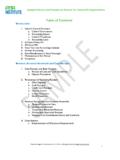
1 LD/GL002/2017 Page 1 of 12 Internship Guidelines for Unemployed Youth Status: Approved Custodian: Learning Division Manager Approved: Chief Executive Officer Decision Date: 13/11/2014 Review Date: 14/08/2015 5/12/2016 Version Number: LD/GL002/2017 LD/GL002/2017 Page 2 of 12 Table of Contents Internship Guidelines for Unemployed Youth .. 1 Acronyms .. 3 1. Preamble .. 4 2. Grant Regulations .. 4 3. Discretionary Funds .. 5 4. Internships .. 5 5. Application windows .. 6 6. Internship funding .. 6 Eligibility for funding .. 6 Employers: .. 6 Interns: .. 6 Funding Amount .. 7 7. 7 8. INSETA Intern Grant Approval .. 7 10. Commencement of Internship .. 9 11. Payment of Internship Funds to the Employer .. 10 11. Roles and Responsibilities .. 11 Employers .. 11 Interns .. 12 INSETA .. 12 12. Dispute Resolution .. 12 13. Review .. 12 LD/GL002/2017 Page 3 of 12 Acronyms ATR Annual Training Report FET Further Education and Training INSETA Insurance Sector of Education Training authority NSDS National Skills Development Strategy PIVOTAL Professional, vocational, technical and academic learning programmes QCTO SDA SDL Quality Council for Trades and Occupations Skills development Act Skills Development Levies Act SETA Sector Education and Training Authorities SSP TVET Sector Skills Plan Technical and Vocational Education and Training Colleges WIL Work Integrated Learning WSP Work Skills Plan LD/GL002/2017 Page 4 of 12 1.
2 Preamble The Insurance Sector Education Training authority (INSETA s) purpose is to grow the pool and quality of scarce and critical skills in the insurance and related services sector, enhancing the sector and supporting the country s transformation. The Skills Development Act and the Skills Development Levies Act provide for the collection of levies from employers in the insurance and related services sector and provides directives and/or Guidelines on how the funds allocated to each SETA should be disbursed. The INSETA Learning Division has therefore drafted a formal Internship Guideline for Unemployed Youth between the ages of 18 and 35 years to outline the process and requirements for applying for internships. This guideline document should be used for reference, understanding and preparation by all applicants for Internship funding. 2. Grant Regulations On 3 December 2012, revised Grant Regulations were gazetted, which impacted on the allocation of SETA funding.
3 The intent of the new regulation is to, amongst others: (adapted from Government Gazette no. 34932): Regulate the proportion of funds available for skills development that is spent on administration costs Regulate the proportion of discretionary funds available for skills development Improve the quantity and quality of labour market information received by SETAs through Workplace Skills Plans (WSP), Annual Training Reports (ATR) and PIVOTAL Training Reports, which provide a reflection of skills needs and inform planning. Promote PIVOTAL 1programs, which are NQF-registered and quality assured, towards addressing priority scarce and critical skills needs in the sector, as identified through Sector Skills Plans (SSP s) and research. 1 According to regulations, PIVOTAL is an acronym which means professional, vocational, technical and academic learning programmes that result in qualifications or part qualifications on the NQF as contemplated in regulation 3(6) and (7) as read with regulation 6(11) to (15) (taken from Government Gazette No.)
4 35940). LD/GL002/2017 Page 5 of 12 In response, the INSETA drafted a reviewed Discretionary Grant Funding Policy that was approved by the INSETA Board on 12 March 2014 and the following revisions are effective from 01 April 2013: The discretionary project expenditure increases from 20% to 80% of Discretionary funding has to be allocated to PIVOTAL programmes. 3. Discretionary Funds The Discretionary funds allocation allows the INSETA to exercise discretion in relation to how discretionary grants are utilised towards implementation of the sector skills plan and strategic objectives. The priority focus is on meeting the scarce and critical skills needs of the sector and closing the gap between labour market needs and skills supply. INSETA will be guided by the following national priorities in the allocation of its discretionary funds: National strategic goals as set out in the NSDS III, the INSETA strategic plan and annual performance plan and other national priorities as relevant.
5 Disbursement of discretionary grant funding aims to: Address the scarce and critical skills needs of the sector as identified through the SSP and other relevant research Focus on PIVOTAL programmes that meet the essential needs of the labour market Encourage structured practical and work integrated learning within programmes as a priority and ensure that mechanisms are put in place for monitoring workplace learning; and 4. Internships INSETA will support the development of work experience through Internships of Unemployed Youth with a view to: Addressing the scarce and critical skills as identified in the SSP Promoting the developmental and transformational imperatives of NSDS lll LD/GL002/2017 Page 6 of 12 Increasing the professionalism of the sector 5. Application windows Internship funding will only be allocated through application windows opened at the discretion of INSETA. No applications will be considered outside of application window time-frames as prescribed by INSETA.
6 Application windows will be announced via the INSETA website. The INSETA call-centre and other mechanisms of communication may be used at the discretion of INSETA. 6. Internship funding Eligibility for funding Employers: INSETA will support levy-paying and non-levy paying employers (confirmed as uniquely registered with INSETA) operating in the Insurance and related services sector INSETA will only support employers who have submitted the WSP/ATR and PIVOTAL reports as required Employers found to be non-compliant in past implementation of INSETA funded programmes will not be considered for funding unless evidence of remediation to the satisfaction of INSETA can be produced In the event of non-performance by any party funded by INSETA in terms of the learning programme all further funding will be withheld until an investigation is completed Interns: Interns must be South African citizens Interns must be Unemployed and between the ages of 18 and 35 years LD/GL002/2017 Page 7 of 12 An interns may not be on more than one INSETA funded programme within a 12 month period Interns that previously exited an INSETA- funded programme prior to completion will not be considered unless special representation has been made by the employer.
7 Approvals are at the discretion of INSETA Interns are subject to the terms and conditions of the contract of employment entered into with the employer and the performance requirements of the Internship programme. Funding Amount Discretionary Grant breakdown Category Stipend Interns with matric plus qualification 4 500 Interns with degree 6 500 Please note that any funding not utilised for the purposes allocated must be refunded. 7. Duration Internship programmes will run for 3, 6 or 12 consecutive months and will require submission of prescribed documentation at commencement, midway and closure for purposes of payment processing. For 3 month internships, no replacement of interns is permitted For 6 month internships, no replacement of interns is permitted after 1 month of commencing programme For 12 month internships, no replacement of interns is permitted after 2 months of commencing programme 8. INSETA Intern Grant Approval Application process: Employers are required to apply in the prescribed manner, during the open application window as communicated by INSETA.
8 Applications must be made separately per region and according to commencement period. LD/GL002/2017 Page 8 of 12 Recommendations and approvals will be considered against the registration status of the company with INSETA, previous implementation of INSETA funded programmes, the size of the applicant company, the available infrastructure and support for learner, budget availability as well as the submission of statutory reporting required by INSETA (WSP and ATR). The following principles will inform approval: Funding for interns will not exceed the number of permanent staff members. Where applications are in excess, the additional number will be approved at INSETA discretion Employers must have identified mentors with relevant experience in the work place and in relation to developing people, in order to qualify for Internship funding Employers must adhere to a ratio of 1 mentor to every 3 interns, however, this does not guarantee that a minimum of 3 interns will be allocated.
9 First time applicants will be approved initially as pilot projects, with a conservative number of interns. Increased roll out will be considered going forward. Site visits will be conducted at INSETAs discretion, but site visit is required prior to approval of all new applications Any employer who is intending on placing interns at secondary sites, must inform INSETA who will then ensure that the secondary site is pre-approved prior to approval and placement o Secondary sites must be in the business of insurance or related services (according to the standard industry classification SIC- codes) o Site visits will be conducted to pre-approve secondary sites o Secondary site arrangements must be subject to formal agreement between the lead employer and the secondary employer. This agreement must be made available on request At application the following is required: Letter of support (on letterhead and signed) indicating the contact details of the authorised signatory for contracting purpose Proof of company banking details, either a cancelled cheque or letter from the bank confirming banking details (indicating that the name of the business is LD/GL002/2017 Page 9 of 12 the same on the Bank statement/cancelled cheque as the one on the company invoice) Programme layout indicating the broad areas of work experience Letter from auditor/ accountant indicating financial stability Approval Process: INSETA commits to a 60 working day turnaround time from close of funding window to approve, reject or query an Internship Grant Application.
10 Where INSETA has a query and requests outstanding documents, these must be provided within 5 working days failing which the application will be declined and returned to the applicant. Upon completion of evaluation, INSETA will advise the applicant on approval or rejection in writing. INSETA will allocate a unique Internship Work-experience Grant Allocation (IWGA) number for all internships approved and this will be provided to the applicant company on a formal, singed allocation letter for reference purpose. Only once such approval is in place, can INSETA communicate the approval to the applicant company and only then may the company commence the Internship programme. 10. Commencement of Internship Once the recommendation letter indicating IWGA has been received, the employer will be expected to recruit and contract with Unemployed Youth according to the criteria set out in these Guidelines . Prior to commencing with the Internship , the following must be submitted in accordance with the recommendation letter: An electronic list of interns applied for Completed fixed term contract of employment between candidate and employer Certified copy of qualifications (not older than 3 months) Certified ID copy for all interns applied for (not older than 3 months) Once the required documentation has been received and evaluated, INSETA will issue the employer with a final allocation agreement which sets out the terms and LD/GL002/2017 Page 10 of 12 conditions of the allocation.