Transcription of Severe allergic reaction (anaphylaxis) - St John Ambulance ...
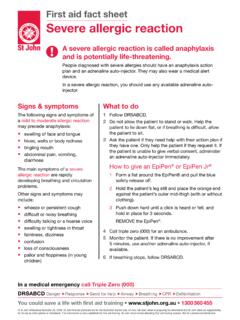
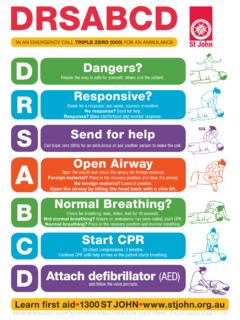
1 Severe allergic reaction ( anaphylaxis ). IN A MEDICAL EMERGENCY CALL TRIPLE ZERO (000) FOR AN Ambulance . DRSABCD Danger Response Send for help Airway Breathing CPR Defibrillation The DRSABCD Action Plan is the first step when providing first aid. Use this to assess the immediate situation. WARNING. WHAT TO DO. anaphylaxis is potentially life- threatening. 1 Follow DRSABCD. People diagnosed with Severe allergies 2 If the patient is carrying an adrenaline auto-injector, should have an anaphylaxis action plan use it immediately. and an adrenaline auto-injector. They 3 Ask the patient if they need help with their action plan may also wear a medical alert device.
2 If they have one. Only help the patient if they request In a Severe allergic reaction , you should it. If the patient is unable to give verbal consent, use any available adrenaline auto- injector. administer an adrenaline auto-injector immediately. 4 Do not allow the patient to stand or walk. Help the SIGNS AND SYMPTOMS patient to lie down flat, or if breathing is difficult, allow The following signs and symptoms the patient to sit. of a MILD TO MODERATE allergic 5 Call triple zero (000) for an Ambulance . reaction may precede anaphylaxis : swelling of face and tongue 6 Monitor the patient. If there is no improvement after 5 minutes, use another adrenaline auto-injector, if hives, welts or body redness available.
3 Tingling mouth abdominal pain, vomiting, diarrhoea 7 If breathing stops, follow DRSABCD. The main symptoms of a Severe HOW TO GIVE AN EPIPEN OR EPIPEN JR . allergic reaction are rapidly 1 Form a fist around the EpiPen and PULL OFF THE. developing breathing and circulation BLUE SAFETY RELEASE. problems. 2 Hold the patient's leg still and PLACE THE ORANGE. Other signs and symptoms may include: END against the patient's outer mid-thigh (with or wheeze or persistent cough without clothing). difficult or noisy breathing 3 PUSH DOWN HARD until a click is heard or felt, and difficulty talking or a hoarse voice hold in place for 3 seconds. swelling or tightness in throat All EpiPens should be held in place for 3 seconds faintness, dizziness regardless of instructions on the device's label.
4 Confusion 4 REMOVE the EpiPen . loss of consciousness pallor and floppiness (in young children) FOR MORE INFORMATION SEE YOU COULD SAVE A LIFE WITH FIRST AID TRAINING 1300 360 455. St John Ambulance Australia Inc. 2018. St John first aid protocols are for the Australian market only. All care has been taken in preparing the information but St John takes no responsibility for its use by other parties or individuals. This information is not a substitute for first aid training. St John recommends attending first aid training courses. Not for commercial distribution.