Example: air traffic controller
Questions and Answers About Leukemia
common). In acute leukemia, bone marrow cells are immature and are unable to function normally. The number , cells are more mature and can carry out some of their normal functions. The number of abnormal cells increases more slowly. The most common types of leukemia are acute lymphocytic leukemia, acute myeloid leukemia, chronic lymphocytic ...
Tags:
Information
Domain:
Source:
Link to this page:
Documents from same domain
School Chemistry Laboratory Safety Guide
www.cdc.govSchool Chemistry Laboratory Safety Guide. October 2006. U.S. Consumer Safety Product Commission DEPARTMENT OF HEALTH AND HUMAN SERVICES. Centers for Disease Control and Prevention

Biosafety in Microbiological and Biomedical …
www.cdc.goviii. Foreword. Biosafety in Microbiological and Biomedical Laboratories (BMBL) quickly became the cornerstone of biosafety practice and policy in the United States upon first
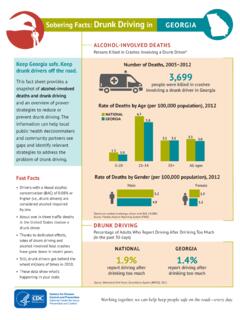
Sobering Facts: Drunk Driving in Georgia
www.cdc.govSobering Facts: Drunk Driving in GEORGIA Keep Georgia safe. Keep drunk drivers off the road. This fact sheet provides a snapshot of alcohol-involved deaths and drunk driving
ALCOHOLS III 1402
www.cdc.govALCOHOLS III: METHOD 1402, Issue 2, dated 15 August 1994 - Page 3 of 4 a. Remove and discard back sorbent section of a media blank sampler. b. Inject a known amount of analyte or DE stock solution directly onto front sorbent section
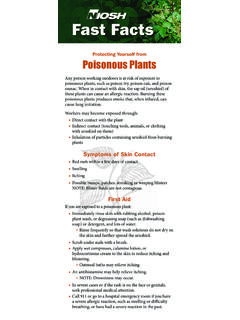
Fast Facts
www.cdc.govAny person working outdoors is at risk of exposure to poisonous plants, such as poison ivy, poison oak, and poison sumac. When in contact with skin, the sap oil (urushiol) of

Trans Fat: The Facts
www.cdc.gov• Read the Nutrition Facts label and ingredient list to compare foods. » Choose products with 0 grams trans fat. » Check the Ingredient List to see if there is any partially hydrogenated oil in the product.

ANTIBIOTIC RESISTANCE THREATS
www.cdc.govApr 23, 2013 · 6. ANTIBIOTIC RESISTANCE THREATS IN THE UNITED STATES, 2013. Executive Summary. Antibiotic Resistance Threats in the United States, 2013. is a snapshot of the complex problem
Chlorine Residual Testing
www.cdc.govChlorine Residual Testing Fact Sheet, CDC SWS Project 4 Methods to Test Free Chlorine in the Field in Developing Countries There are three main methods to test free chlorine residual in drinking water in the field

2018 Combined Recommended Immunization …
www.cdc.govRecommended Immunization Schedule for Children and Adolescents Aged 18 Years or Younger, UNITED STATES, 2018 Approved by the Advisory Committee on …

Traveling? Make Sure You Protect Yourself from …
www.cdc.govCS26201 Malaria transmission occurs throughout Malaria transmission occurs in some parts Malaria transmission is not known to occur Center for Global Health
Related documents

ORAL SIGNS OF LEUKEMIA AND DENTAL MANAGEMENT – …
www.journal-imab-bg.orgAcute myelogeous leukemia symptoms include fever, fatigue, pallor, mucosal bleeding, petechiae, and local infections; clinical manifestations of acute lymphocytic leukemia are similar to those of acute myelogeous leukemia, but with a high incidence of central nervous system disease [1, 4]. Laboratory finding in leukemia

NCCN.org/patients/survey Chronic Lymphocytic Leukemia
www.nccn.orgChronic Lymphocytic Leukemia, 2021 1 Leukemia basics Types of leukemia | CLL and SLL Types of leukemia There are many types of leukemia. They differ by which type of blood cell is affected. How fast the leukemia worsens is partly based on the affected blood cell. Acute leukemia Acute leukemia often worsens quickly and causes symptoms.

Pathophysiology of Acute Lymphoblastic Leukemia
cdn.intechopen.comThe Acute lymphoblastic leukemia (ALL), it produced as a result of a process of malignant transformation of a progenitor lymphocytic cell in the B and T lineages. In ALL, the majority of the cases, the transformation affects the B lineage cells. Leukemia and other cancers share biological characteristics, as clonality.

DRUG NAME: Carboplatin
www.bccancer.bc.caOvarian cancer1,11 Leukemia, acute lymphocytic5 Lung cancer, non-small cell2,11 Lung cancer, small cell2,11 Lymphoma, non-Hodgkin’s14 Melanoma11 Neuroblastoma2,5 Osteosarcoma5,15 Rhabdomyosarcoma5 Retinoblastoma2,5 Testicular cancer2,11 Wilms’ tumour2 *Health Canada Therapeutic Products Programme approved indication SPECIAL PRECAUTIONS:

Acute Promyelocytic Leukemia Facts
www.lls.orgMay 07, 2015 · types of leukemia are acute myeloid leukemia (AML), chronic myeloid leukemia (CML), acute lymphoblastic leukemia (ALL) and chronic lymphocytic leukemia (CLL). Each of the main types of leukemia is further classified into subtypes. With myeloid leukemia, a cancerous change begins in a marrow cell that normally forms certain blood cells—that is,
Leukemia: AML, CML, ALL and CLL - - RN.org®
www.rn.orgleukemia (ALL), acute myelogenous leukemia (AML) or acute nonlymphoblastic leukemia (ANLL), chronic myelogenous leukemia (CML), and chronic lymphocytic leukemia (CLL) with a number of subtypes. Leukemias are often referred to by a number of different names, depending on the involved cell, and this can be confusing at times. Acute and chronic ...

Hematopoietic and Lymphoid Neoplasm Coding Manual ...
seer.cancer.gov9819/3: B-lymphoblastic leukemia/lymphoma, BCR-ALB1 like . 9877/3: Acute myeloid leukemia with mutated NPM1 . 9878/3: Acute myeloid leukemia with biallelic mutation of CEBPA . 9879/3: Acute myeloid leukemia with mutated RUNX1 . 9912/3: Acute myeloid leukemia with BCR-ABL1 . 9968/3: Myeloid/lymphoid neoplasm with PCM1-JAK2
Leukemia, Lymphoma, and Multiple Myeloma: Toward a …
www.cancer.govLeukemia The leukemias are very heterogeneous, with patterns of occurrence differing by age, sex, and racial and ethnic group. For example, highest incidence of acute lymphoblastic leukemia (ALL) is in children, ages 2-4, while chronic lymphocytic leukemia (CLL) is rare before age 30, and has the highest incidence among the elderly. Chronic myeloid