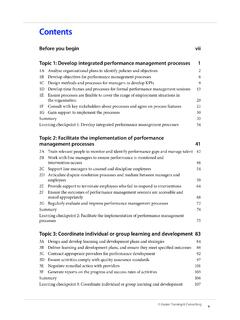
Transcription of BSBWHS302 Apply knowledge of WHS legislation in the …
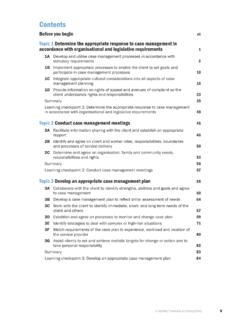
1 Contents Before you begin vii Topic 1: Determine the legal framework for WHS in the workplace 1. 1A Identify and access current WHS legislation and related documentation 2. 1B Apply knowledge of the relationship between WHS Acts, regulations and codes of practice 16. 1C Identify duty holders 20. 1D Identify legal obligations for consulting and training workers and health and safety representatives 24. 1E Identify consequences of noncompliance with WHS legislation , policies and procedures 32. Summary 43. Learning checkpoint 1: Determine the legal framework for WHS. in the workplace 44. Topic 2: Contribute to activity that reflects WHS legislative requirements 49.
2 2A Contribute to monitoring legislative compliance 50. Topic 3: Keep up-to-date with legislation and relevant publications 89. 3A Use relevant sources to keep up-to-date with legislation and publications 90. Aspire Training & Consulting v BSBWHS302 . Apply knowledge of WHS legislation in the workplace Aims of the WHS Act according to Safe Work Australia's guide to the Model WHS Act: Protect the health and safety of workers and other people by eliminating or minimising risks arising from work or workplaces. Ensure fair and effective representation, consultation and cooperation to address and resolve health and safety issues in the workplace .
3 Encourage unions and employer organisations to take a constructive role in improving WHS practices. Assist businesses and workers to achieve a healthier and safer working environment. Promote information, education and training on WHS. Provide effective compliance and enforcement measures. Deliver continuous improvement and progressively higher standards of WHS. Regulations WHS regulations supplement the WHS Act, and the Acts of those states yet to harmonise, by providing more detailed information about WHS obligations and the duties that Apply in relation to particular hazards. They specify how some duties under the WHS Act must be met and the procedural or administrative processes that must be in place.
4 A wide range of matters are covered by the regulations, including: representation and participation managing risks to health and safety and general workplace management hazardous work involving noise, hazardous manual tasks, confined spaces, falls, demolition work, electrical safety, licensing of high-risk work accreditation of assessors of competency plant and structures construction work hazardous chemicals asbestos major hazard facilities mines. Codes of practice Codes of practice, sometimes referred to as compliance codes, provide practical guidance on how to meet the standards contained in WHS Acts and regulations. Codes of practice are generally developed through consultation with representatives from industry, workers and employers, special interest groups and government agencies.
5 They provide guidance on a range of matters, including duty of care, hazard identification, risk assessment processes and risk control. Aspire Training & Consulting 4. BSBWHS302 . Apply knowledge of WHS legislation in the workplace equal employment opportunity and anti-discrimination law industrial relations law privacy laws. Dangerous goods State and territory Acts and regulations make it an offence to fail to take all reasonably practicable measures to minimise the risk to people, property and the environment when handling, transporting, storing, treating and disposing of dangerous goods. There are strict penalties for failing to comply.
6 legislation requires those who store or use dangerous goods to develop risk management strategies. Environmental protection Care of the environment has become an increasingly important aspect of an organisation's responsibilities. The Environment Protection and Biodiversity Conservation Act 1999 (Cth) provides the legal framework to protect and manage Australia's built and natural environment, although the control of the environment is left to each state and territory through individual environmental protection Acts. You need to be aware of your state or territory's environmental Acts and regulations and the role and powers of the regulator.
7 There are laws relating to the management and transportation of hazardous waste, noise, pollution, waste products and water. For example, relevant state and territory's conservation and land management regulations impose a penalty for discharging or depositing waste on crown land managed for conservation. Equal employment opportunity and anti-discrimination law In Australia, national, state and territory laws cover equal employment opportunity and anti-discrimination in the workplace . PCBUs have an obligation under their duty of care to assess work tasks to develop safe systems of work and provide a workplace free from discrimination.
8 For example, discriminating against pregnant women in employment is unlawful. PCBUs must comply with these laws; for example, by undertaking risk assessments to identify work hazards to pregnant and breastfeeding women and making modifications to minimise those risks. Laws also address issues related to people with disabilities and those with learning and language difficulties. For example, employers are required to provide safe and easy access to their building or site for everyone, regardless of their physical abilities. Similarly, instructions for responding to emergencies must be clearly displayed and presented in such a way that they can be understood by all workers.
9 Aspire Training & Consulting 8. BSBWHS302 . Apply knowledge of WHS legislation in the workplace Roles and responsibilities Roles and responsibilities of key positions such as the officers, managers and supervisors with specific accountability for implementing health and safety practices and procedures. Function The function of the health and safety committee and its commitment to consultation and cooperation between management and workers. Review process The review process for assessing the policy's effectiveness, stating a commitment to regularly monitoring and reviewing the policy to ensure health and safety in the workplace .
10 WHS policies: policy areas Workers should be consulted and actively encouraged to participate when developing, reviewing and evaluating policies to ensure they are relevant and practical. Typical policy areas include: hazard identification and management incident reporting and investigation emergency planning and response bullying and harassment environmental management visitors and contractors induction, training and supervision consultation and participation alcohol, drugs and smoking manual handling mobile phone use. Aspire Training & Consulting 12. Topic 1. Determine the legal framework for WHS in the workplace Example: relationship diagram between the WHS Acts, regulations, codes of practice and guidance material The following diagram provides an overview of the relationship between the WHS Acts, regulations, codes of practice and guidance material.