Transcription of 2.9.3. DISSOLUTION TEST FOR SOLID DOSAGE …
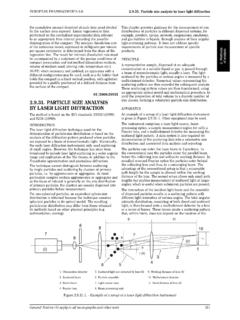
1 DISSOLUTION test for SOLID DOSAGE formsEUROPEAN PHARMACOPOEIA glass plateD. waterB. vaginal tabletE. dish, beakerC. water surfaceFigure DISSOLUTION TEST FOR SOLIDDOSAGE FORMSThe test is used to determine the DISSOLUTION rate of theactive ingredients of SOLID DOSAGE forms (for example, tablets,capsules and suppositories).Unless otherwise justified and authorised, either the paddleapparatus or the basket apparatus or in special cases, theflow-through cell apparatus may be following are to be prescribed for each preparation towhich the DISSOLUTION test is applied: the apparatus to be used, including in those cases wherethe flow-through cell apparatus is prescribed, whichflow-through cell (Figures ) is to be used, the composition, the volume and the temperature of thedissolution medium, the rotation speed or the flow rate of the dissolutionmedium, the time, the method and the amount for sampling of thetest solution or the conditions for continuous monitoring, the method of analysis, the quantity or quantities of active ingredients requiredto dissolve within a prescribed characteristics of the DOSAGE form.
2 Allparts of the apparatus that may come into contact with thepreparation or the dissolutionmedium are chemically inertand do not adsorb or react or interfere with the test metal parts of the apparatus that may come into contactwith the preparation or the DISSOLUTION medium must bemade from a suitable stainless steel or coated with a suitablematerial to ensure that such parts do not react or interferewith the preparation or the DISSOLUTION medium. No partof the assembly or its environment contributes significantmotion, agitation or vibration beyond that resulting from thesmoothly rotating element or from the flow-through apparatus that permits observation of the preparation tobe examined and the stirrer during the test is apparatus.
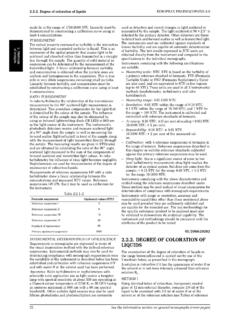
3 The apparatus (see Figure )consists of: a cylindrical vessel of borosilicate glass or other suitabletransparent material with a hemispherical bottomand a nominal capacity of 1000 ml; a cover is fittedto retard evaporation; the cover has a central hole toaccommodate the shaft of the stirrer and other holes forthe thermometer and the devices used to withdraw liquid; a stirrer consisting of a vertical shaft to the lower end ofwhich is attached a blade having the form of that part ofacirclesubtendedby2parallelchords;theb ladepassesthrough the diameter of the shaft so that the bottom ofthe blade is flush with the bottom of the shaft; the shaftisplacedsothatitsaxisiswithin2mmoft heaxisofthevesselandthebottomofthebladei s25 2mmfromtheinner bottom of the vessel; the upper part of the shaft isconnectedtoamotorprovidedwithaspeedreg ulator;the stirrer rotates smoothly without significant wobble; a water-bath that will maintain the DISSOLUTION mediumat37 Paddle apparatusDimensions in millimetresBasket apparatus.
4 The apparatus (see Figure )consists of: a vessel identical with thatdescribed for the paddleapparatus; a stirrer consisting of a vertical shaft to the lower partof which is attached a cylindrical basket; the basket has2 parts: the upper part, with a 2 mm vent, is welded tothe shaft and has 3 spring clips or other suitable devicethat allows removal of the lower part of the basket forintroduction of the preparation to be examined and firmly228 See the information section on general monographs (cover pages)EUROPEAN PHARMACOPOEIA DISSOLUTION test for SOLID DOSAGE formsholds the lower part concentric with the axis of the vesselduring rotation; the lower part of the basket is made ofwelded-seam cloth formed into a cylinder with a narrowrim of sheet metal around the top and bottom.
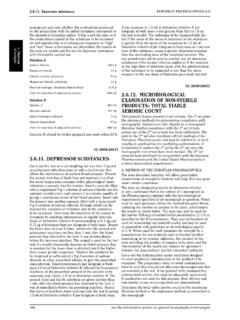
5 Unlessotherwise prescribed, the cloth has a wire thickness mm in diameter and mm square openings; mthickmaybeusedfortests carried out in dilute acid medium; the bottom of thebasket is 25 2 mm from the inner bottom of the vesselduringthetest;theupperpartofthesha ftisconnectedto a motor provided with a speed regulator; the stirrerrotates smoothly without significant wobble; a water-bath that will maintain the DISSOLUTION mediumat37 Basket apparatusDimensions in millimetresFlow-through apparatus. The apparatus (see Figure )consists of: a reservoir for the DISSOLUTION medium; a pump that forces the DISSOLUTION medium upwardsthrough the flow-through cell; a flow-through cell (see Figures ) oftransparent material mounted vertically with a filtersystem preventing escape of undissolved flow-through cell shown in Figure isspecifically intended for lipophilic SOLID DOSAGE formssuch as supposi-tories and soft capsules.
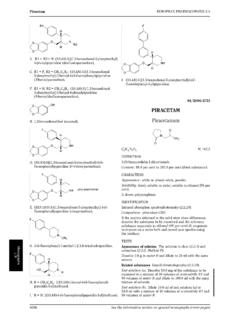
6 It consists of3 transparent parts which fit into each other. The lowerpart (1) is made up of 2 adjacent chambers connectedto an overflow DISSOLUTION medium passes through chamber A andis subjected to an upwards flow. The flow in chamber B isdownwards directed to a small-size bore exit which leadsupwards to a filter assembly. The middle part (2) of thecell has a cavity designed to collect lipophilic excipientswhich float on the DISSOLUTION medium. A metal grillserves as a rough filter. The upper part (3) holds afilter unit for paper, glass fibre or cellulose filters. a water-bath that will maintain the DISSOLUTION mediumat37 Flow-through apparatusDissolution medium.
7 If the DISSOLUTION medium is buffered,adjust its pH to within units of the prescribed any dissolved gases from the DISSOLUTION mediumbefore the test since they can cause the formation of bubblesthat significantly affect the Flow-through cellDimensions in millimetresMETHODP addle and basket apparatusPlace the prescribed volume of DISSOLUTION medium inthe vessel, assemble the apparatus, warm the dissolutionmedium to 37 C and remove the one unit of the preparation to be examined in theapparatus. For the paddle apparatus, place the preparationat the bottom of the vessel before starting rotation of theblade; DOSAGE forms that would otherwise float are kepthorizontal at the bottom of the vessel using a suitable device,such as a wire or glass (1) DISSOLUTION test for SOLID DOSAGE formsEUROPEAN PHARMACOPOEIA the basket apparatus, place the preparation in a drybasket and lower into position before starting care to avoid the presence of air bubbles on the surfaceof the preparation.
8 Start the rotation of the apparatusimmediately at the prescribed rate ( 4 per cent).Flow-through apparatus Cells (see Figures )Figure Flow-through cellDimensions in millimetresPlace 1 bead of 5 mm ( mm) diameter at the bottomof the cone to protect the fluid entry of the tube and thenglass beads of suitable size, preferably 1 mm ( mm)diameter. Introduce 1 unit of the preparation in the cell onor within the layer of glass beads, by means of a the filter head. Heat the DISSOLUTION medium to37 C. Using a suitable pump, introduce the dissolutionmedium through the bottom of the cell to obtain a suitablecontinuous flow through an open or closed circuit at theprescribed rate ( 5 per cent).
9 Cell (Figure )Place 1 unit of the preparation to be examined in chamber of the test, chamber A requires air removal viaa small orifice connected to the filter assembly. Heat thedissolution medium to an appropriate temperature takingthe melting point of the preparation into a suitable pump, introduce the warmed dissolutionmedium through the bottom of the cell to obtain a suitablecontinuous flow through an open or closed circuit at theprescribed rate ( 5 per cent). When the DISSOLUTION mediumreaches the overflow, air starts to escape through thecapillary and chamber B fills with the DISSOLUTION preparation spreads through the DISSOLUTION mediumaccording to its physico-chemical justified and authorised cases, representative fractions Flow-through cellDimensions in millimetresSAMPLING AND EVALUATIONI nthecaseofthepaddleapparatusandthebasket apparatus,withdraw at the prescribed time, or at the prescribed intervalsor continuously.
10 The prescribed volume or volumes froma position midway between the surface of the dissolutionmedium and the top of the basket or blade and not less than10 mm from the vessel ,samplesarealwayscollected at the outlet of the cell, irrespective of whether thecircuit is opened or where continuous measurement is used with thepaddle or basket method (the liquid removed being returnedto the vessel) or where a single portion of liquid is removed,add a volume of DISSOLUTION medium equal to the volume ofliquid removed or compensate by the liquid removed using an inert filter of appropriatepore size that does not cause significant adsorption of theactive ingredient from the solution and does not containsubstances extractable by the DISSOLUTION medium that wouldinterfere with the pr