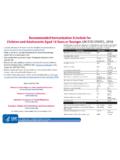
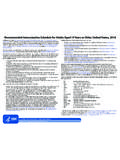
Transcription of 2017 Recommended Immunizations for Children from 7 …
1 INFORMATION FOR PARENTS 2017 Recommended Immunizations for Children 7- 18 years Old Talk to your child's doctor or nurse about the vaccines Recommended for their age. Tdap Meningococcal MMR. HPV. Flu Tetanus, Inactivated Measles, Chickenpox Human Pneumococcal Hepatitis B Hepatitis A. Influenza diphtheria, MenACWY MenB Polio mumps, Varicella papillomavirus pertussis rubella 7-8 Years 9-10 Years 11-12 Years 13-15 Years 16- 18 years More Preteens and teens Preteens and teens All 11-12 year olds All 11-12 year Teens, 16-18. information: should get a flu should get one should get a 2-shot olds should get years old, may be vaccine every year . shot of Tdap at age series of HPV a single shot of vaccinated with a 11 or 12 years.
2 Vaccine at least a quadrivalent MenB vaccine. 6 months apart. meningococcal A 3-shot series is conjugate vaccine needed for those (MenACWY). A. with weakened booster shot is immune systems Recommended at and those age 15 age 16. or older. These shaded boxes indicate when the vaccine is These shaded boxes indicate the vaccine should be Recommended for all Children unless your doctor tells given if a child is catching-up on missed vaccines. you that your child cannot safely receive the vaccine. These shaded boxes indicate the vaccine is This shaded box indicates the vaccine is Recommended Recommended for Children with certain health or for Children not at increased risk but who wish to get lifestyle conditions that put them at an increased risk for the vaccine after speaking to a provider.
3 Serious diseases. See vaccine-specific recommendations at Vaccine-Preventable Diseases and the Vaccines that Prevent Them Diphtheria (Can be prevented by Tdap vaccination) being in the same room after a person who has measles has already more serious forms of pneumococcal disease. However, in some Diphtheria is a very contagious bacterial disease that affects the left can result in infection. Symptoms usually include a rash, fever, cases pneumococcal disease can be fatal or result in long-term respiratory system, including the lungs. Diphtheria bacteria can be cough, and red, watery eyes. Fever can persist, rash can last for up problems, like brain damage and hearing loss. Pneumococcal passed from person to person by direct contact with droplets from to a week, and coughing can last about 10 days.
4 Measles can also disease spreads when people cough or sneeze. Many people an infected person's cough or sneeze. When people are infected, cause pneumonia, seizures, brain damage, or death. have the bacteria in their nose or throat at one time or another the bacteria can produce a toxin (poison) in the body that can without being ill this is known as being a carrier. cause a thick coating in the back of the nose or throat that makes Meningococcal Disease (Can be prevented by meningococcal vaccination). it hard to breathe or swallow. Effects from this toxin can also lead Meningococcal disease is caused by bacteria and is a leading Polio (Can be prevented by IPV vaccination). to swelling of the heart muscle and, in some cases, heart failure.
5 Cause of bacterial meningitis (infection around the brain and Polio is caused by a virus that lives in an infected person's throat In serious cases, the illness can cause coma, paralysis, and even spinal cord) in Children . The bacteria are spread through the and intestines. It spreads through contact with the stool of an death. exchange of nose and throat droplets, such as when coughing, infected person and through droplets from a sneeze or cough. sneezing or kissing. Symptoms include sudden onset of Symptoms typically include sore throat, fever, tiredness, nausea, Hepatitis A (Can be prevented by HepA vaccination) fever, headache, and stiff neck. Meningococcal bacteria also headache, or stomach pain.
6 In about 1% of cases, polio can Hepatitis A is an infection in the liver caused by hepatitis A virus. The cause blood infections. About one of every ten people who cause paralysis. Among those who are paralyzed, About 2 to 10. virus is spread primarily person-to-person through the fecal-oral get the disease dies from it. Survivors of meningococcal Children out of 100 die because the virus affects the muscles that route. In other words, the virus is taken in by mouth from contact disease may lose their arms or legs, become deaf, have problems help them breathe. with objects, food, or drinks contaminated by the feces (stool) of an with their nervous systems, become developmentally disabled, infected person.
7 Symptoms can include fever, tiredness, poor appe- or suffer seizures or strokes. Rubella (German Measles) (Can be prevented by MMR vaccination). tite, vomiting, stomach pain, and sometimes jaundice (when skin Rubella is caused by a virus that is spread through coughing and and eyes turn yellow). An infected person may have no symptoms, Mumps (Can be prevented by MMR vaccination) sneezing. In Children rubella usually causes a mild illness with may have mild illness for a week or two, may have severe illness for Mumps is an infectious disease caused by the mumps virus, fever, swollen glands, and a rash that lasts about 3 days. Rubella several months, or may rarely develop liver failure and die from the which is spread in the air by a cough or sneeze from an infected rarely causes serious illness or complications in Children , but can infection.
8 In the , about 100 people a year die from hepatitis A. person. A child can also get infected with mumps by coming be very serious to a baby in the womb. If a pregnant woman is in contact with a contaminated object, like a toy. The mumps infected, the result to the baby can be devastating, including Hepatitis B (Can be prevented by HepB vaccination) virus causes swollen salivary glands under the ears or jaw, fever, miscarriage, serious heart defects, mental retardation and loss of Hepatitis B causes a flu-like illness with loss of appetite, nausea, muscle aches, tiredness, abdominal pain, and loss of appetite. hearing and eye sight. vomiting, rashes, joint pain, and jaundice. Symptoms of acute hepa- Severe complications for Children who get mumps are uncom- titis B include fever, fatigue, loss of appetite, nausea, vomiting, pain mon, but can include meningitis (infection of the covering of the Tetanus (Lockjaw) (Can be prevented by Tdap vaccination).)
9 In joints and stomach, dark urine, grey-colored stools, and jaundice brain and spinal cord), encephalitis (inflammation of the brain), Tetanus is caused by bacteria found in soil, dust, and manure. (when skin and eyes turn yellow). permanent hearing loss, or swelling of the testes, which rarely The bacteria enters the body through a puncture, cut, or sore results in decreased fertility. on the skin. When people are infected, the bacteria produce a Human Papillomavirus (Can be prevented by HPV vaccination) toxin (poison) that causes muscles to become tight, which is very Human papillomavirus is a common virus. HPV is most common Pertussis (Whooping Cough) (Can be prevented by Tdap vaccination) painful.
10 Tetanus mainly affects the neck and belly. This can lead in people in their teens and early 20s. It is the major cause of Pertussis is caused by bacteria spread through direct contact to locking of the jaw so a person cannot open his or her mouth, cervical cancer in women and genital warts in women and men. with respiratory droplets when an infected person coughs or swallow, or breathe. Complete recovery from tetanus can take The strains of HPV that cause cervical cancer and genital warts sneezes. In the beginning, symptoms of pertussis are similar to months. One to two out of 10 people people who get tetanus die are spread during sex. the common cold, including runny nose, sneezing, and cough.