Example: tourism industry
24 — Asia - IPCC
damage to reefs will increase during the 21st century as a result of both warming and ocean acidification. Marine biodiversity is expected to increase at temperate latitudes as warmwater species expand their ranges northward (high confidence), but may decrease in the tropics if thermal tolerance limits are exceeded (medium confidence).
Tags:
Information
Domain:
Source:
Link to this page:
Documents from same domain
Summary for Policymakers - IPCC
www.ipcc.chSummary for Policymakers 2 Introduction This Synthesis Report is based on the assessment carried out by the three Working Groups of the Intergovernmental
Other Land Use (AFOLU) - ipcc.ch
www.ipcc.ch816 Agriculture, Forestry and Other Land Use (AFOLU) 11 Chapter 11 Executive Summary Agriculture, Forestry, and Other Land Use (AFOLU) is unique among the sectors considered in this volume, since the mitiga-
22 — Africa - IPCC
www.ipcc.ch1199 22 Africa Coordinating Lead Authors: Isabelle Niang (Senegal), Oliver C. Ruppel (Namibia) Lead Authors: Mohamed A. Abdrabo (Egypt), Ama Essel (Ghana), Christopher Lennard (South Africa),
Transport and its infrastructure - ipcc.ch
www.ipcc.ch326 Transport and its infrastructure Chapter 5 Hybrid vehicles have also played a role, though their market penetration is currently small. Reductions in drag coefficients
Synthesis Report Summary for Policymakers Chapter
www.ipcc.chSummary for Policymakers 2 SPM Introduction This Synthesis Report is based on the reports of the three Working Groups of the Intergovernmental Panel on Climate Change
Working Group II Fact Sheet Climate Change 2014: …
www.ipcc.chIPCC WGII Technical Support Unit • c/o Carnegie Institution for Science 260 Panama Street • Stanford, CA 94305 USA Phone: (+1) 650-353-4257 • Fax: (+1) 650-462-5968 • email: media@ipcc-wg2.gov • www.ipcc-wg2.gov/AR5/
Climate Change 2007 – The Physical Science Basis …
www.ipcc.chThis Synthesis Report with its Summary for Policymakers is the fourth and final part of the Fourth Assessment Report (AR4) of the Intergovernmental Panel on Climate Change
Summary for Policymakers - IPCC
www.ipcc.ch5 SPM Summary for Policymakers Sustainable development and equity provide a basis for assessing climate policies and highlight the need for …
19 — Emergent Risks and Key Vulnerabilities - IPCC
www.ipcc.ch1041 Emergent Risks and Key Vulnerabilities Chapter 19
Summary for Policymakers - IPCC
www.ipcc.chSummary for Policymakers 3 Figure SPM.1. Atmospheric concentrations of carbon dioxide, methane and nitrous oxide over the last 10,000 years (large
Related documents
Physical Drivers of Climate Change
science2017.globalchange.govof climate change.1 Our understanding is challenged by the complexity and intercon-nectedness of the components of the climate system (that is, the atmosphere, land, ocean, ... Ocean acidification Ocean heat uptake Changes in other climate variables Climate impacts A erosols Volcanic eruptions CO 2 Land use Solar irradiance Feedback processes ...

2022 MATE ROV COMPETITION: PRODUCT DEMONSTRATION …
files.materovcompetition.orgUnderstanding how the ocean responds to pressures and taking action to improve management practices is critical for sustainable use and development of this precious resource. Ocean observations ... acidification, as are the coastal communities that depend on them. The impact of multiple pressures on

Climate Change 2007: Impacts, Adaptation and Vulnerability
msuweb.montclair.eduThe uptake of anthropogenic carbon since 1750 has led to the ocean becoming more acidic with an average decrease in pH of 0.1 units [IPCC Working Group I Fourth Assessment]. However, the effects of observed ocean acidification on the marine biosphere are as yet undocumented [1.3].
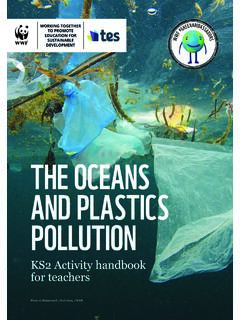
THE OCEANS AND PLASTICS POLLUTION - WWF
www.wwf.org.ukacidification in some places, with devastating results such as coral bleaching. Arguably the world’s most iconic coral reef, The Great Barrier Reef in Australia, has now been hit by four mass coral bleaching events in 1998, 2002, 2016, and 2017. Pollution is poisoning our blue planet. Over 80 per cent of this comes from land-based activities

Summary for Policymakers
www.ipcc.chA. Understanding Global Warming of 1.5°C4 A.1 Human activities are estimated to have caused approximately 1.0°C of global warming5 above pre-industrial levels, with a likely range of 0.8°C to 1.2°C. Global warming is likely to reach 1.5°C between 2030 and 2052 if it continues to increase at the current rate. (high confidence) (Figure SPM.1 ...