Transcription of 3. Approaches to teaching and learning
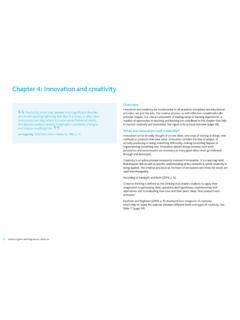
1 40 Implementing the curriculum with Cambridge: A guide for school The Cambridge teacherExcellent teaching including the development of the learner attributes is the single most significant factor impacting on learners academic performance and personal growth that a school can influence. Successful schools, and successful school systems, develop and nurture highly skilled teachers who are encouraged to be creative professionals working in a collaborative is important to stress that there is no single recipe for excellent teaching , and that different schools, operating in different countries and cultures, will have strong traditions that should be respected. However, there is a growing, evidence-based consensus that a certain number of powerful practices and Approaches help learners fulfil their potential and be prepared for modern cannot be transmitted from one person to another; it is always constructed in learners minds.
2 In order to develop a learner s understanding, their existing mental models must be challenged and extended. Teachers have to listen to the voice of the learner, in the classroom and as evidenced in the work they produce, and engage with it to support learning to help the learner develop their own understanding. This process helps to develop independent learners as they start to model the teacher s approach. The most effective teaching practices and learning environments challenge learners thinking beyond what they could achieve independently. The role of the teacher is to support (sometimes referred to as scaffold ) student learning in what Vygotsky (1978) described as the zone of proximal development .
3 This is the area of challenge beyond what the learner can manage on their own but achievable with the help of a skilled other person. As a collection of practices and principles, Cambridge International describes this as active learning . The word active refers to learners being actively engaged in learning rather than passive recipients of teaching . Teachers also need to be active leaders of learning rather than transmitters of knowledge or facilitators of learning . This involves constantly challenging student thinking, monitoring the impact of their instructional Approaches and adjusting what they do based on feedback. See the Getting started with Active learning guide . teaching and learning strategiesTeachers need to employ a variety of teaching strategies in the classroom.
4 This will normally include carefully-designed individual learning activities, group work and whole-class instruction. The key element is the quality of learner engagement and the opportunities provided for feedback between the learner and teacher to guide the next learning steps. Whole class instruction can be a highly effective instructional approach if it includes discussion and learners have the opportunity to respond and should apply assessment practices that regularly inform them whether learners are reaching their objectives. These assessment techniques also allow learners to understand where they are on their learning journey and how they can improve (see the Getting started with Assessment for learning guide ).
5 This chapter considers Approaches to instruction that have the highest impact on students learning and performance and support the development of the Cambridge learner and teacher Approaches to teaching and learningFurther reading about the ideas in this chapter is available in: The Developing the Cambridge learner attributes guide Chapter 4 of the Developing your school with Cambridge guide and; Other resources in the teaching Cambridge at your school area of the Cambridge International website41 Implementing the curriculum with Cambridge: A guide for school leaders3. Approaches to teaching and learningTeachers as role modelsOutstanding teachers model the Cambridge learner attributes.
6 They are confident, responsible, reflective, innovative and engaged because they: Have mastery of their subject area. They can relate concepts and skills in such a way that students learn to understand and appreciate the nature of the academic discipline they are studying, and what constitutes excellence for the developmental stage they are teaching . Teach for understanding as well as coverage. They have the ability to engage with learners mental ideas about the really important concepts, and take them on a journey of discovery. This approach requires learners to revisit concepts over an extended period of time and within different contexts. This spiralling strategy reinforces learning and leads to deeper levels of understanding.
7 Connect learning to the real world. They connect learning to other topics in the subject, other disciplines and the experience of learners making learning relevant. Scaffold learning . Teachers need to constantly challenge student thinking in the proximal zone of development . The optimal level of performance for a learner is the level that they can reach when they receive expert support, as distinct from the functional level, which they can achieve independently. Scaffolding learning helps to close this gap. Have a learning rather than a performance orientation. Chris Watkins (2010) points out that too many schools and teachers are more concerned about students looking good rather than learning well.
8 There is considerable evidence that learning to learn is an effective strategy at raising student performance and preparing them to be independent, self-regulated learners equipped for modern life. Are able to model problem solving and consider themselves as mentors as much as teachers. They are concerned with the holistic development of the learner and understand the critical role that attitudes, emotions and self-confidence play in learning . They communicate a love of learning and believe every learner can achieve. Understand, and can apply, assessment for different purposes. They have an excellent grasp of summative assessment practices, but they also understand how to use assessment to support student learning .
9 This is the process of identifying what the learner has or has not achieved in order to plan the next steps in learning and provide appropriate support. Use a variety of different teaching strategies and activities. This includes whole class instruction, collaborative group work and creative assignments and activities, as well as overseeing individual learning . Are reflective and creative practitioners engaged in ongoing effective professional learning . Are collaborative and supportive of their colleagues, the school and the school s order to support schools, Cambridge has developed a set of teacher standards which define the key professional characteristics and practices that teachers should develop to enable effective student learning in Cambridge schools.
10 The standards can help to provide benchmarks against which teachers and their schools can evaluate their current practice and plan future development . They can show how the Cambridge Teacher and Cambridge Leader attributes are demonstrated in practice and they can contribute to the development of a shared frame of reference within which schools can work to improve the quality of teaching and leadership. The standards are flexible and have been developed so that they can be used to best effect in each school context providing a benchmark of what Cambridge considers to be teacher quality. See here: The Cambridge learner and teacher attributesSchools want their learners to combine both a deep understanding of their own culture and nation, with the skills to be global learners who are able to contribute and adapt to the uncertainties of the modern world.