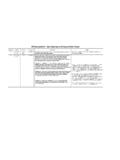
Transcription of API Standard 610 - Centrifugal Pumps for …
1 Note: The 9th and 10th editions are technically Update: August 25, 2010 StandardEditionSectionInquiry #QuestionReply61010th - Oct. : The second paragraph of mentions: "Setting the limits for the preferred operating region and location of rated flow is not intended to lead to the development of additional sizes of small Pumps or preclude the use of high specific speed Pumps ". Our understanding of this sentence is, if the required rated flow is beyond the limits specified in the subject clause of API 610 for the selected pump size, and a smaller size pump is not available in the manufacturing range of the pump manufacturer, then it is not intended to develop a new size to satisfy the subject 1: Is our understanding correct?
2 Question 2: Please clarify the definition of "small Pumps " in Clause with reference to flow, head, and 1: 2: The definition of small in this case is left to the - Jan. clarify the purpose and source of the cooling water system design conditions in in API 610, 9th cooling water design conditions have historically been representative of the conditions specified by the purchaser. They are supplied to result in consistent offerings in proposals. If a user has different conditions, they should be - Oct. it mandatory per API 610 that pump pressure casing are to be manufactured with a minimum gauge pressure rating per even though the operating pressure is 5 bar and nozzle rating is given as Class 150?
3 Yes, the minimum flange rating for a type OH2, single stage overhung Pumps is Class 300 and the minimum MAWP is Mpa (40 bar, 600 psig). The service application of the pump is irrelevant to the requirements of the - Oct. to Clause , does API 610 allow elastomer (O-ring) gaskets on radial pressure casing joints?API 610 does not prohibit the use of O-rings as casing gaskets, however, this issue is being reviewed for the eleventh - Oct. to Table 4 in Clause , should each nozzle be able to withstand the allowable force and moment simultaneously or are they individual load cases?The loads are simultaneous per Clause - Oct.
4 The values for customary units given in Clause , Table 4, based on 150# ANSI flanges? - Oct. 4 of API 610 only lists nozzles to size 16 in. When a pump vendor suggests that his pump can handle 2 X API nozzle loads, and the pump suction and discharge nozzles are 32 in. and 24 in. respectively, what actual nozzle loads should we allow for in our piping design?See Clause in API - Oct. 610, Clause requires combined electrical and mechanical TIR to be less than mil when using vibration probes. Mechanical is checked with a dial indicator simultaneously with a proximity probe. In theory the proximity probe, I believe, is picking up mechanical and electrical.
5 Is it the intent to use only the probe reading for combined TIR, or must this be added to the mechanical reading taken with the dial indicator? It seems the wording combined mechanical and electrical is all equipment supplied with proximity probes, the intent is to use only the probe reading for combined Standard 610 - Centrifugal Pumps for Petroleum, Petrochemical and Natural Gas IndustriesNote: The 9th and 10th editions are technically Update: August 25, 2010 StandardEditionSectionInquiry #QuestionReplyAPI Standard 610 - Centrifugal Pumps for Petroleum, Petrochemical and Natural Gas Industries61010th - Oct. API 610, 10th Edition, Clause states that Motors shall have power rating including service factor (if any), at least equal to the percentage of power at pump rated conditions given in Table 11.
6 However, the power at rated conditions shall not exceed the motor name plate reading . Now suppose my bkw of the pump is 100 kW in the offer from a vendor. According the clause , if I select a motor of 100 kW with a service factor of , it will fulfill the requirement. Then what about the additional requirements of Table 14 where a +4% tolerance on power is permitted during testing, and clause by which I can increase the head of the pump during project execution by 5% by adding new impellers? Can the motor now be permitted to run continuously at 109 kW? I understand that the appropriate use of service factor rating (between 100 kW and 115 kW in this case) is to handle short-term or occasional overloads.
7 Please rated operating point is the point at which the vendor certifies that pump performance is within the tolerances stated in this international Standard . Furthermore, API motor standards require that motors be selected within the motor nameplate at a service factor. Therefore, selection of a 100 kW motor for a rated point of 100 kW would entail some risk that the tested power might be as much as 104 kW, but, would be allowed by the selection rules of API 610. Additionally, there is no requirement in API 610 to size the driver to accommodate the 5% potential head increase. The acceptability of running a motor continuously in the service factor is a matter for your company s electrical - Jan.
8 Of API 610, 9th Edition calls for application of MYc and MZc. This is applicable for all pump types. In case of vertical Pumps where the shaft centerline is along the Z axis, MZc would hardly induce any shaft deflection at the coupling end. Therefore, for vertical Pumps , would it not be more relevant to apply MXc and MYc?Clause is found in Section Baseplates. While it is in fact in the general section, it was not envisioned that it would be applied to vertical Pumps because they are typically not supplied with baseplates. Because the drivers of most vertical Pumps are supported by a structure attached to the casing, no combination of moments applied to the nozzles should cause misalignment.
9 61010th - Oct. a pump vendor supplies a pump with API 610 specification and higher nozzle allowable loads (two times or three times higher) than those per Table 4 (T4). Is it acceptable to use the vendor allowable loads in Clause to satisfy all the conditions in a) through c) in Equations , , , and instead of the Table 4 values when an Annex F calculation is performed?Yes.