Transcription of BIPAP Self Instructional Learning Package
1 BCCH BIPAP Self Instructional Learning Package Acute Inpatient Units September 2012 1 BIPAP (Bi-level Positive Airway Pressure) Self Instructional Learning Package BCCH Acute Inpatient Units BCCH BIPAP Self Instructional Learning Package Acute Inpatient Units September 2012 2 What is BIPAP ? One of the most utilized forms of non invasive ventilation utilized in pediatric care is: BIPAP : Bi-level Positive Airway Pressure. Non-invasive positive pressure ventilator support is a technology utilized to augment alveolar ventilation for prescribed periods without an artificial airway. Why would a pediatric patient need BIPAP ? Different pediatric patients require the use of BIPAP for different reasons, some of the most common indications are: Airway obstruction Increased work of breathing due to pulmonary congestion Muscle weakness leading to inadequate respirations Restrictive lung disease leading to poor lung expansion Poor lung compliance leading to poor lung expansion Obesity and cardiac failure On the acute care units at bc children s Hospital, Non-Invasive Positive Pressure Ventilation ( BIPAP ) may be delivered to patients established on home BIPAP program that are considered to be clinically stable on the acute inpatient areas.
2 BIPAP is not to be initiated as a new treatment for escalation of care on the acute inpatient areas at bc children s Hospital Some contraindications for BIPAP include patients who have: Pneumothorax DO NOT have a respiratory drive to breath Upper gastrointestinal bleeding Recent gastric or esophageal surgery Tracheostomy or other airway disorders BCCH BIPAP Self Instructional Learning Package Acute Inpatient Units September 2012 3 How Does BIPAP Work? A BIPAP machine is a relatively small device. children s Hospital and most children in the community use the Synchrony BIPAP machine (type I or II): It is connected by flexible tubing to a face mask worn by the patient: Patients at bc children s Hospital using a BIPAP machine will have a pre-printed order set that will outline the machine settings and patient care parameters.
3 (see appendix) BCCH BIPAP Self Instructional Learning Package Acute Inpatient Units September 2012 4 BIPAP Principles and Operation: A BIPAP machine is programmed to assist a patient s spontaneous respirations by delivering a flow of air at two different pressures: positive pressure on inspiration (IPAP Inspiratory Positive Airway Pressure) and positive pressure on expiration (EPAP Expiratory Positive Airway Pressure). In this way the BIPAP machine helps the patient to push air and oxygen into their lungs and then helps to maintain airway patency, thereby allowing more oxygen to diffuse to the pulmonary circulation. BIPAP Modes The mode controls how the BIPAP machine works to assist breathing. The S or Spontaneous mode offers support to the breaths the patient takes on his/her own. The CPAP or Continuous Positive Airway Pressure mode supports spontaneous respirations by providing one continuous positive pressure on inspiration and expiration.
4 The S/T or Spontaneous/Timed mode offers a combination of machine delivered breaths (set respiratory rate) and spontaneous (patient triggered) assisted breaths. BIPAP Settings IPAP Inspiratory Positive Airway Pressure is the positive pressure generated during inspiration allows the child to take a deeper breath than he or she would normally. EPAP Expiratory Positive Airway Pressure is the positive pressure generated during expiration helps to splint open the upper airway, maintain the necessary resting volume in the lungs at end of expiration and helps to avoid secretion build up and collapse. If this resting volume is maintained, the lungs will also expand better. RR - Respiratory Rate is the number of breaths the machine will deliver regardless of patient effort. Ti - Inspiratory Time is the length of time it takes for a breath to be delivered. The Rise - is a function of how quickly the BIPAP machine will go from the EPAP pressure to the IPAP pressure during inspiration.
5 BCCH BIPAP Self Instructional Learning Package Acute Inpatient Units September 2012 5 BIPAP Setup, Monitoring and Clinical Decision Making: At bc children s Hospital, physicians, Registered Nurses (RNs) and Respiratory Therapists (RT) will work together to care for children using BIPAP and provide patient and family teaching specific to the disease process and plan of care: The physician will order the BIPAP settings and care via the preprinted orders: Non Invasive Ventilation Bilevel Positive Airway Pressure ( BIPAP ) The Respiratory Therapist will set up, turn on and take off the BIPAP . They will also discuss the patient s care on BIPAP at the start of each shift with the RN and monitor the BIPAP every 3 hours. The RN is responsible for the overall care of the child, assessing and monitoring the child while they are on BIPAP . They will identify, document and inform the physician and RT if problems and/or escalation of patient care occur.
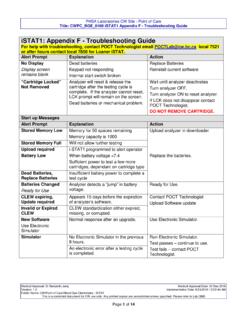
6 1. Together, the RN and RT will assemble the circuit and put mask on the patient, adjusting the head gear. Bottom straps should be secured first and then the top straps. You should be able to get one finger underneath each strap. 2. The RT will turn the machine on and, with the RN, will check for appropriate settings and attach tubing to the mask. 3. You should feel some air leaking from the mask. In case of unintentional leaks (eg. air directed at child s eyes), try adjusting the mask on the child s face ensuring it is not pushing into their eyes or mouth. 4. Sometimes a chin strap will help if there is too much air escaping from the mouth. If using a chin strap, secure lightly to jaw bone only to prevent the child s tongue from obstructing the airway NOTE: *over tightening can cause more leaks and pressure sores* BCCH BIPAP Self Instructional Learning Package Acute Inpatient Units September 2012 6 Patient Care and Safety : Equipment Setting and Alarms: This information will be validated in the clinical setting.
7 RTs will discuss the patient s care with the RN at the beginning of the shift and will monitor the BIPAP every 3 hours. RTs will be available by pager for concerns and/or questions. RNs will be familiar with BIPAP machine settings and alarms, by completing the following Read through the attached appendix for instructions on how to obtain the machine information. Complete a BIPAP Clinical Skill Validation: Noninvasive Ventilation RNs and RTs will work together to optimize the care of patients using BIPAP , trouble shoot problems and care for equipment. Possible complications of BIPAP : Skin Breakdown- check mask fit, the RT may try an alternate mask. Place duoderm over area of breakdown. Eye Irritation-check for leaks and mask pressure around eyes and refit as appropriate. Sinus Congestion-check mask tightness, RT may consider adding humidification to BIPAP , or increasing the temperature of the humidity.
8 Consult physician to discuss adequate fluid intake and/or consider Otrivin nasal spray. Oro/nasal Drying- see information for sinus congestion. Patient Discomfort with Ventilation- Contact RT and physician to discuss ventilator settings. Gastric Distension- If noted, inform physician and discuss placement of NG or OG tube for air venting. Aspiration- Contact physician to assess feeding parameters. Set up Precautions: 1. Do not block air intake filter. 2. Should the power go out while the BIPAP is on, take the mask off. 3. Do not block exhalation port or built in leaks on mask. *All masks require an exhalation port attachment or a built in leak in order for CO2 to escape. BCCH BIPAP Self Instructional Learning Package Acute Inpatient Units September 2012 7 BIPAP Equipment Care: Equipment Cleaning and Disinfecting: The child s BIPAP facemask and headgear needs to be clean and dry at all times.
9 RNs and RTs will clean the BIPAP mask (daily) and the headgear as needed. The outside of the BIPAP machine can be wiped down with damp cloth when needed. Please read the appendix for equipment cleaning instructions Conclusion BIPAP is commonly used in pediatric patients who require non-invasive ventilation. At bc children s hospital physicians, nurses and respiratory therapists will work together, along with the families, to ensure the best care for clinically stable children who use BIPAP . Please read the appendix and the online BCCH Child and Youth Health Policies for: BCCH Child & Youth Health Policy and Procedure Policy: Non-Invasive Ventilation Management BCCH BIPAP Self Instructional Learning Package Acute Inpatient Units September 2012 8 BIPAP Case Studies 1.) Olivia is a 2 year old with bronchopulmonary dysplasia. She has come to the hospital for cardiac catheterization. Her family has traveled from northern BC for this procedure.
10 Olivia is admitted for further study and will be arriving on your unit within 2 hours. Olivia is on BIPAP only at night. Her respiratory status is stable. Her BIPAP orders are: BIPAP mode: S/T IPAP: 12 cm H20 EPAP: 7 cmH20 RR: 15 Ti: Rise: 2 Humidifier: 3 Mask: Small gel mask Using the above information: What equipment and supplies do you anticipate that her family will bring to the hospital? Who will assist with the equipment set up? What policy will you refer to for her care? What will you include in your assessment of Olivia? How will you collaborate with the RT in the monitoring and documentation of Olivia s care? How will her family be involved? BCCH BIPAP Self Instructional Learning Package Acute Inpatient Units September 2012 9 2.) Joshua is a 16 year old with history of restrictive lung disease (nemaline myopathy). He is currently in hospital with a fractured leg. His condition is other wise stable.